Obituary: Vanessa Romain, Long Beach LGBTQ+ community icon
V leaves, in her wake, a loud, proud life of accomplishments and personal challenges.
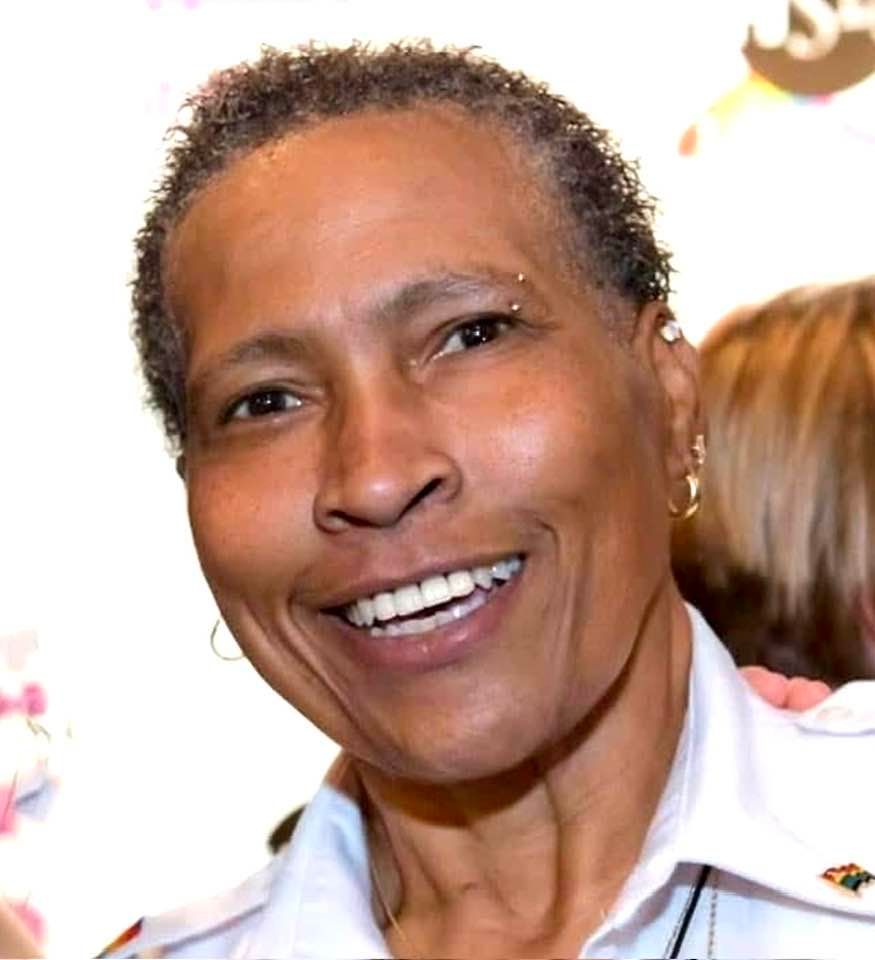
March 14 saw the loss of a fighter, an activist and a force within the LGBTQ+ community. Vanessa Romain helped shape Long Beach Lesbian and Gay Pride — now Long Beach Pride; opened what she said was the first homeless center run by a Black female, for Catholic charities; and was a loud, proud activist who addressed trouble and nearly as often caused it.
Vanessa died at Memorial Medical Center from multiple complications from metastasized breast cancer and possibly from problems caused by a heart attack during the beginning of February. She’d just seen her 70th birthday.
“Vanessa was a friend, a community leader, and a trailblazer for LGBTQ+ rights and representation,” said Congressman Robert Garcia. “She spent her life breaking down barriers and building a local movement to advance civil rights for all people. She helped build Long Beach Pride, and her legacy of activism will never be forgotten.”
She was also my friend. I heard about her death in April, and, seeing no obits for her, went about researching her life and contacting her friends and family. This was no small feat. V was a person of achievements, complications and contradictions. It took a long time to complete, and reducing her to a few paragraphs proved impossible.
“I will never hold Vanessa in anything other than honest regard,” her daughter Dani Heard said. “People were polarized by Vanessa because Vanessa was polarizing. She was a Robin Hood. A naughty nun. Suspicious Sue. She housed the homeless, sheltered the vulnerable, cared for those in hospice, and supported people in recovery and transition. She hired people others turned away; parolees, recovering addicts, those trying to rebuild- because she believed in second chances when the world didn’t. She sat with people in their final moments during the AIDS crisis, holding them when others wouldn’t even come near. She helped create space for LGBTQ+ people to exist, gather, and celebrate before it was safe, before it was accepted, before it was protected. She leaves behind more than memories; she leaves systems, progress, and lives that exist today because she refused to accept the world as it was.
I first encountered Vanessa in 1996, when she led a big group down Broadway and back to City Hall, conducting us in chants of “Outa the bars, into the streets!” as we passed gay bars. We were protesting then-council member Jerry Shultz’s harangue against gays and lesbians. I’ll follow her readily, I thought as I walked. I was struck by Vanessa’s charisma.
“She was relentless with making sure people were OK,” said psychotherapist Ethel Daniels. “She saw danger, she stepped up to the plate. She didn’t run away from it.”
An intruder armed with a knife once entered the waiting room of her office. Despite Ethel’s protestations, Vanessa, who was “big and buff” at the time, charged into the waiting room, yelled at the intruder, and got the knife away. She then sat on the intruder until the police arrived.
“I’ll never forget the visual of opening my door and seeing Vanessa sitting on that person,” Ethel said. “Then, it was ‘OK, ’bye’ after the police took the person away. She had a great deal of pride in who she is, where she was from, and what she could handle. What preceded her fear, in my observation, was her strong leadership, doing the right thing no matter how difficult it is.”
But Vanessa could strike out at something that she perceived as a personal offense, even if she was part of the cause.
“I know the hurt she caused — I know the bridges she burned,” Dani said. “At times, I think the power and the fight consumed her. There was an anger she carried, perhaps resentment toward those who hadn’t endured the same battles but benefited from them. That made her difficult to love at times, when she wasn’t intentionally creating distance. But I also think she believed soldiers did not deserve softness in the same way others did. Maybe that is exactly why she protected society’s most vulnerable people with such force.”
Vanessa Romain was born Jan. 14, 1956, in South Central Los Angeles to Annie Belle McCoy from Port Arthur, Texas, and Francis Romain, né St. Romain. She was the youngest in the family, the only girl among nine big brothers. Her father worked as a forklift operator in a warehouse until an accident put him on lifelong disability before Vanessa was born. His alcoholism kept him from working at anything but odd jobs or developing a close relationship with his daughter.
Annie Belle was an inspiration to Vanessa and a role model for community involvement and the importance of education. She was close to her mother, who kept the family afloat by cleaning multiunit apartment buildings. Her brothers were her protectors and role models, for better or worse.
“My mother would make them take me everywhere they went, so I became the tag-along little sister who got into all the trouble things that the boys would get into,” Vanessa said in a Historical Society of Long Beach (HSLB) recorded interview with Karen Harper.
Vanessa went to public kindergarten and switched to Catholic school for the rest of her education. The family was Catholic, and Vanessa’s mother believed that a Catholic school education was of higher quality than that of public schools. Vanessa attended Holy Cross Elementary and Middle School and then St. Matthias Girls Catholic School in Huntington Park, now the coeducational St. Pius X–St. Matthias Academy in Downey. Vanessa said that she wanted to enroll at the high school primarily because she was charmed by the beautiful, white sweaters that were part of the uniforms.
Vanessa paid for her tuition by typing for St. Vincent de Paul and Catholic Charities during the summers and holidays thanks to her mother, who’d encouraged her to learn to type.
“Mom said we had to work if we wanted to go to Catholic school,” she said. “She told me, ‘No matter what they say about you, as long as you’re educated, they can’t take that away.’”
Vanessa realized that she was a lesbian when she was about 14. Some teenagers called her a "bull dyke" when she was walking home, and Vanessa had no idea what the phrase meant. When she found out shortly after, she immediately realized that was who she was. She had her first girlfriend when she was in high school.
Vanessa wanted to be a nun for a while because of their clarity and attitude toward education but decided against it because, in her own words, she "cursed worse than a sailor." After she graduated St. Mathias, she was accepted into University of Southern California. She never found out who paid her tuition, but figured it was someone from the church.
She majored in journalism and social science. “I could do the work of God that way,” she said. She also likely tempted the patience of, if not God, at least the university administration with her badass activism. During a Ku Klux Klan appearance at USC, Vanessa participated with the Black student organizations in blocking their path with trash cans and other metal objects. In another, more hardcore activity, she joined a student group who expressed their displeasure over a racist regulation that ordered Black students working in the cafeteria to wear hairnets “because their hair was more likely to fall out and land in the food.” The group set a section of the university kitchen afire by jamming paper towels in the stove’s gas jets.
Vanessa graduated from USC in 1978. Her mother was in the hospital and couldn’t attend the ceremony. She died shortly after. It was heartbreaking for Vanessa.
After graduation, Vanessa worked for Catholic Charities in Los Angeles and moved to Long Beach with her then-partner, Mary Martinez, to open a homeless center. In 1983, they both worked with Judi Doyle, Marilyn Barlow and Robert Crowe to found Long Beach Pride. Mary was fluent in Spanish and could communicate with some of the workers who made deliveries and did setup. Vanessa was put in charge of security.
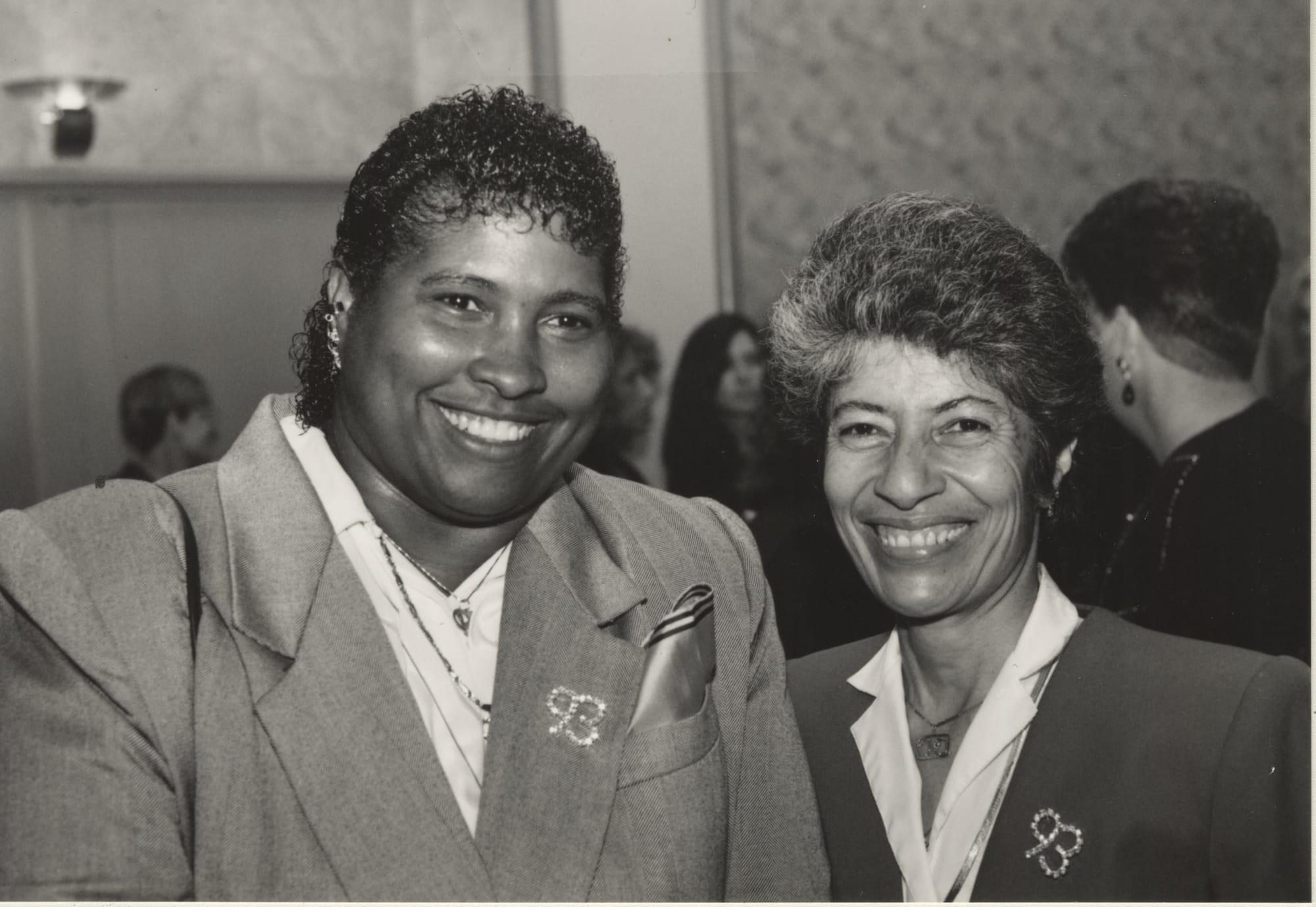
“We had about 5,000 people for the first Pride Festival … it was scary for all of us,” Vanessa said in an LBHS interview for their Women in the Spotlight series. “There were threats on Pride’s phone. Our own City Council was not supportive of us. … We made buttons with the faces of council members who voted against us and put a circle with a red slash over them. We wore those proudly our first year.”
Vanessa recalled inviting the police department to her home to discuss security.
“I hid the marijuana plant that was in the window,” she said. “One policeman came to help — he was with Special Events. So, I introduced him to all the people, and I asked what we could do to make it a pleasant atmosphere for everybody.”
Vanessa’s committee put together a manual for safety and trained groups of people with its guidelines. She let the police know that Pride had plenty of trained volunteers so that officers wouldn’t need to step in unless they were needed.
“We wanted them to understand that we didn’t want them to come in with billy clubs unless we needed billy clubs,” she said. “It did work for those first couple of years.”
Some people weren’t going to do their part no matter what. A group of religious fundamentalists threatened to protest the Pride event. Vanessa said that they were told that they were welcome to stay and yell and scream in one place but not up and down the street because that’s where fights were going to break out. The cops agreed to the sequestering, but the fundamentalists did not. They walked up and down the street during the event holding signs and spouting fire and brimstone.
“It was very scary for all of us — people spitting, saying you’re going to die [from AIDS],” Vanessa said.
Vanessa was pumping gas at the station at Alamitos Avenue and Ocean Boulevard, wearing her Pride Security T-shirt, when someone threw a Bible at her and hit her on the shoulder.
“I picked it up, and I looked at him, and I said, ‘This is not what you do with God’s word,’” Vanessa said. “He didn’t know what to say.”
The fundamentalists still come to the Pride parade but stay in their corner and yell while beautiful noise goes on everywhere else.
Vanessa was involved with Pride for 29 years. She served on its board for 27 years and as president for five years. She was also security chair.
She continued her work as social services coordinator for Catholic Charities until September, 2013. She worked as field deputy and case manager for then-Congressman Alan Lowenthal from September 2016 to November 2018. During her time at Pride and thereafter, she wrestled with health issues and collected an impressive number of exes, some of whom still speak to her.
“We secretly remained ‘the love of my life’ for the years past the 2008 breakup despite subsequent relationships and even marriages,” said Gavett Burch.
Vanessa also collected an impressive number of honors and awards. Among them are the Outstanding Woman Award, Human Rights Award, the Lesbian Rights Award for community service, and the inaugural Ellen Ward Leadership Icon Award. She was “sainted” by the nonprofit community organization Sisters of Perpetual Indulgence as Saint Mama Bear of Pride. She continued her calling as a community worker; her favorite project was a Christmas toys program for orphanages in Mexico and for Children with Aids.
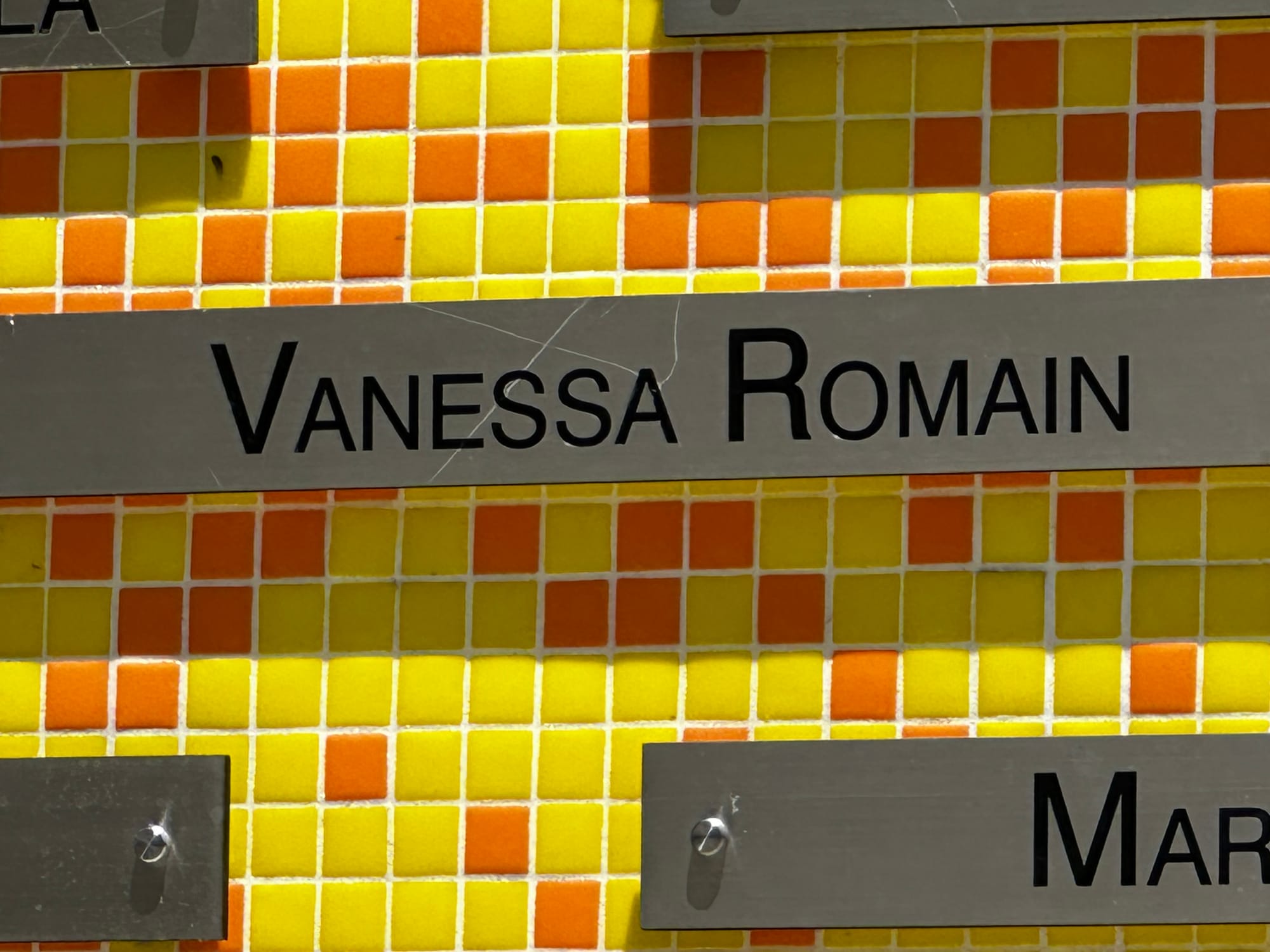
“I grew up tracing my fingers along the frames of photos featuring her and Hillary Clinton, among other leading politicians,” Dani said.
Vanessa left Long Beach in 2018 to share a home with her wife in Ceres, California. In mid-March, she died, leaving a wife, two grown children and a huge group of friends, fellow warriors, lovers, proteges, accomplishments, emotions all over the spectrum and an empty space that will always echo with her calls to action.
“Rest in power, Vanessa,” Dani wrote. “Your impact is still here. Your fight mattered. And your legacy will continue through every life you touched, including mine. I am so proud of you — we’ve got this from here, I promise.”
Great thanks go to Gavett Burch, Dani Heard, Ethel Daniels, Robert Garcia, and Bianca Moreno and Max Baddiley of HSLB for helping fill in a lot of the blanks in Vanessa Romain’s story.
We need your support.
Subcribe to the Watchdog today.
The Long Beach Watchdog is owned by journalists, and paid for by readers like you. If independent, local reporting like the story you just read is important to you, support our work by becoming a subscriber.