Column: Long Beach says racism is a public health crisis. Black Workers are still waiting for the cure.
A city commission recently voted unanimously to support the Coalition Against Anti‑Blackness in its fight for improved conditions for Black workers employed by the city of Long Beach.

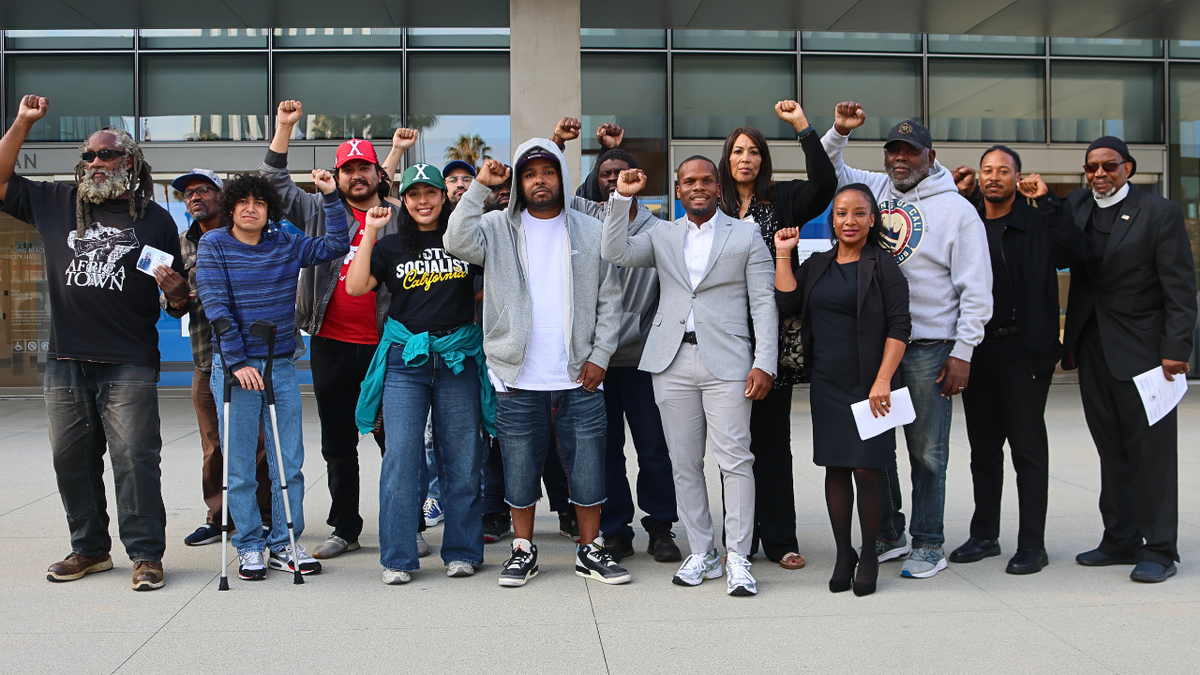
For years, Black workers in Long Beach have walked into city offices knowing two things can be true at the same time: 1) The city will stand in front of cameras and declare racism a public health crisis and 2) The city will allow racism to flourish in its own workforce.
On July 1, that contradiction was front and center at the Equity & Human Relations Commission (EHRC) meeting. Workers, with support from community members, demanded to be able to go to work, do their jobs and not be punished for being Black.
The question on the agenda was simple but huge in impact: would the EHRC back a detailed set of demands from the Coalition Against Anti‑Blackness (CAAB) and the Long Beach Black Worker Center — a roadmap to bring real justice for Black workers across the city?
The commission unanimously voted yes.
That “yes” doesn’t magically fix workplace discrimination. But it does something Long Beach has consistently avoided: it calls the city to the table, in writing, with specific steps, timelines, and accountability for how Black workers are treated in hiring, promotion, discipline and everyday workplace culture. The very issues workers have been bringing to Dana Nickerson, who leads the Long Beach Black Worker Center.
“The citizens want to know what's going to happen besides having more conversations,” Nickerson told the commission. “My request is that the communication pipeline be opened by you.”
Anthony Holmes, a Black worker in the city’s refuse department and founder of the CAAB, has been showing up to meetings for the past four years asking the city to look Black workers in the eye and explain why they’re treated as disposable. He described a workforce full of Black employees too afraid to even sit in the audience, worried about retaliation from supervisors, human resources, and department heads who harass, bully and terminate Black workers while hiding behind policy.
Holmes recalled being told, “We gotta take care of ICE first, we’re gonna put y’all on the back burner.” That sentiment captures the hierarchy that Black workers experience in the city, according to Holmes. His message to the commission was clear: “Protect Black workers. And Black people stand up, because they think our race is soft.”
Zainab, who declined to give her last name, is a Black woman who lives in District 6 and owns a business in the city. She doesn’t fear retaliation in the same way city workers do, but she speaks with those who do and highlighted a glaring double standard.
“Everybody else gets the right to show up as who they are authentically,” she said, noting that Black workers’ hair, voice, walk, and even their smile often fall under scrutiny.
The commission also heard from people with direct experience of how these issues play out in Long Beach. Melissa Morgan, a Black worker who once staffed the very commission in question, demanded the city meet with the coalition and implement strong anti-retaliation protections for workers as well as form a new body called the Truth, Reconciliation and Accountability Commission.
Former city of Long Beach Violence Prevention Task Force member Dr. Lydia Holly brought historical receipts, noting that the Black unemployment crisis has been normalized and largely ignored since at least 2013. She pointed out that Long Beach’s 2020 racial equity and reconciliation initiative acknowledged these realities but has failed to address them.
Forest, a Syrian Armenian resident, said community safety is directly tied to Black safety. She reminded the room that Black people should not have to beg for the right to work free from harassment and discrimination.
“Please protect Black people,” she said. “I feel safer when the Black community is safe. When I know they're safe, I know I'm safe.”
Commission Chair Joshua De Leon reminded the room that a formal letter — recommending the city support and advance the Coalition Against Anti‑Blackness’s action plan for Black workers — went to Mayor Rex Richardson and the City Council on May 25.
The EHRC’s unanimous vote and formal recommendation put the ball squarely in the City Council’s court and subverted the “we need more study” narrative. The commission is clear: The problem isn’t a lack of information — it’s a lack of implementation, measurement, transparency and accountability.
De Leon called the commission’s unanimous vote an elevation point and a moment when community demands move from public comment to written expectations. But elevation is only real if action — and money — follows.
The city’s budget meetings will begin on July 29 and will take public comment. If the community is serious about justice for Black workers, those rooms should be filled with the very people this city has put on the back burner, ready to hold the council accountable for every dollar and every decision.
We need your support.
Subcribe to the Watchdog today.
The Long Beach Watchdog is owned by journalists, and paid for by readers like you. If independent, local reporting like the story you just read is important to you, support our work by becoming a subscriber.