Traveling with your best buddy
Whether by car, RV or plane, make the journey as pleasant for your pet as it is for you.

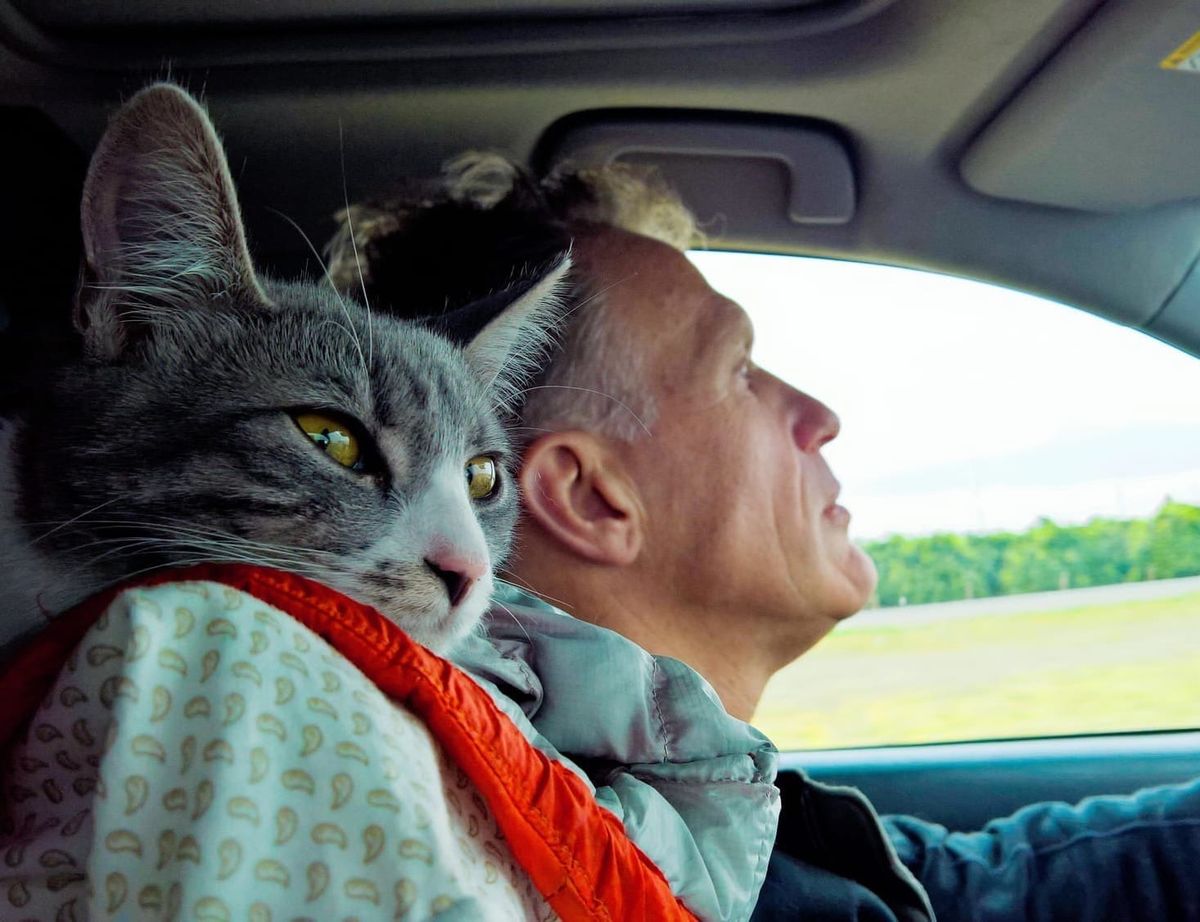
Back in the old days when there was no such thing as a pet-travel industry, it wasn’t as common as it is now to bring the cat or dog with you on vacation. people did it and made it work, unless it didn’t. Dogs stuck with their humans, most of the time, and less frequently, cats shared a beach cottage if the landlord permitted. If they didn’t, people sneaked their animals in. Sherri Stankewitz, the bad girl of pet rescue and proprietor of Sherri Says animal merch, used some creative workarounds in the past to get a dog into a motel room.
“We’d wrap up the animals like a newborn and sneak them in,” Stankewitz said. “Sometimes, we’d pretend that a medium-size dog was a child sleeping in a car, wrapped in a blanket. When I had my big dog, I’d ask for a bottom-floor room and sneak him in. They didn’t have a lot of cameras like they do now.”
They didn’t have a lot of available safety guidelines then, either, or the technology to distribute them. Microchips and monitoring devices hadn’t yet been developed. If you needed an emergency veterinarian, you’d have to locate a Yellow Pages directory (Remember them? They were these huge books with alphabetized business categories with their phone numbers and addresses. Carnival performers used to tear them in half.).
Today, with a burgeoning pet-travel industry, an increasing number of hotels and RV grounds are welcoming pets. Airlines are making it easier, if not cheaper, to fly with pets, and airline-approved pet carriers are flying off the shelves like Boeing 737s. Market-research firm Global Market Insights reported a $2.4 billion pet-travel-sales market for 2025, driven by growing technology advances, pet-friendly traveling services, and of course, the number of us who are acquiring pets and treating them like family. Which they are.
We’re in summer vacation season, and Scratch This! has never run a pet-travel section before, so let’s take a trip.
Basics
We have to pack what’s appropriate for the weather, get tetanus shots for dog knows what we’ll encounter, use whatever GPS devices we have, and put our plane tickets, passports, and REAL ID or whatever we use to pass go, and you likewise have to ready your best buddies. Wherever you go and however you get there, do these things:
- Get a microchip implanted by your vet, and enter the required information online as soon as you get home. If your pet has one already, great, but sure that the information is up to date. If your pet should sneak out of the hotel room or RV and disappear, the chip is considered the most effective way to a safe trip home.
- Make your reservations for lodging, flights or RV campgrounds early. Read the website’s policies for requirements and restrictions — some won’t allow cats, others won’t allow dogs, and others may forbid them from being left in the room without you.
- Your pet’s vaccination and spay/neuter records are their passports. Lodging and airlines might require them — check requirements before you book. Get the records from the vet if you don’t already have them. Keep a hard copy with your travel documents, and put a backup on your electronic device.
- Get sturdy harnesses and leashes that they can’t wiggle out of. If you have a cat, get one specifically made for cats — they’re built differently from dogs! Have them wear the harnesses around your home for a few days to get used to it, and use the leash to “walk” them through the rooms.
- Buy a high-quality carrier. Don’t get ones made of cardboard or flimsy ones that the animal can break out of. It won’t hurt to get one that’s airline approved even if you’re not flying — you might someday. Leave the carrier open in an area of your home that the pets frequent so they’ll get used to it. Feeding them inside the carrier is a good idea, too, and put in something from home like a blanket or the pajamas you wore all week.
The website Bring Fido is a phenomenal resource for furry travelers. The website offers more resources for pet travel than you have cat photos on your phone. Wherever on the planet you’re going, be it Chihuahua or Katmandu, you can search Bring Fido for local pet-friendly hotels, Airbnbs, campgrounds, veterinarians, restaurants, parks — you name it. That’s just scratching the surface, so open the site and claw away.
Road trips
If you’re heading out in the family vehicle, dog rescuer Louise Montgomery suggests a secure crate for a cat or a dog.
“If the owner insists on a dog car seat, be sure it is in the back seat, as an airbag will most likely kill the pet in the event of a collision,” she said. “If your dog hates to be in a crate and is whining or leaping around, ignore them for the first two or three rides. They will certainly adjust, and you will be rewarded with a lifetime of safe travel with your dog.”
The two cats who live with my friends Elizabeth and Patrick are seasoned travelers. They take after their humans, who take lots of road trips and always make sure that the kitties have a safe trip.
When making lodging reservations, they call the hotel’s front desk directly instead of booking online. They stay at the same places but always call to make sure that their pet policy hasn’t changed.
“Someone tried to tell me they did not accept cats, but I said I had stayed there three times before with my cat,” Elizabeth said. “We were in!”
They pack the car completely the night before so that when they’re ready to leave, they can scoop up the cats and put them in the carriers, giving them no time to figure out what’s up. The cats are always leashed and harnessed during the entire trip, even in the carriers and hotel room.
Elizabeth said that the cats like the car but that she and Patrick are comfortable allowing them to free-range.
“Neko likes to sit on the passenger’s lap,” Elizabeth said. “I bring her favorite blanket. Eva prefers the carrier, but the door to it is open.”
When they make a stop, someone always stays in the car with the cats.
A litter box, water and food are always within a foreleg’s reach. For extra hydration, the couple brings Weruva pouched cat food and Churu treats, both of which have high moisture content.
In the hotel room, Elizabeth and Patrick bring a large mat to put under the litter box and food and water dishes to keep scattered litter and kibble spitting down.
“There is less tracked litter to clean for housekeeping,” Elizabeth said. “And I leave an extra-large tip for housekeeping.”
One or both humans bring a takeout meal into the room so that someone will always be there with them.
Speaking of housekeeping, the last and only time we traveled with our cats was when we had to fumigate the house. We stayed at a nearby hotel and told the cats that they were going on vacation. We requested no housekeeping at all, which made it more like home for us and eliminated the possibility of the cats slipping out or freaking out from stranger danger.
We also back Elizabeth’s advice to examine the bed for hiding places. Cats can climb into the box springs if the cover is flimsy enough. Don’t be fooled by those solid bases, either. We were until the cats found a hidey-hole behind the base and climbed into it. My partner had to drive home and get a board to cover the space.
“Nothing like having to flip the entire mattress and box spring to get the cat out!” Elizabeth said. “Keep that harness and leash on even in the room!”
RV trips
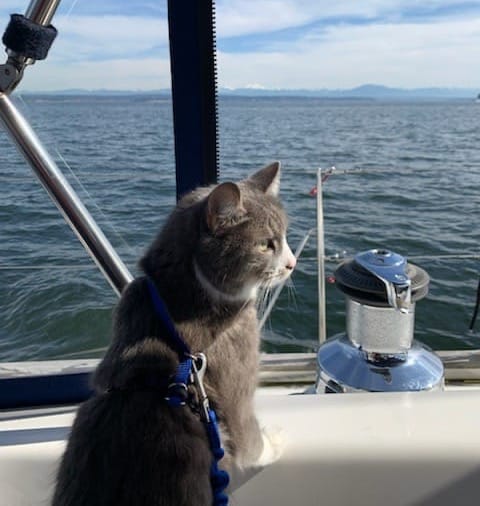
Pets have traveled in campers and other recreational vehicles for decades. The number seems to have increased after the COVID pandemic, possibly to avoid the close quarters of an airplane cabin or risking taking in someone else’s germs in a hotel room.
“I’ve done it many times,” Long Beacher Sharon Nomlas said. “I rented one with some girlfriends — we all brought our dogs. Then my partner and I lived on the road for a month during Covid with our dog.”
Casey Regan rented an RV when she moved to California with her dog, who enjoyed the trip. Gail S. RV’d with her cats in the late pioneer days, about 40 years ago. She found that if cats get used to riding in the car, they’ll be fine in an RV. Hers mostly slept and went to the potty, which she kept in the bathroom.
But it isn’t all me and you and a dog named Boo. An RV isn’t a really home away from home for pets — they have to get used to the new digs, and the unfamiliar territory outdoors present frustrations and dangers. If animals aren’t allowed in restaurants or shops, you can leave them at home in your own dwelling, but many human companions aren’t comfortable doing that when traveling.
“It was fun but a little hard,” Nomlas said of one of her trips. “I couldn’t go on a particular outing because my fur baby was with me, so I slept in the RV for the day, but that was my choice.”
A good choice, too — one person I talked to lost her cat during a road trip. Making an RV secure in every way for pets is mandatory.
“We made sure he had a seat with a belt that held him in — it went between the two seats so he could see out, but he was fully belted in,” Nomlas said. “I also purchased a lighted collar for the wilderness part of trips in Utah. He had a full winter coat and layers for camping and hiking.”
If you’re planning an RV road trip, search for safety tips online. Everywhere with Claire offers the following advice. They’re fleshed out in the article:
- A couple of weeks before you leave, let your pet explore the vehicle. Harness and leash-train them as well. Practice short test drives, especially for the cat.
- Provide familiar toys and treats they favor.
- Call your vet to recommend a tracking device, particularly for the cat. The author has suggestions.
- Many states have laws against leaving your pet unattended in vehicles. Campgrounds have them, too. Look up the ones on your route.
- Invest in a security system connected to your smoke alarm and your phone. A pet camera connected to your phone is another good suggestion.
- Put several stickers on your camper signaling that you have pets inside, the species and how many.
- Install a fire extinguisher by the door, and have a backup evacuation plan.
- Check your slides before you open or close them. Slides are cut-out areas built into the sides or rear of the RV that can extend or contract. They increase the square footage. Before you move the slides, make sure that there are no pets napping in the gaps between them.
- Before you leave, locate the nearest emergency veterinarian in the area where you’ll travel.
- Always check your campsite before you let your pet roam in it or put out the playpen. Previous campers may have left dangerous items behind — the author mentioned razor blades, drug residue, food scraps that pets shouldn’t eat, and (blech) human waste.
- Similarly, research predators and dangerous plants and animals in the area. Ask the camp host or a park ranger to fill you in further when you get there.
- Don’t let your pet drink standing water or water from a stream or a lake! Bring plenty of filtered water for them.
- Park in the shade, and open all vents. If the air conditioning fails and the pets are in the vehicle, at least the RV vents will allow air flow.
My footloose, freewheeling friend Jules B. has traveled in an RV with her cats forever and has been living in one as her primary home for nearly 10 years. Her cats don’t enjoy the traveling part, but they sure do like looking at the wildlife from a safe vantage point once they get there.
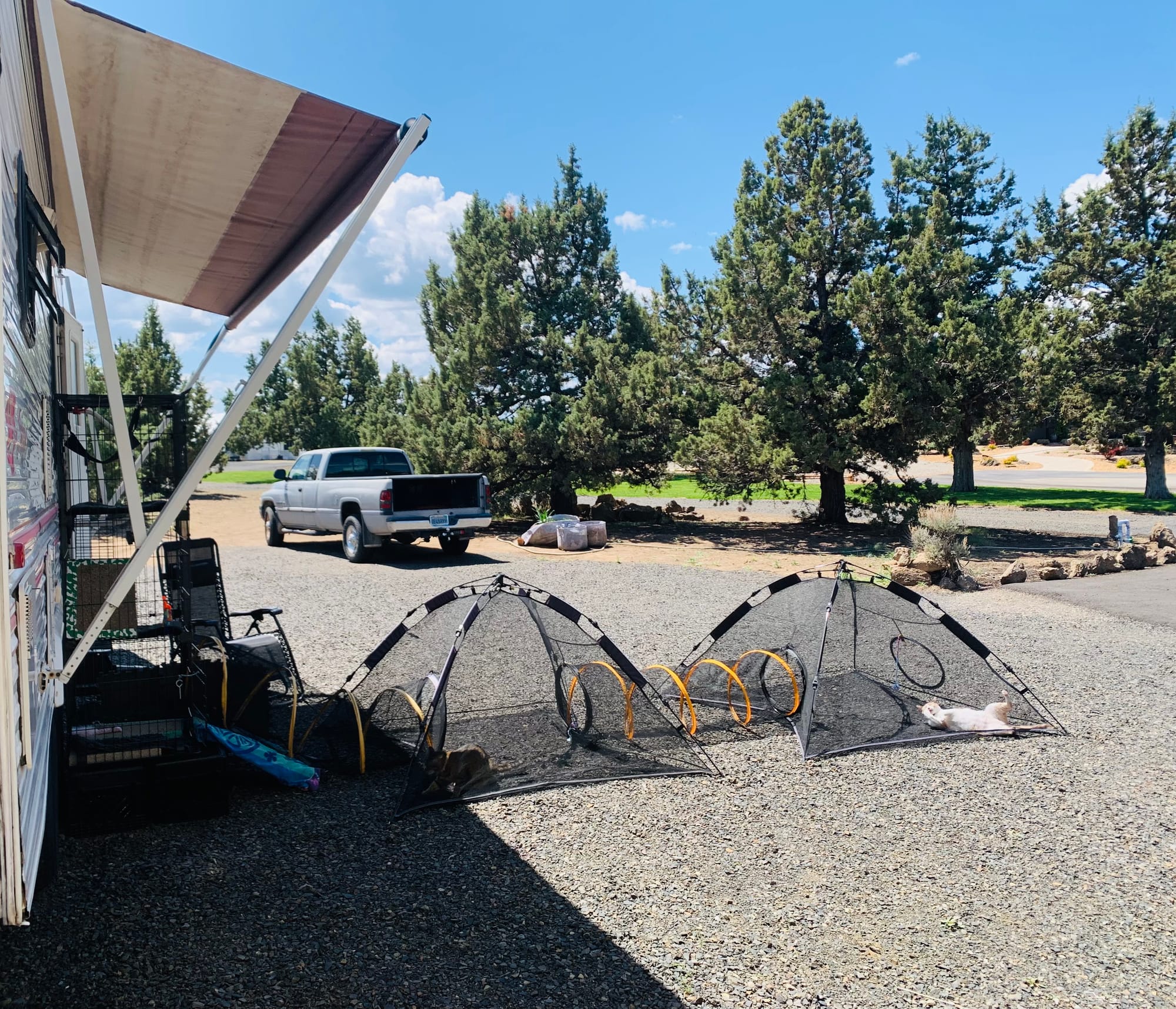
And yes, there’s a Facebook group for RV pet-travel nerds. Jules turned me on to RV Traveling with Cats: Hints, Tips and More. The page is a hive mind of worker bees who, like Jules, have MacGyvered catios, escape-proofed the vehicles, and built comfort areas especially for the kitties. The members post tips for leash-training cats and getting them accustomed to the vehicle, and of course, adorable photos and videos of kitty coach life are everywhere. A few dogs even show up!
Just for balance and equality, there are several Facebook pages for RVing with dogs, including one that’s in fact called RVing with Dogs. Check out the white pit bull lounging on a white fluff rug in the vehicle.
Taking flight safely
Years ago, if you wanted to bring your pet on an airline flight, you’d need all kinds of paperwork, and the poor animal would have to be tranquilized, packed into a crate, and stowed away in cargo. News stories about pets dying or escaping and wandering about the hold would hit the news from time to time and upset people.
If you’ve been in an airport in the past few years, however, you may have noticed more pets on leashes and in carriers than there were about 15 years ago. They’re not going into the cargo hold (thankfully) as often, either. They can share your space with you, for a price, of course.
An airline employee I know said that the company they work for only accepts military transport dogs and no longer allows pets in cargo because of the aforementioned incidents and tragedies. But other airlines do allow them in the cabin with you. If you can afford an airline ticket, the pet fee for most commercial airlines won’t break you. Check with the airline you’re flying with for their pet policies and travel fees.
My friend cited a few private airlines that allow big dogs to travel in the cabin with their humans. RetrievAir, JSX (up to 80lbs), and international companies K9 Jets and BARKair are a few of them. They’re on the pricey side, though, and destinations are limited.
The way to get a pet ready to fly is the same for any airline you book, though.
“The key to a successful trip begins well before you arrive at the airport,” my friend said. “While travel is routine for many people, it’s a completely new experience for our pets — loud announcements, crowds of unfamiliar people, rolling luggage, and the energy of hundreds of passengers can be overwhelming. As pet parents, it is our role to make them feel safe, confident and prepared.”
Here are some tips my friend gave me:
- Before you book your trip, check out the airline’s pet-travel requirements: carrier size, fees, health documentation, and limits of how many pets can be in the cabin.
- If you are traveling internationally, be aware that some destinations have quarantine requirements for arriving pets. Some of them offer ways to significantly reduce or even avoid quarantine if all required vaccinations, testing, documentation and timelines are completed well in advance — six months are recommended.
- Check with the airline about breed restrictions to make sure your pet is accepted before booking.
- If your pet is traveling in the cabin with you, a soft-side carrier is generally the best option because it will fit under the seat in front of you. Line it with puppy pee pads for cats or dogs. If your pet is too big to fit under the seat, they’ll need to be in an airline-approved hard-shell carrier and fly cargo. Your pet must have enough room to stand, turn around, and lie down comfortably in any carrier. Check with airline for dimensions. As with any trip, introduce your pet to the carrier a couple of weeks before you go, and give them a couple of meals inside. “The goal isn't simply getting your dog into the carrier, it’s helping them see it as a safe place,” my friend said.

- Exercise or play with your pet before heading to the airport. This releases extra energy and anxiety so they can rest and relax. You may want to ask your vet to prescribe a sedative.
- Arrive early to allow extra time for check-in.
- Bring any required health documentation. Pack essentials: poop bags, travel litter box, a leash, any meds and a collapsible water bowl.
- You may have to take the animal out of the carrier to walk through security, so secure your cat or dog with a harness and leash inside the carrier.
- Many airports have designated pet-relief areas where your pet can stretch, relieve themselves, and take a short break before and after your flight. If you have a long layover, visiting a pet-relief station can help keep your pet more comfortable and reduce stress.
- Stay as calm as possible because your pet is going to take cues from you.
“The best travel experiences begin long before you arrive at the airport,” my friend said. “With the right carrier, gradual training and thoughtful preparation, your pet's first flight can be a comfortable and positive experience.”
Of course, not everyone wants to take pets along on a trip, me included, and not every pet wants to go, especially if they’re cats.
“My best advice is to leave them at home with a pet sitter and enjoy your vacation,” Montgomery said. “Pets would be safer to stay in the comfort of their own homes as they sleep most of the time anyway.”
Yes, cats in particular. But Stankewitz is delighted.
“I’m so glad that it’s gotten a lot easier to travel, with so much pet awareness, and you don’t have to sneak the animal in!” she said.
YOURS DROOLY
Meet the Gang at the Second Saturdays adoption event!

Join Sherri Stannkewitz and Sparky and the Gang Dog Rescue for their adoption event this Saturday, July 11 at the Marina Pacifica Mall, 6310 E. PCH, Long Beach. Meet two of their little charges. For more information and to adopt either or both pups, text 562-716-7226.

Naya is a darling 2-year-old female pug who’s with other dogs and humans, too. Her previous owners refused to provide her treatment for a common minor skin condition and instead relinquished instead to rescue.

Don Pablo is a 1-year-old male pug. Don Pablo loves kids, other dogs and swimming!
TAIL-WAGGIN' AND NOSE-BOOPIN' EVENTS
Pet Loss and Illness Support Group

The worst day in the life you share with a pet is the day you have to say goodbye forever. Grief is personal on the one hand, and on the other hand, you have a lot of company who get what you’re going through. Helen Sanders CatPAWS rescue gets it, too, and offers a space for anyone who also gets it, who’ll never say to you, “But it was just a cat.” Or a dog, or a rabbit, or a horse, or a goldfish. The members of this group will listen, connect, and support you, and you’ll do the same for them.
The Pet Loss and Illness Support Group takes place Saturday, July 18 at 11 a.m. at the Bay Shore Church, 5100 E. The Toledo, Long Beach. No cost for the meeting.
FOLBA Dance Party!

Ever think, “I want to go out, I want to dance, I want to eat, I want a cocktail . . . AND I want to be in bed by 10 PM”? Well, July 28 is your night! Grab your friends, put on your dancing shoes, and come to at Phil Trani’s for an early evening of great music, good food, cocktails and fun, all while supporting a cause close to our hearts. Phil Trani’s will donate 20% of all receipts to Friends of Long Beach Animals, which will help provide lifesaving care and support for homeless and needy pets in our community!
FOLBA’s Dance Party takes place Tuesday, July 28, 4 p.m.–9 p.m. at Phil Trani’s, 3490 Long Beach Blvd., Long Beach.
Whiskers & Words open mic night
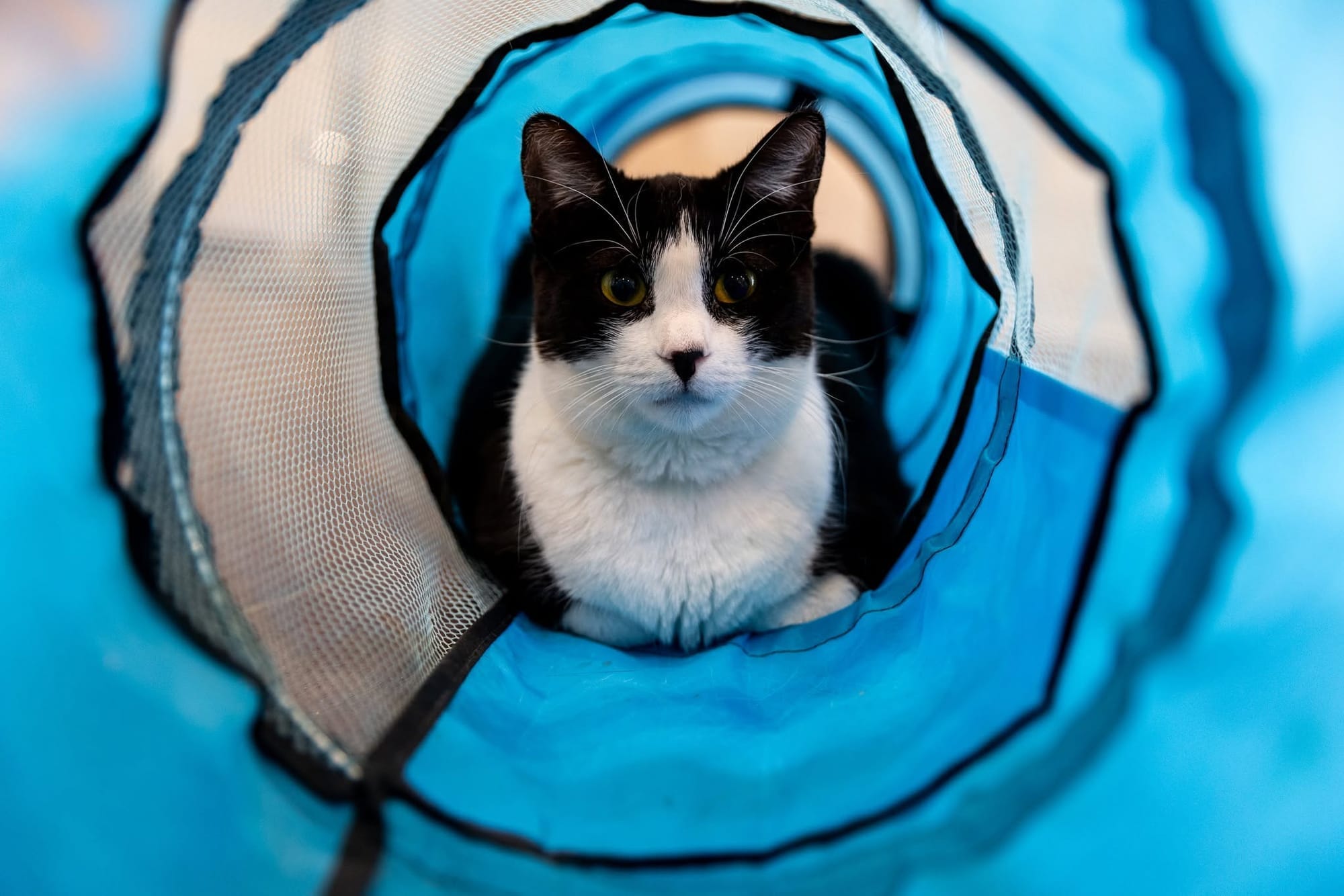
Think you can get a word in edgewise with a bunch of cats milling around? Feline Good Social Club (FGSC) would like you to try! The cat lounge invites local writers, musicians and cat lovers to Whiskers & Words, a unique open mic night dedicated entirely to the pointy-eared characters in the audience and at large. Human attendees can step into the spotlight or settle into the audience while the lounge’s free-roaming, adoptable resident cats do their best to distract. Performers may share original poetry, read favorite cat-centric literature, or strum acoustic songs inspired by their four-legged muses. It’s the perfect opportunity for animal advocates and creatives to express their devotion to felines in a cozy, supportive community space. “Our resident kitties make the absolute coziest audience in Long Beach,” said Pam Leslie, Chief Feline Officer (CFO) of FGSC. “Whether you are stepping up to the microphone or just soaking up the creative energy, you get to cuddle with adoptable cats the entire time. It is a wonderful way to balance local art with vital animal socialization.”
Whiskers & Words takes place Saturday, July 25, 6:30 p.m.–8 p.m. at Feline Good Social Club, 301 Atlantic Ave., Long Beach. Tickets are $19.99; purchase tickets or sign up to perform at this link. All proceeds support local cat rescues.
Need a low-cost veterinarian, information about trapping community cats, places to volunteer, pet food, veterinary assistance, rescues and shelters to adopt from — anything pet related? Follow this link for resources. Please add your own ideas in the Comments section.
We need your support.
Subcribe to the Watchdog today.
The Long Beach Watchdog is owned by journalists, and paid for by readers like you. If independent, local reporting like the story you just read is important to you, support our work by becoming a subscriber.