Port of Long Beach officials respond to Strait of Hormuz reopening
The waterway is expected to remain open for at least 60 days as part of a temporary agreement that experts say heavily favors Iran.

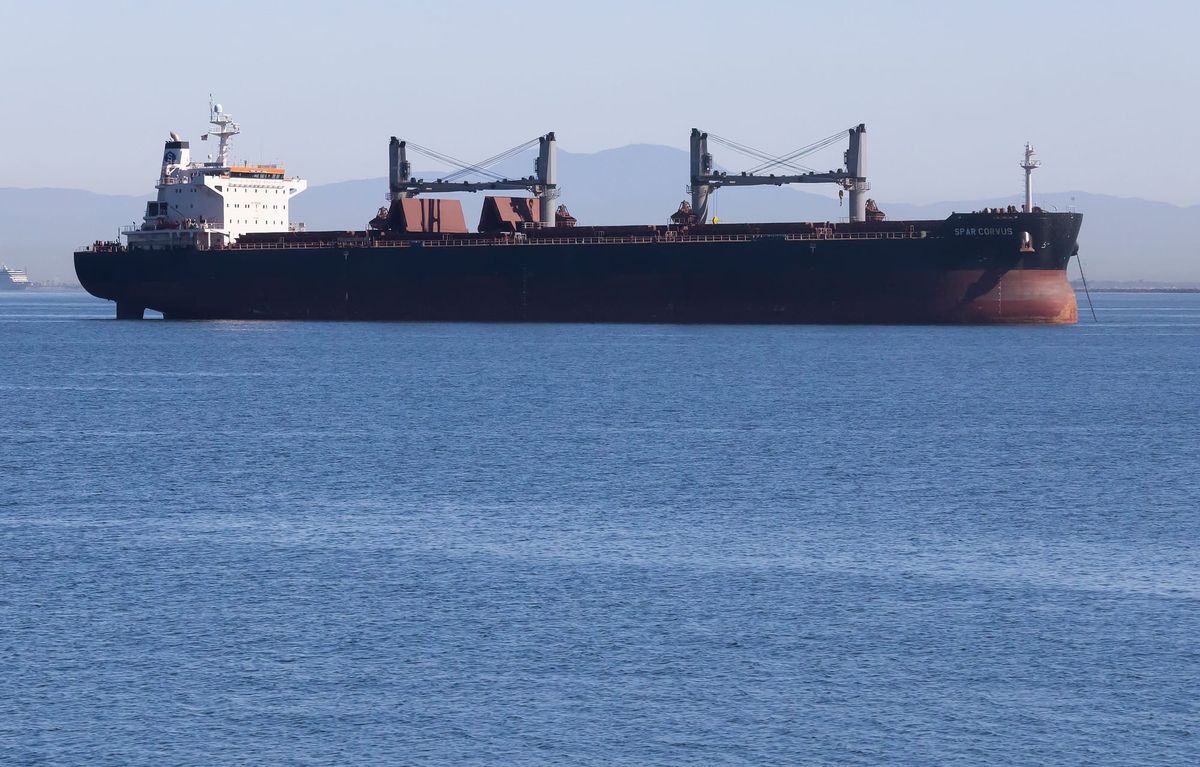
The Strait of Hormuz has reopened after being effectively closed by Iran for three and a half months. The waterway is passable following the signing of a memorandum of understanding by the Middle Eastern country and President Donald Trump at the Palace of Versailles Thursday to end the nearly four-month long war between the two nations
"The reopening of the Strait of Hormuz is a critical priority to restore the stability that keeps cargo moving through the Port of Long Beach and protects California and U.S. economies that depend on it,” Port of Long Beach CEO Noel Hacegaba said in a statement. “The supply chain thrives on stability and predictability. When a critical chokepoint like the Strait of Hormuz is disrupted, the effects ripple across the entire system, from fuel prices to vessel costs to shipping routes.”
The reopening is one piece of the 14-point memorandum of understanding signed by the U.S. and Iran, which many from both American political parties feel heavily favors the Middle Eastern country.
Under the agreement, the strait will remain open for 60 days as the two countries work toward a more permanent deal. Other points in the MOU include:
- Ending the war on all fronts, including Lebanon, which could prove difficult without Israeli cooperation;
- The removal of the U.S. naval blockade within 30 days;
- A $300 billion reconstruction and redevelopment fund for Iran from the U.S. and its regional partners, which Trump and Vice President JD Vance claim will not include any U.S. dollars;
- The removal of all U.S. sanctions on Iran;
- A commitment from Iran that it will not pursue development of a nuclear weapon, with questions related to uranium enrichment to be negotiated at a later time;
- The release of an undisclosed amount of frozen Iranian funds and assets.
Read the full text via NPR here.
Many political commentators were quick to point out that the temporary agreement signals that the U.S. clearly lost its war against Iran, which Trump started on Feb. 28. Analysts have pointed out that the MOU does not even guarantee Trump’s main objective: Iran not producing weapons-grade uranium.
U.S. Senator Roger Wicker, R–Mississippi, who chairs the Senate's Armed Services Committee, released a statement criticizing the MOU in fairly strong terms.
"I am concerned that the memorandum of understanding negotiates away the victories of Operation Epic Fury in ways that are completely out of step with the President’s goals," Wicker said.
Wicker added that the $300 billion commitment to Iran in Trump's MOU "would make Iran’s payoff under President [Barack] Obama’s 2015 deal look like a pittance by comparison."
Under Obama's deal, dubbed the Joint Comprehensive Plan of Action, Iran pledged to not develop a nuke and to not enrich uranium beyond levels needed for energy production. The agreement included mandatory inspections to ensure Iran was holding to the agreement.
Trump pulled out of the agreement during his first term as president but as recently as last year, U.S. Director of National Intelligence Tulsi Gabbard testified to Congress that Iran was not building a nuclear weapon and that it had not restarted its weapons program. Despite that assessment, Trump has repeatedly said Iran was “weeks away” from having a nuke, a talking point used by conservatives for decades.
Gabbard’s testimony resurfaced last June when the U.S. military carried out Operation Midnight Hammer, during which the Trump administration claimed it “obliterated” Iran’s nuclear facilities.
Given Gabbard’s testimony and the administration’s claim that facilities were completely destroyed, many questioned why Trump started his war in Iran earlier this year, which caused oil prices and inflation to increase.
Despite the uncertainty surrounding the U.S.-Iran conflict, the Port of Long Beach is having a strong year. Through May, the most recent data available, the port has moved more than four million 20-foot-equivalent units (the standard measuring unit of shipping containers), making it the second-busiest U.S. port behind Los Angeles — rankings that have held almost every year for decades.
Year-to-date cargo volumes are higher than last year, which was the port’s third-best year in its 115-year history, according to data compiled by the Watchdog.
“While California’s ports primarily handle trans-Pacific trade with Asia, global supply chains are deeply interconnected, and stability in global trade routes and fuel prices are major factors which will strengthen confidence across the whole network,” Hacegaba said. “Throughout this period, the Port of Long Beach has remained resilient, with terminals open and cargo moving normally. That same resilience defines ports across California.”
We need your support.
Subcribe to the Watchdog today.
The Long Beach Watchdog is owned by journalists, and paid for by readers like you. If independent, local reporting like the story you just read is important to you, support our work by becoming a subscriber.