New California law ends cat declawing
As of Jan. 1, AB 867 outlawed a practice that many consider inhumane, except for therapeutic purposes.
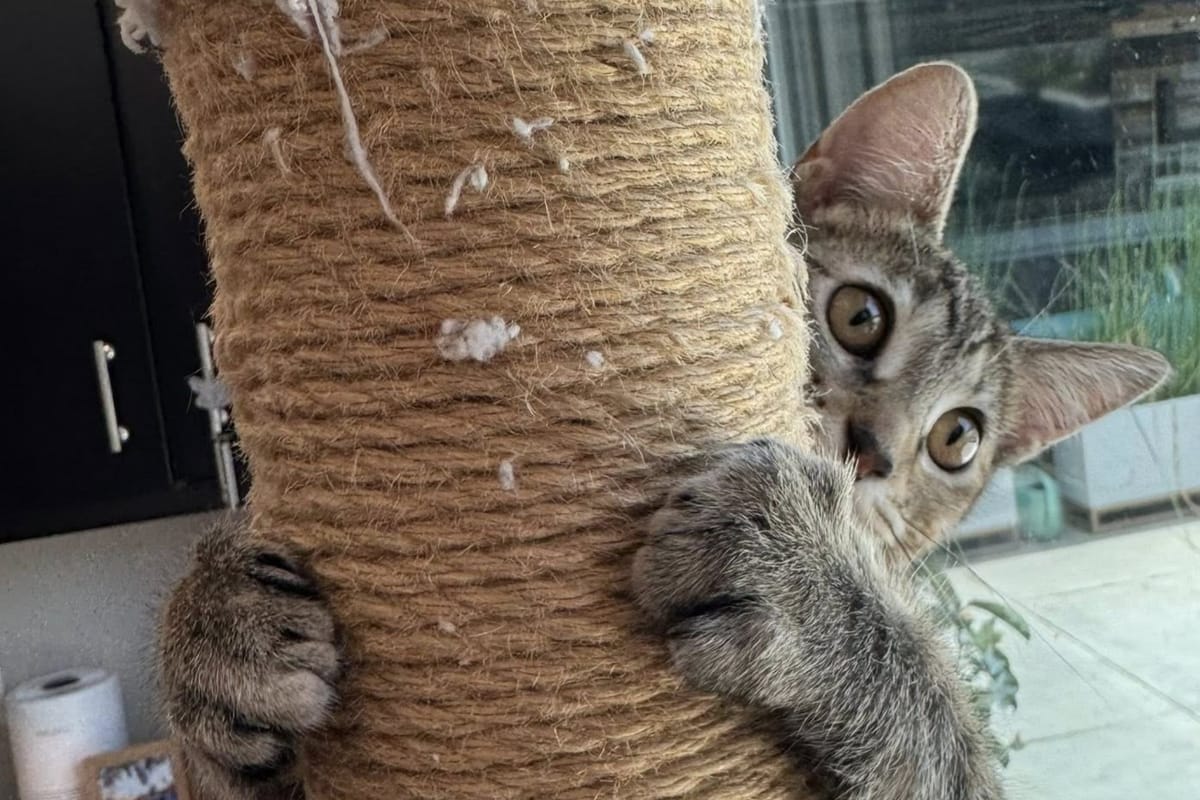
Back in the 1960s, more people were deciding to keep their cats fully indoors to protect them from cars, predators, disease and bad people and to block home delivery of gifts of rodents and birds. It was also good news for the rodent and bird populations. According to an article by veterinary surgeon Dr. Karyn Kanowski, it wasn’t good news for the upholstery and carpeting.
So, sometime in the 1960s, veterinarians started offering onychectomy procedures, commonly called declawing, as an optional addition to spay/neuter surgery. I’m embarrassed to admit that I did have one of my cats declawed back in 1981, before I knew what I’m about to describe. Ezzi hopped around the house like a kangaroo for days — luckily, she didn’t suffer any other effects, and I swore I’d never do it again.
In her article, Kanowski referred to declawing as a “rather grotesque solution to a human problem.”
“The word ‘declawing’ is a little misleading,” Carrie Robbins, DVM, said. “It’s actually a distal phalangeal [referring to the terminal bone at the tip of each finger and toe] amputation. The cats have a nail that actually attaches to the third phalanx; the classic declaw procedure is amputating that last little bone. If you think of your knuckles that are beneath your fingernails, it’s amputating below that joint.”
Robbins is medical director at Primary Care Animal Hospital in Long Beach. Full disclosure: that’s where my cats go to get their shots, get well, and skittishly climb the walls, sometimes literally. They can do that — they have their claws.
“Many people think that declawing removes only a cat’s claws, but this is not accurate,” said Natasha Wood, DVM, chief veterinarian at Long Beach Animal Care Services. “Declawing is actually the surgical amputation of the last bone — the phalanx — of each toe, which includes the claw and nail bed. Typically, a scalpel blade or laser is used to cut through soft tissue, ligaments and tendons and remove the bone at the joint. Stitches are placed to close the incisions. This is a major surgical procedure on a very sensitive and important part of the body — it’s the equivalent of amputating all a person’s fingers and toes at their last knuckle!”
Wood added that declawing comes with risks that include anesthetic complications, excessive bleeding and serious infections at the surgical site. The removal of the toe bones affects the distribution of the cat’s body weight when they walk, which can lead to chronic pain, arthritis and posture change.
“Bone spurs can develop at the declaw site, and with each step, declawed cats feel like they’re walking on sharp stones,” Wood said. “Some cats have had to undergo reconstructive surgery to be able to walk normally again.”
Robbins said that cats can take about two weeks to recover from the pain. Infection at the site is also possible, and the cat could suffer anxiety at not having their weapons in their sheaths.
Check out onychectomy sketches on the internet — thankfully, actual photos weren’t evident when I looked.
About AB 867 and a brief history of declawing in California
California has always been a leader in pet legislation. In 2023, West Hollywood became the first city in the country to ban declawing, with San Francisco, Beverly Hills, Los Angeles and several other cities following the lead. The California Veterinary Medical Association pushed back against the bans — the organization wanted to protect the interests of commercial veterinarians and to prevent cats being relinquished to shelters because their owners wouldn’t be able to declaw them.
“I don’t know that there’s a direct association, but anything that encourages owner responsibility before bringing a cat or a dog into a home is a good thing,” Robbins said. “We certainly want to get fewer animals in shelters and more animals in homes. But I think that [declawing] is a pretty outdated procedure, and in this era of our understanding of cat behavior and training, I think we have a lot of other options. This is not a huge loss to cat owners to no longer have access to this procedure.”
The city bans did stay in place, and today, several states outlaw the procedure. Robbins said that in the past 20 years, medical associations including the American Association of Feline Practitioners, the American Veterinary Medical Association, the American Animal Hospital Association and humane organizations such as the ASPCA have denounced declawing cats.
And as of Jan. 1, Luna and Max, you’ll be able to keep your claws if you live in California. Assembly Bill 867, which went into effect on Jan. 1, prohibits a person from performing declawing or similar procedures on any cat unless the person is licensed as a veterinarian in California and the veterinarian is performing the declawing for a therapeutic purpose. This could include trauma, tumor removal, injury to a nail bed or the result of an aggressive infection. Tendonectomies, surgery that removes a small part of the tendon in each claw so that the cat cannot extend or retract their claws, are also now illegal.
The bill also “clarifies that ‘therapeutic purpose’ does not include a procedure performed for a cosmetic or aesthetic purpose or to make the feline more convenient to keep or handle.”
A veterinarian performing an onychectomy, a tendonectomy or any similar procedure is subject to having their license denied, suspended or revoked. The text of the bill clarified that routine nail trimming is just fine. The cat often imposes the consequences for that anyway.
"Cat declawing, the amputation of the first knuckle of each cat's toes, is an outdated, cruel and unethical surgical procedure that results in lifelong disfigurement and pain,” said Assembly Member Alex Lee, the bill’s author. “Many countries have already outlawed this inhumane practice. AB 867 shows the nation and world that California does not endorse surgical mutilation performed electively on healthy cats for human convenience. This bill safeguards the welfare of cats by protecting them from the harmful and barbaric surgical procedure of declawing."
Read the full bill for complete information.
Keeping Felix’s fishhooks from the furnishings
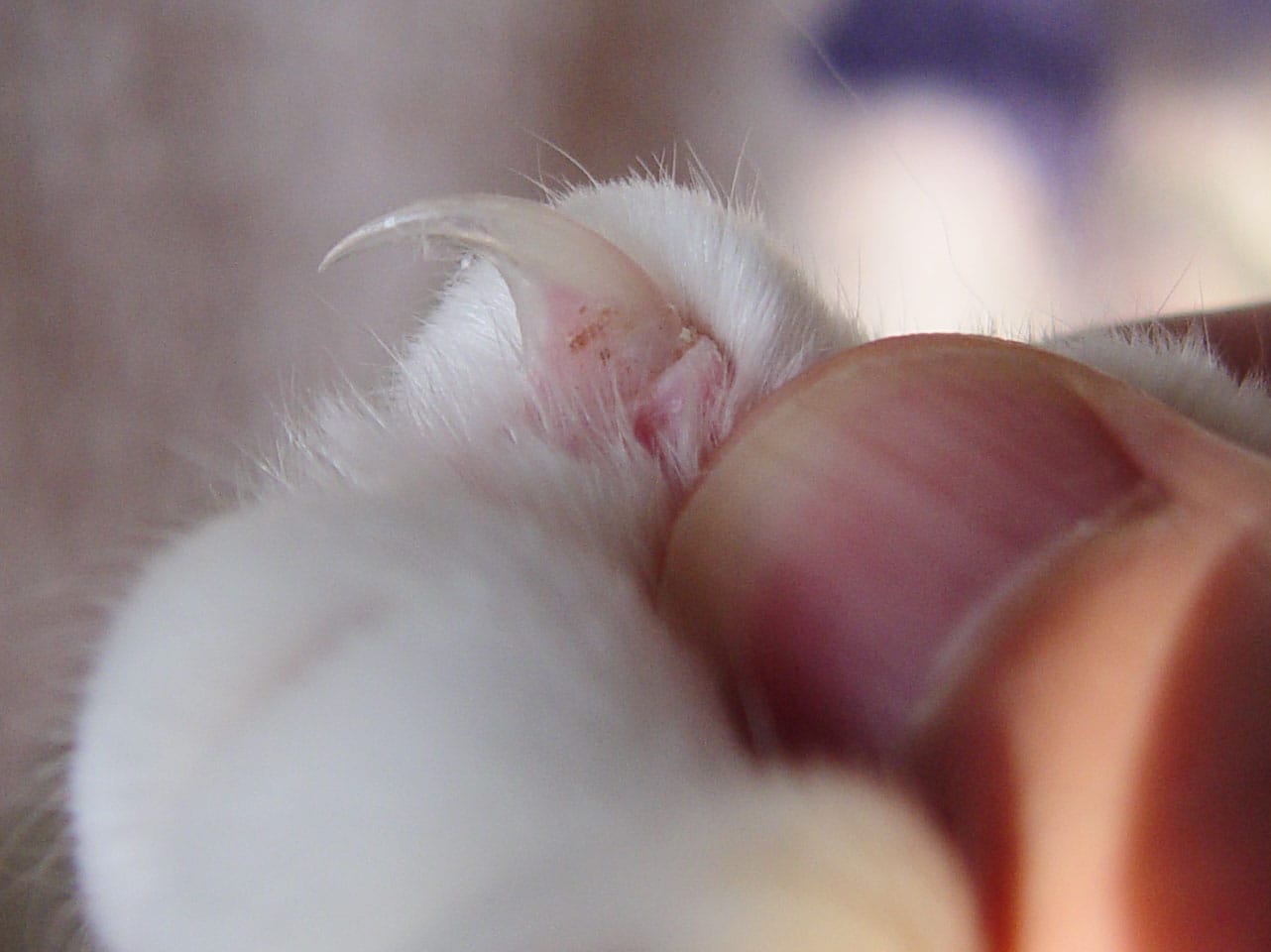
“All species of cats will scratch to stretch and exercise their bodies and to communicate both visually and through the scent glands in their paws,” she said. “Cats use their claws while playing, hunting, climbing and defending themselves. Removing the ability to scratch often leads to negative behavior changes in cats. Declawed cats may begin biting their owners, which is much more dangerous than getting scratched! Declawed cats may also begin urinating and defecating outside the litterbox because it hurts too much to dig or walk in litter. They can develop back pain from walking with an abnormal posture. They may also begin grooming themselves and their feet excessively.”
So, what’s a human to do if they love their cat but like the upholstery, too?
When I was a kid, our family cat, Mrs. Fineman, would regularly lie on her back under the sofa and claw it with promiscuous abandon. We had these long, red drapes on the windows, from which she’d swing, one to another. My father, who had a voice like a bullhorn through a megaphone and could and did make any one of us cower, would yell “Heah! Heah! Get away from theah, you Gahd. Damn. Cat!” and smack the table with a rolled-up newspaper. Finally, all it took for Mrs. Fineman to avoid the living room like a plague of rocking chairs was to hear Dad’s tread on the floorboards. That worked, as did a scratching post that my brother made from two perpendicular pieces of wood and some kind of material.
Several decades later, I have four cats, all with intact claws, and they have cardboard scratchers and little scratchy structures everywhere. I bought microfiber furniture, which doesn’t give a cat as much purchase to claw as regular furniture, and I have a jar of pennies to shake for the same effect as my father’s voice. Pennies do have value after all.
“I have lots of cardboard scratchers,” said cat roommate Debbie, who asked that her name not be used. “Don’t use scratchers with upholstery fabric, because they don’t know the difference between what’s OK and what’s not. I try to keep their nails trimmed as much as I can — the cats don’t always cooperate.”
Debbie also recommends double-stick tape on surfaces where you want the cats to stay off. It doesn’t look pretty, but it does keep them from ruining the area. Sticky Paws makes tape especially for this purpose. It comes in a roll or in sheets. This video demonstrates its use.
Soft Paws vinyl caps come in clear plastic or in colors that can add an element of flash to the kitty’s pedicure. They coat the claws with dull tips. If you want to go all atomic age showroom, drape see-through plastic covers over the furniture. Who knows — you might start a retro trend in your neighborhood.
“Another reason people declaw is fear of cat scratch fever and because they’re immunocompromised,” Robbins said. “This is something to address your doctor about, but the Soft Paws caps would be a huge help there.”
Cats also love vertical space, Robbins said. Tall scratching towers placed near windows to climb on, look out from and sharpen their claws on will both help with the clawing problem and increase their happiness and enrichment. Vertical and slanted scratch pads are good for stretching.
Robbins added that redirecting the cat can be a tricky situation to address and is a long-term process.
The internet abounds with suggestions for redirecting your cat’s attention from something clawable that you want to keep to something else that a cat can wreck to their heart’s content. Use your Googly sense to find one —tried-and-true sources include cats.com, Jackson Galaxy of My Cat from Hell fame, and any site connected with a veterinarian.
Thanks go to Dr. Natasha Wood at Long Beach Animal Care Services and to Carrie Robbins and Dave Statner at Primary Care Animal Hospital. Statner, Primary Care’s administrator, provided this link to Veterinary Partner for more information about cats and their claws.
YOURS DROOLY
The Veterinary Partners article about declawing included a linked page that suggested ways to enrich a cat’s environment. Cats that have toys to play with, lots of scratching areas and attention from humans will be less anxious and more stimulated and will be less likely to scratch in places where you don’t want them to scratch.
Helen Sanders CatPAWS rescue houses their furry proteges with fosters, who play with them and give them plenty of stimulation. The cats are rotated through the play area at the Seal Beach PetSmart. Here, they have many toys to play with, lots of places to climb and explore, and of course, scratching options for their little claws. Volunteers give them the ultimate ingredients — love and attention — and visitors like you can visit and play with them, too! Of course, you can take them home.
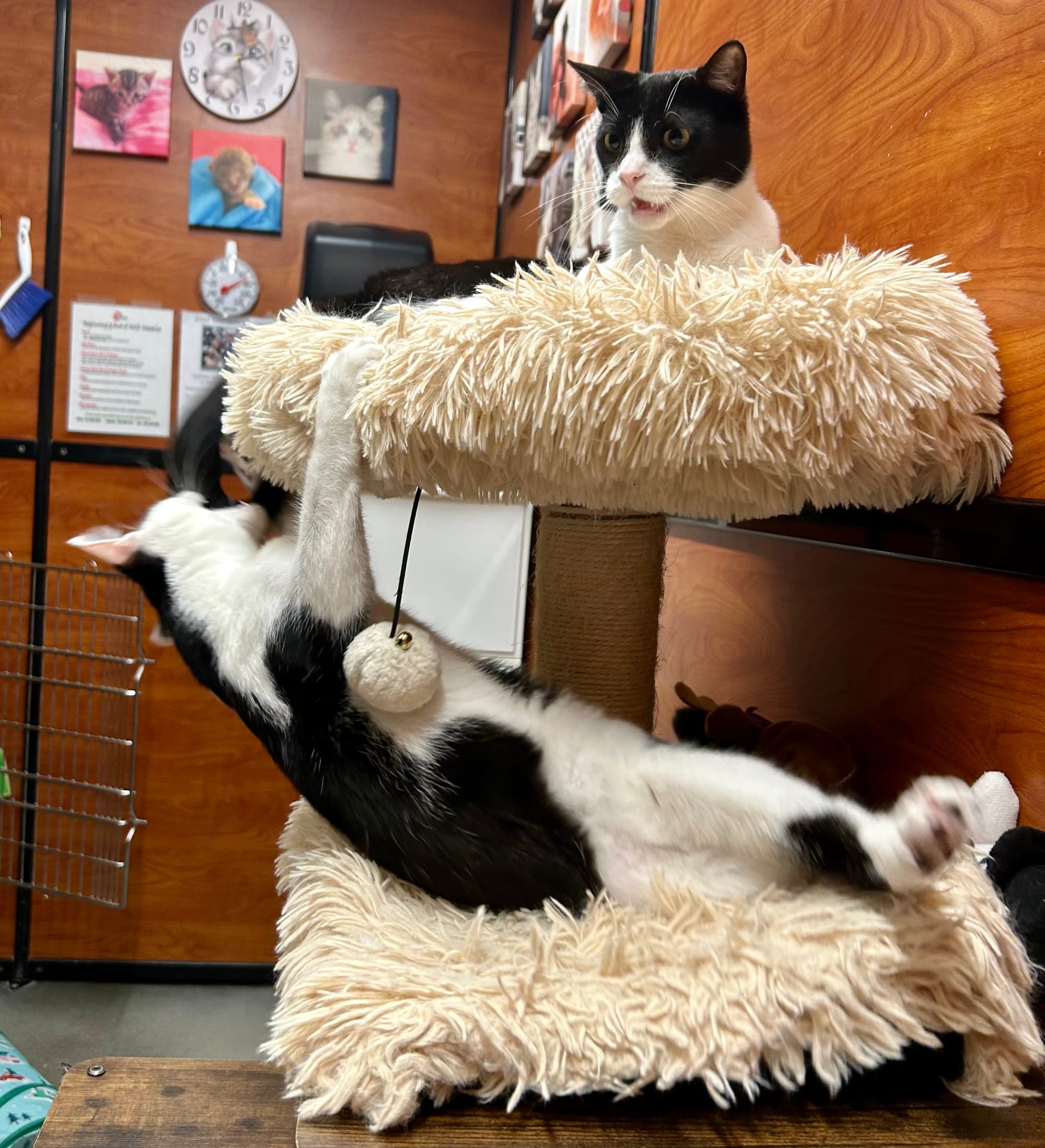
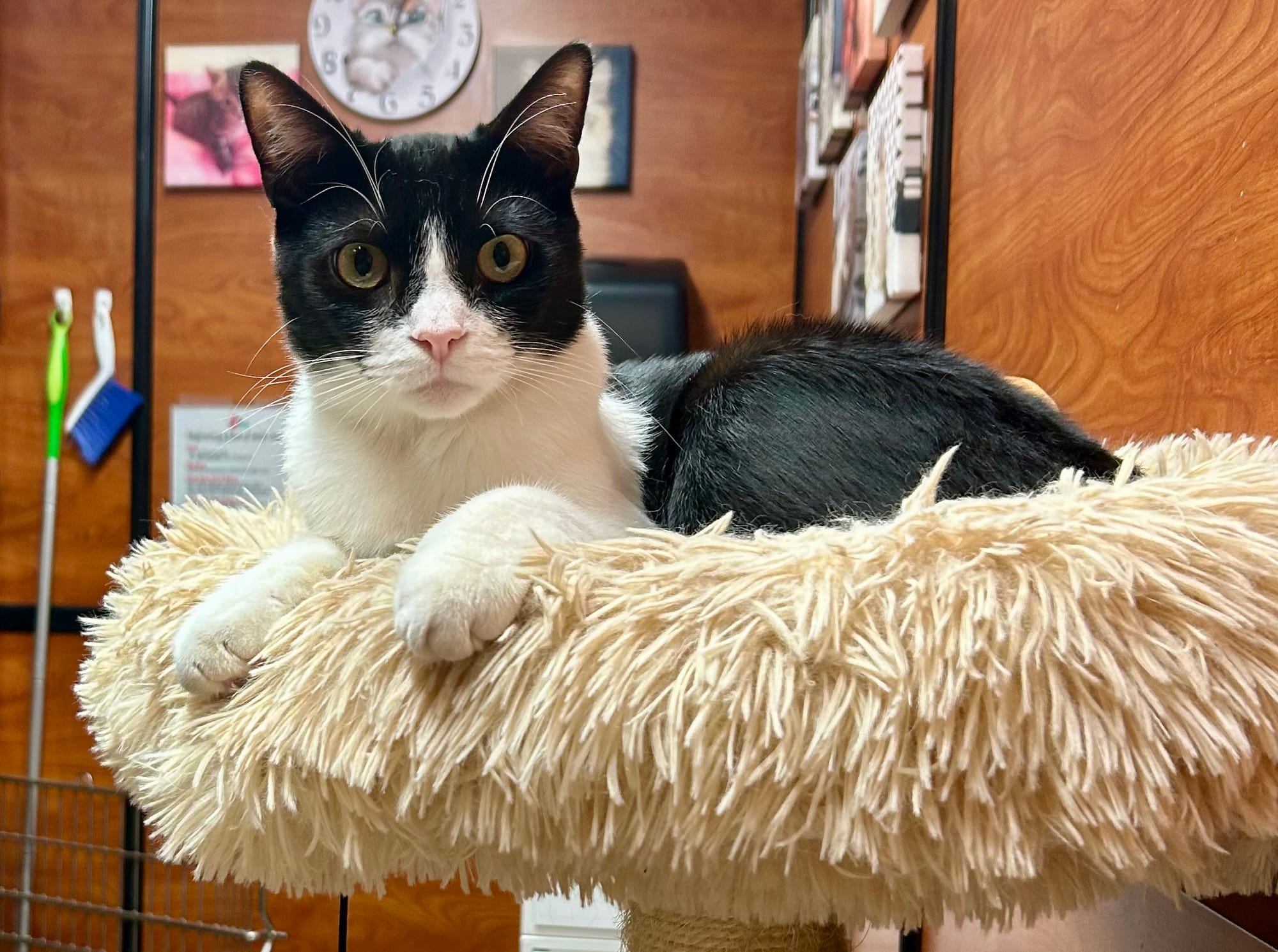
David wants to be near you in case you need to pet a cat, He’s affectionate, playful and smart. He enjoys treats and interacting with people. He would love to learn your routine so he can be your perfect companion. If you are considering two companions (two for the price of one!), David has spent his life so far with his brother, Walter, and enjoys his company. Check out his photo on the adoption link. David can also be adopted alone.

Or you could adopt David with Dottie! Dottie is graceful and ladylike yet playful. She enjoys playing chase with a laser light and any type of wand toy. This beauty has agile moves and will catch her “prey” every time! She loves to hang out with her siblings and foster siblings. She’d do best with another playful animal in her home — like David!
Robin. Video by Kate Karp
Or like Robin! Robin is sweet, graceful, agile and so much fun! She loves her feline playmates and would like a friendly cat or dog in her new home. She’s used to adult cats and small dogs and is a perfect age to go home — she’s still officially a kitten but without the crazy energy. She deserves a home of her own … how about yours?
TAIL-WAGGING AND NOSE-BOOPING EVENTS
Your New Year’s resolution: I will volunteer at a shelter or rescue
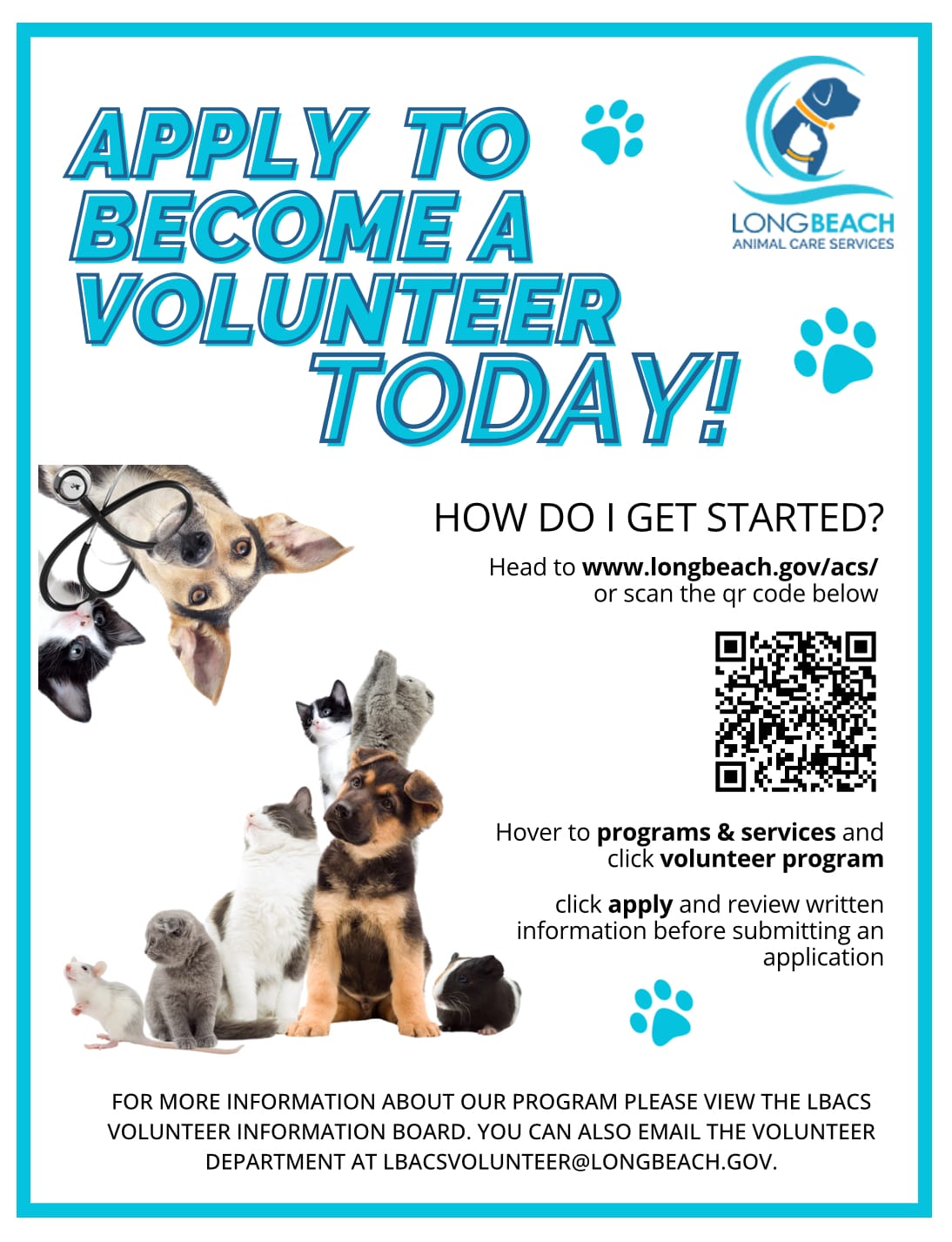
Animal shelters and rescues are typically understaffed and underfunded. They rely on volunteers who love animals and want the best outcome for them to walk dogs, change litter boxes, transport them for medical care, help with paperwork and do any other task that they need done. If that sounds like a good way to spend your spare time, access this link, also at the end of the article. It lists shelters and rescues as well as resources where your help will be welcome!
Drag Bingo fundraiser for The Little Lion Foundation
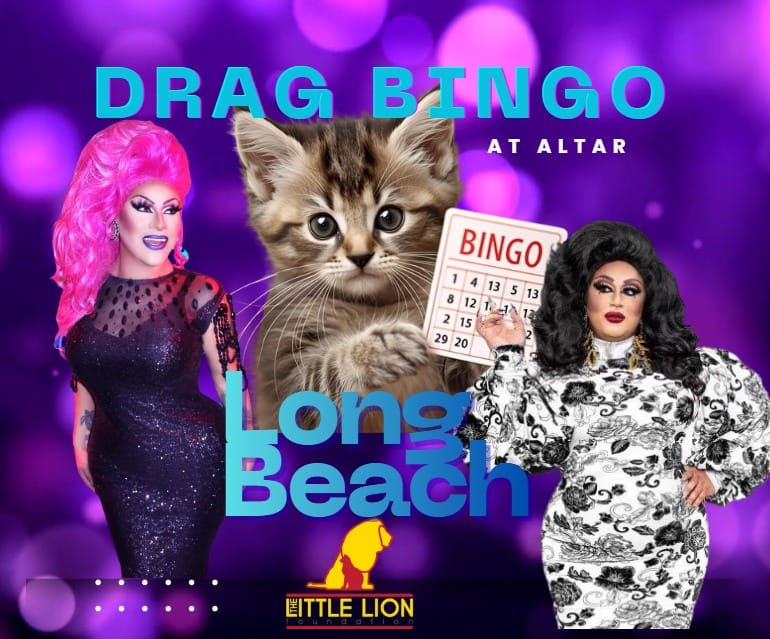
Caring for homeless, newborn or sick kittens can be a drag, but you can make it so in the best way possible by attending The Little Lion Foundation’s Drag Bingo event and raise funds for caring for these kitties! The purr-fectly entertaining evening features local icon hosts Mia Anastasia Farrow and Robbie Osa, who’ll keep the energy as high as an orange cat with zoomies! You’ll enjoy singing, sipping on cocktails, munching goodies, shopping the vendors and, of course, shouting “Bingo!” All proceeds from ticket sales will be donated to support Little Lion’s local cat rescue programs.
Drag Bingo will take place Friday, Jan. 12, 7 p.m.–10 p.m. at the Altar Society Brewing Co. in Downtown Long Beach, 228 Pine Ave. Tickets from $33.85, available here. Early bird discount through Dec. 31; bar and food available but not included.
LBACS marches in the Dr. King parade
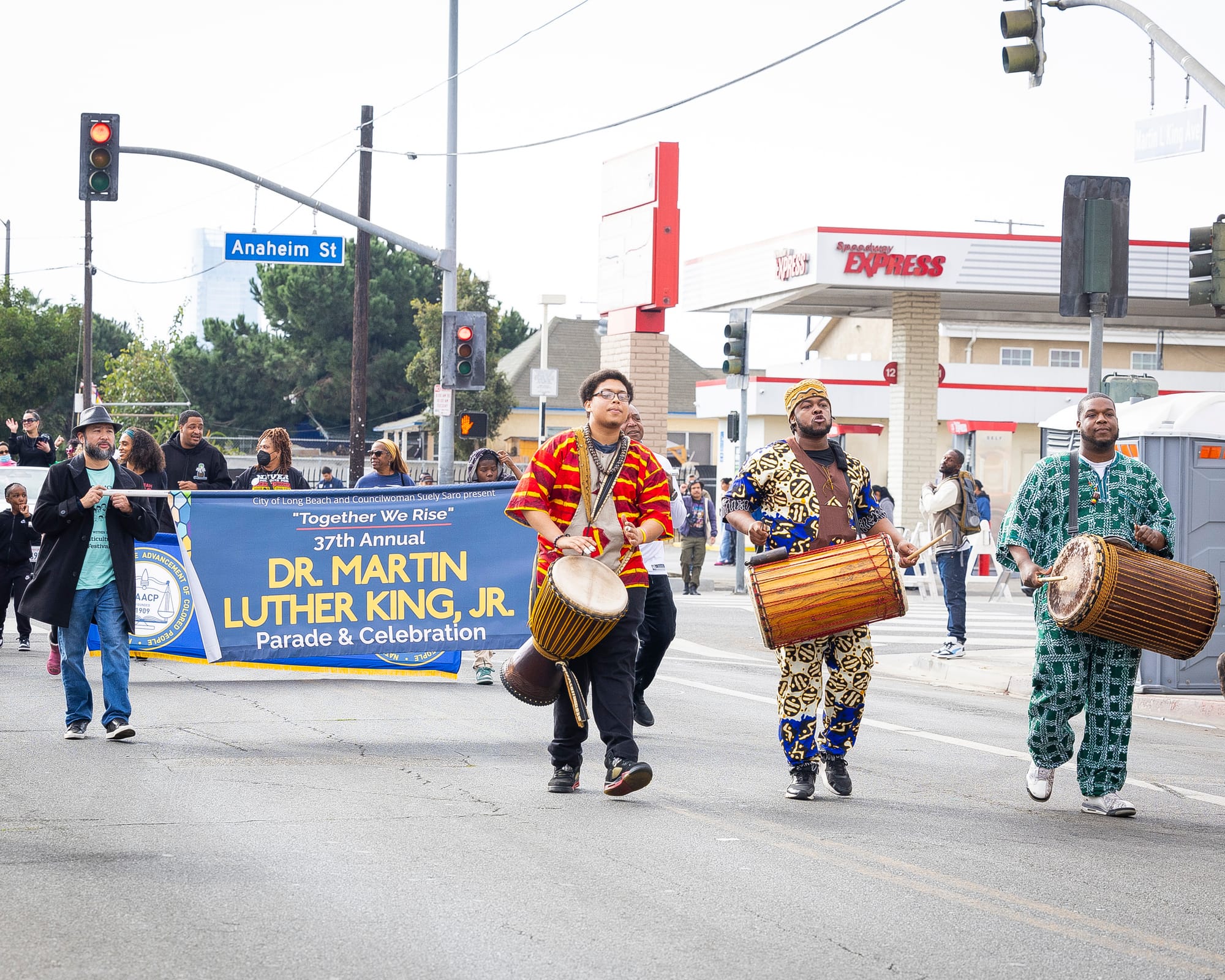
The city of Long Beach and the office of Sixth District Councilwoman Dr. Suely Saro proudly present the 38th annual Martin Luther King Jr. Parade and Celebration, a family-friendly event honoring the life, legacy and values of Dr. Martin Luther King Jr. Our shelter at Long Beach Animal Care Services (LBACS) will trot along a few dogs. A celebration will follow that will include a main stage with live entertainment, a kid zone, and food and merchandise vendors.
The parade kicks off at 10 a.m., Saturday, Jan. 17 at the intersection of Martin Luther King Jr. Avenue and Anaheim Street. The celebration runs from noon to 5 p.m. at Martin Luther King Jr. Park, 1950 Lemon Ave.
Need a low-cost veterinarian, information about trapping community cats, places to volunteer, pet food, veterinary assistance, rescues and shelters to adopt from — anything pet related? Follow this link for resources. Please add your own ideas in the Comments section.
We need your support.
Subcribe to the Watchdog today.
The Long Beach Watchdog is owned by journalists, and paid for by readers like you. If independent, local reporting like the story you just read is important to you, support our work by becoming a subscriber.