Long Beach Airport is all in on Southwest. Now, the airline has shed everything that set it apart
Free checked bags and open seating are gone, and so are five of its Long Beach flight slots, which the company gave up in February. Two were picked up by Hawaiian.

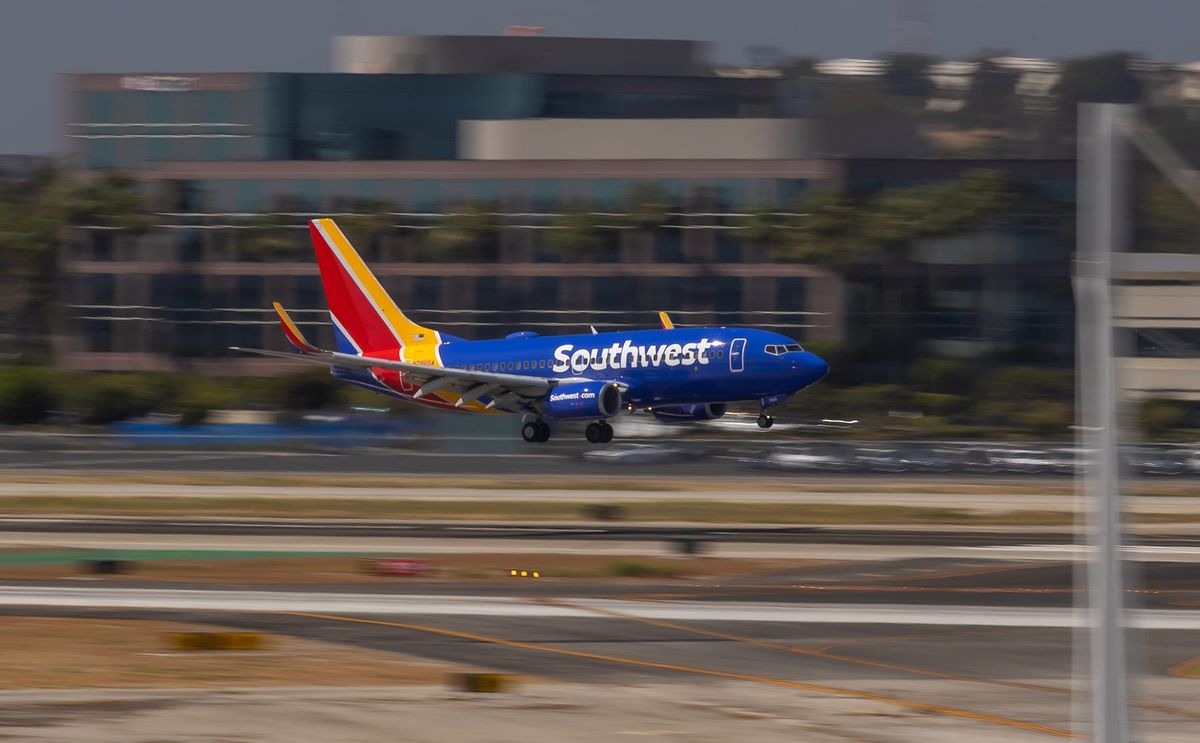
For decades Southwest Airlines found its success in a business model that set it apart from other carriers, consistently ranking it among the top domestic airlines in the country. But starting last year, the Texas-based carrier abandoned all its practices that made it stand out.
And customers have not been quiet about it.
As the most prominent carrier at Long Beach Airport, it remains unclear what these changes and passenger pushback will mean for the small municipal airport, which will likely bring in less revenue than expected this year due to broader challenges in the commercial aviation industry.
In early 2025, Southwest took away its free checked bag policy. In January, the bigger changes came: The airline instituted assigned seating after 55 years of its open-seating model and began requiring plus-sized passengers to purchase an additional seat ahead of their flight.
Financially, the changes have been a boon for the company, which raked in $227 million in profits during the first quarter, according to its recent earnings report, marking a significant improvement from the $149 million in losses posted in the first quarter of 2025. Operating revenues in the first quarter of this year were $7.2 billion, up nearly 13% year-over-year.
During the earnings call, Southwest President and CEO Robert Jordan boasted that the first quarter success is “proof that our existing customer base, and the new customers we are attracting, want and are willing to pay for our new products and our product attributes. In other words, they love the Southwest product.”
But the financial gains have not come from an increase in passenger volumes, which have been relatively flat this year. In January and March, Southwest’s air traffic only increased 3% and 1.2%, respectively, according to Flight Business Intelligence. February data was not available.
Instead, the increased revenue comes from charging for checked bags and up-charges for better seats and other perks. According to Chief Operating Officer Andrew Watterson, the number of customers who were upsold increased from 20% in 2025 to 60% in the first quarter.
Basic ticket holders do not get to choose their seat during the purchasing process, regardless of how far in advance a trip is booked, and are instead assigned a seat at a check-in. They also board last.
The upsells come in three tiers, according to the company’s website, and include improved boarding position, same-day flight changes, flights being refundable rather than just credits if you cancel, express lines and, depending on tier, being able to choose your own “standard” seat, a “preferred” seat and even an “extra legroom” seat. The top tier, “Choice Extra,” also gets two “free” checked bags and one free premium drink (but only on flights that are 251 miles or more).
While the changes to the company’s business model have done wonders for Southwest’s bottom line, especially as the industry struggles overall (see the impending bankruptcy of Spirit), many customers have lamented the loss of what was.
Customer Complaints
One customer explained how she had a scheduled 4 p.m. flight during a work trip but, having wrapped early, arrived at the airport hours early. A 1:30 p.m. flight was preparing to depart with seats to spare but she was not able to switch to the earlier flight because she had not purchased an upgraded ticket.
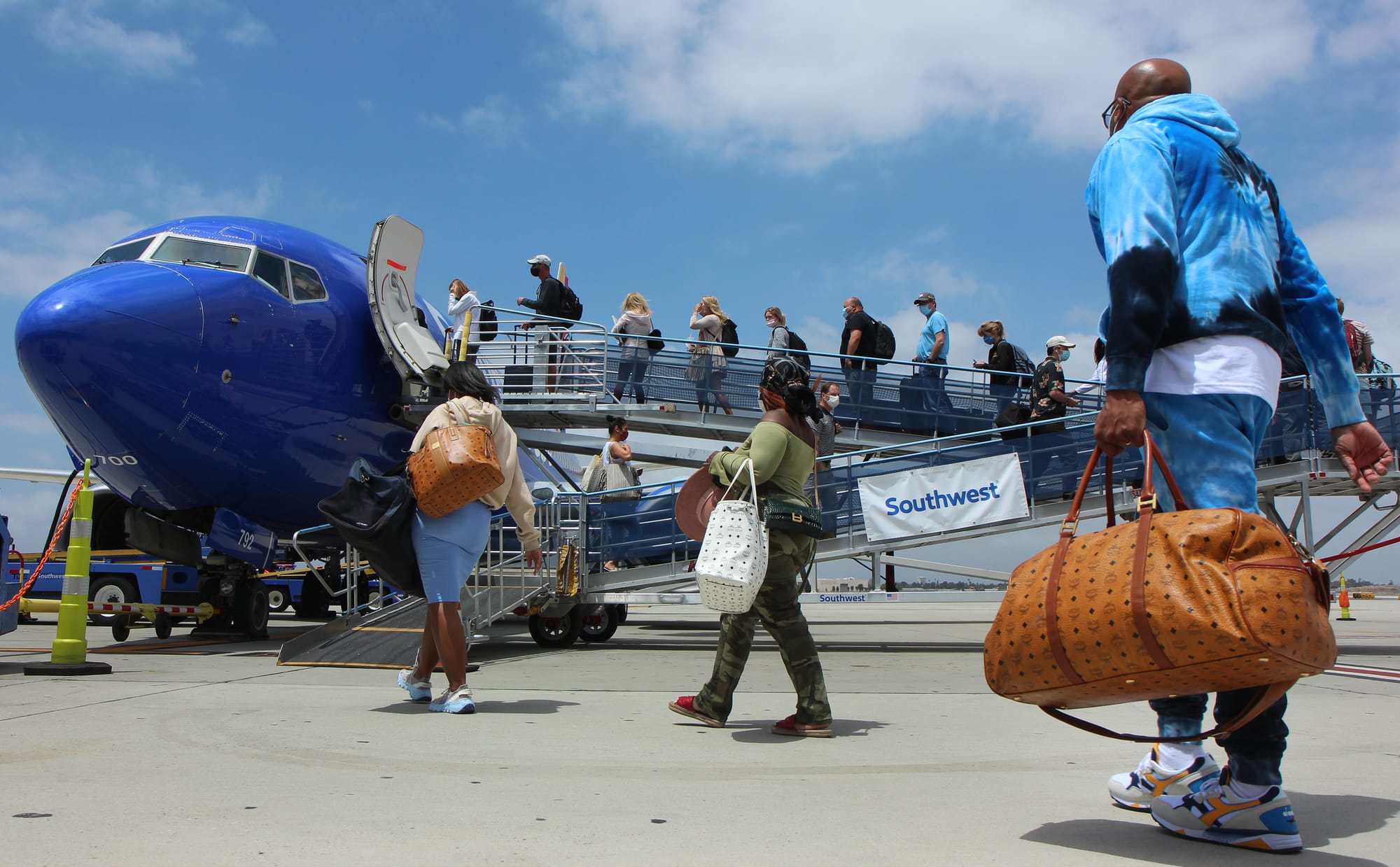
“The basic, regular fare is not enough to have a decent, enjoyable experience anymore,” she said. “If you want decency, if you want something to be enjoyable or not a hassle, they will pull money out of you. Southwest is digging their own grave right now.”
The biggest problem with the new plus-size policy, according to online customer complaints, is that it appears to be based completely on the subjective opinion of the airline’s on-site agents. One flyer described a trip during which she said agents bullied her into purchasing an additional seat.
“What is the process for you deciding that? Just looking at me?” she asked. “You have no clue if I can fit in the seat or not.”
Ultimately, the woman was forced to purchase another seat for $176 despite never needing a second seat on previous Southwest flights. The change also moved her away from the upgraded seat she had originally paid for.
“You can’t just look at someone and determine that they can’t fit in a seat. ‘Cause, guess what, my fat ass did fit in the seat. My armrest went completely down” she said. “It’s absolutely disgusting, discriminatory, [and] predatory.”
She lambasted the policy as inconsistent, noting that, on her return flight, her size was not mentioned by a single Southwest employee. She said the airline is essentially shaming and humiliating people into buying an extra seat because they do not want to bring additional attention to themselves by pushing back.
In a post on reddit, another Southwest customer recounted a flight experience on a plane that was only 25% full. Despite having ample empty seats, half of the passengers were clumped together in a few rows near the center of the plane.
One redditor responded saying the airline was “maximizing discomfort for those who won’t pay up. This ain’t the old Southwest.”
Passengers also have had issues with overhead bin availability amid the policy changes, including upgraded flyers having the bins over their more expensive seats taken by earlier boarders, according to a Newsweek report.
The backlash has been enough for EVP Chief Customer & Brand Officer Tony Roach to send a letter to customers to let them know the feedback has been “invaluable” and that the company is “refining the experience to reward your loyalty while delivering the industry’s best operation reliability and hospitality.”
The refinements, according to Roach’s March letter, include adjusting how boarding groups are assigned, increased overhead bins and designated overhead bins for upgraded seats.
What’s this mean for Long Beach?
It’s unclear what, if any, effect the Southwest shift may have on Long Beach — passenger volumes could decline or customers may put up with the policy changes in favor of the convenience of the smaller airport over LAX.
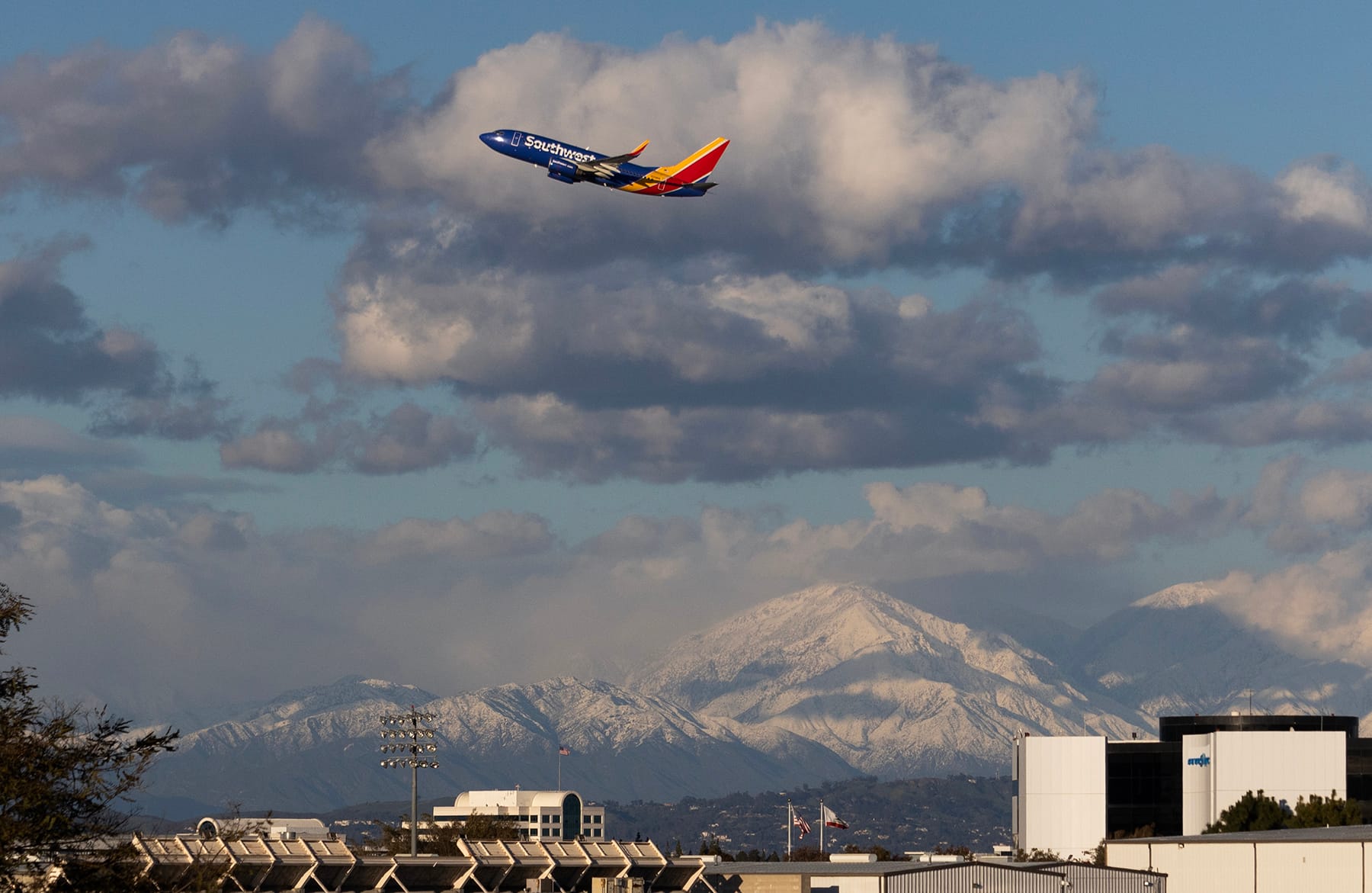
Southwest began service out of Long Beach in June 2016, holding only four of the airport’s limited daily flight slots. Since JetBlue abandoned Long Beach Airport in 2020 after years of friction with the city, Southwest has grown its footprint exponentially, eventually working its way up to holding 50 of 58 daily flight slots.
Now, for the first time in 10 years, Southwest has relinquished slots. According to an April 13 city memo, the airline gave up five of its daily flight slots.
“The airline did not provide a specific reason for their decision,” according to airport spokesperson Hannah Ortiz. “Typically, choices are based on a mix of considerations such as demand on specific routes, economic conditions, aircraft inventory, and other strategic network changes in the Southern California region.”
Of its daily flight slots, Southwest regularly utilizes 39, according to airport spokesperson Lindsey Phillips.
Airport officials notified carriers on the flight slot waitlist of the newly available slots, but Hawaiian Airlines was the only to make a request. As a result, Hawaiian was awarded two more daily flights.
Hawaiian did not respond to questions about how it plans to use the flights, saying only that “Long Beach is an important market in our combined network, and we will have more to share soon.” The airline currently flies to Maui and Honolulu.
After the shakeup, flight slot allocation sits at: Southwest (45), Hawaiian (4), Delta Air Lines (3), and UPS (2). Four flight slots are unallocated, according to airport officials.
Breeze Airways, WestJet, Allegiant Air and Delta are all on the waitlist but passed on taking additional flight slots.
Regarding the backlash Southwest has faced for its recent policy changes, Phillips said airport staff has not received direct feedback. If customers do have questions or concerns, she said they should reach out directly to the airline.
“Airlines are key partners, and their performance contributes to overall airport activity and revenue,” Phillips said. “While the travel industry continues to evolve, we are not focused on any one airline’s policy changes and instead take a broad, long-term view of the market.”
The uncertainty comes at a bad time for the airport as it is already expecting less revenue than anticipated during that last budget season. In a September memo, Director Cynthia Guidry noted that commercial passenger activity accounts for 80% of airport revenue and that airline schedules for 2026 saw a 15% reduction.
“While passenger demand has remained relatively steady, the aviation industry continues to face broader challenges, including economic uncertainty, higher operating costs and aircraft supply constraints,” Phillips said. “The airport remains on stable financial footing and is proactively managing through efforts such as monitoring slot utilization, attracting airline service, growing non-aeronautical revenue and controlling expenses to maintain long-term resilience.”
We need your support.
Subcribe to the Watchdog today.
The Long Beach Watchdog is owned by journalists, and paid for by readers like you. If independent, local reporting like the story you just read is important to you, support our work by becoming a subscriber.