Why does Long Beach flood during rainstorms?
After decades of building on and paving over permeable ground, the old drainage infrastructure is overloaded — and hundreds of millions of dollars of improvements remain unfunded.

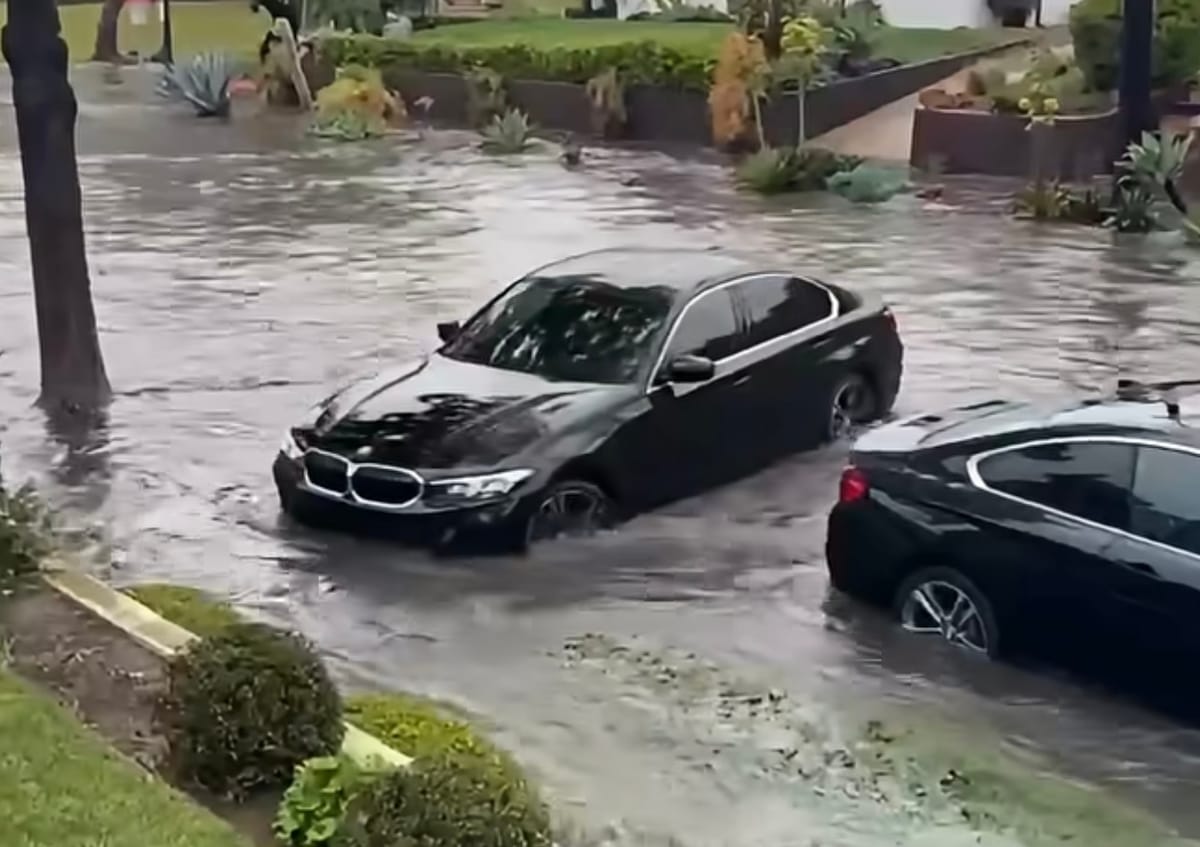
In the last few rainstorms, Long Beach residents experienced flooded streets with water rising well above curb-level — and not just on the Peninsula and other ocean-adjacent areas. Bixby Knolls, North Long Beach and even the 710 Freeway, flooding was seen across the city.
“Holy shit,” one resident said as they filmed the river that used to be their residential street in Cal Heights. Another person filmed a waterlogged 710 Freeway while playing Johnny Cash’s “Five Feet High and Rising.”
Historically, a lot of the land area that is now Long Beach was a natural floodplain, according to David Pepper, a professor of geography at Cal State Long Beach. Prior to being channelized, the Los Angeles and San Gabriel rivers were naturally flowing waterways. Like all rivers, during heavy rain periods, they would rise over their banks.
While the channelization of the rivers keeps them from spilling out into the communities they run through, similar urbanization now causes parts of the city to flood during heavy rainstorms, Pepper said, as paving over land reduces water infiltration.
“The original infrastructure hasn’t kept up with the level of development,” Pepper said. “There’s so much impermeable land.”
Pepper’s explanation is in line with the city’s own assessment. In a Feb. 18, 2025 presentation to the City Council, city staff outlined the causes of flooding on city streets. The first listed cause was “changes in land use over time.”
“Increases in impervious and developed areas generate more runoff,” the report reads, adding that the city’s drainage systems were “designed for past land uses.”
Green space is rapidly being covered up across Long Beach and other urban areas nationwide. The push for increased housing is a major contributor, including the addition of accessory-dwelling units in single-family home backyards. Parking demands also play a role, with surface lots being paved and structures going up across the southland.
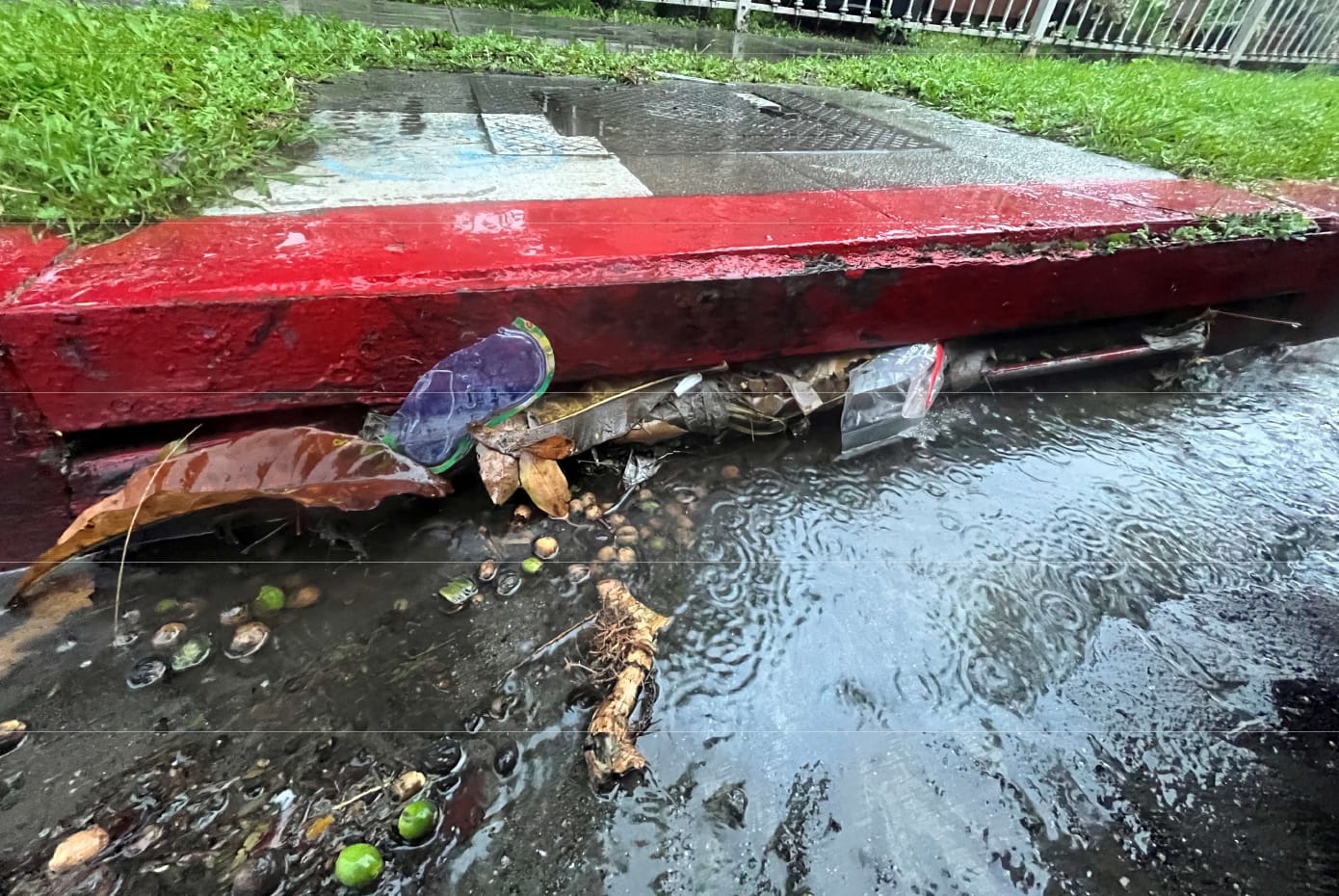
The other reasons for flooding included in the city report are debris clogging drains, pipes and pumps, and damage to pipes, curbs, channels and pump stations.
Pepper noted that climate researchers have been tracking a shift in rainfall intensity, in which many areas are experiencing the same or higher levels of rain in shorter periods of time.
“Rain tends to be more intense, there is more all at once,” Pepper said, explaining that 13 inches of rain spread across 14 rainy days is less likely to cause flooding than the same amount of rain across six rainy days.
According to Climate Central, 88% of the cities analyzed experienced an increase in hourly rainfall intensity 1970 to 2024. The regions with the largest average increases are in the Midwest, the Rockies, the Plains and the Ohio Valley.
Rain intensity in the Los Angeles area has, so far, remained steady, actually showing a 1% decline over the 54-year span, according to Climate Central. But, as Pepper noted, Long Beach does not need to see an increase in rainfall or intensity to experience increased flooding if the amount of permeable ground continues to decrease.
One of the problem areas during recent rainstorms was the 710 Freeway, which saw waters rise more than a foot in some areas, shutting down multiple lanes and even leaving cars stranded. When asked if the city was aware of why certain sections of the freeway have been flooding, Storm Water Manager Colin Averill noted that it falls under the jurisdiction of Caltrans. When asked if the city has at least engaged Caltrans on the issue, Averill reiterated that freeways are not the city’s jurisdiction and said all questions should be directed to the state agency.
Regarding the most recent flooding, a Caltrans spokesperson said it was caused by a combination of “unprecedented amounts of rainfall,” pump intakes being clogged by trash and debris, and three out of four water pumps overheating.
“Caltrans has a project underway to replace all the pumps in the area with new ones,” the spokesperson said in an email to the Watchdog. “This is a complete rebuild of the system, and the project had been scheduled prior to the recent rain events.”
This is not a new issue to Long Beach. A January 2010 story by the LA Times details severe flooding when a three-day storm dumped more than 5 inches on the city. In some areas, water rose chest high, the 710 Freeway flooded twice, tunnels and roads near Long Beach Airport were shut down and classes were even canceled at CSULB.
At the time, city officials said the same thing: The drainage system was overwhelmed.
“It really doesn’t matter how big your storm drain is, when it dumps a lot of water, it’s going to flood,” Long Beach Fire Capt. Jackawa Jackson said at the time.
The city developed a Storm Drain Master Plan in 2005, which had a update in 2018 to include a recommended $332 million in improvements, which remain unfunded, according to Averill. The projects are likely to remain unfunded as the city is facing a $60-$80 million budget deficit in fiscal year 2027, he added.
“Only critical repair projects have been completed due to funding constraints,” Averill said. “Examples include sinkhole repair, storm drain repair and pump station repair, supported by annual budget allocations which have been exhausted each year.”
From FY 2017 through 2026, the city allocated a total of $2 million for sinkhole and drainage repairs and $6.2 million for pump station and storm drain planning and improvements, according to Averill. The funding came from Measure A, a sales tax first approved by voters in 2016.
The city is in the early stages of updating the master plan, with a request for proposals in development, Averill said, adding that the RFP is expected to be advertised this spring.
“The goal is to evaluate capacity and condition of current system assets [as well as] create a framework for future design, construction and maintenance projects, including upgrades, improvements and expansions of the storm drain system,” Averill said.
“The plan will also estimate costs and identify possible funding sources,” he continued. “The estimate from 2018 is expected to increase due to inflation and continued aging of storm drain system infrastructure.”
We need your support.
Subcribe to the Watchdog today.
The Long Beach Watchdog is owned by journalists, and paid for by readers like you. If independent, local reporting like the story you just read is important to you, support our work by becoming a subscriber.