When it rains, it purrs
Though kitten season isn’t quite as cute as it sounds, it can be with the right approach.
Cats, despite being creatures of habit, are unpredictable. Not so, however, are the months known as kitten season. That’s breeding time for cats, and unaltered cats do breed profusely and often..
Kitten season runs between March to October, but in warmer climates like Southern California, it comes earlier and stays later. Even with this year’s cold weather and rain, which can discourage mating but apparently hasn’t, SoCal cats still mark their calendars as well as their territory to mating season.
“During these months, our shelter — and all shelters — have a daily influx of kittens under 4 weeks old,” said Claudia Otis, executive director of The Little Lion Foundation (LLF). “We’ve been doing this for 10 years, and I think that the earliest it started was early February and the latest was mid-March.”
LLF is a nonprofit dedicated to improving the lives of cats and making sure that they have lives to live in the first place. Their programs focus on adoption, fostering, neonatal kitten care and development, veterinary health, shelter partnership and TNVR (trap/neuter-spay/vaccinate/return), which mitigates the seasonal storm of little felines.
And when it rains, it purrs. Otis said that neonatal kittens, with and without their mothers, come in at a moment’s notice to shelters and to rescues, sometimes just when the facility is closing its doors.
“One week ago, in the beginning of February, we had 18 pregnant cats in one week,” Otis said. “Right now, we have two to four spay/neuter clinics a week, and we’re getting at least four or five pregnants a day. Rescues and shelters are inundated daily with very small kittens, and we’re all scrambling to find somewhere for them to go.”
TNVR and clinics for owned cats do indeed help keep the numbers down, but it’s not as if cats only have one litter of two kittens per year. Five is the estimate, and the number of kittens can be anywhere from one to 12 — at times, more. They don’t all survive, but you can’t trap them all. Often, the kittens wind up in shelters and rescues, and they need special care when they do. So, on Tuesday, Feb. 24, Long Beach Animal Care Services (LBACS) hosted an LLF presentation titled “Kitten Care 101.” The event was presented by Otis, LLF kitten program manager Amy Gray, and TNVR coordinator Amanda Barajas and was designed to give volunteers, shelter staff and interested residents the basics of caring for neonatal kittens. A link to the slides is available here.
Otis herself was a few minutes late for the presentation because, well, kittens. Someone had dropped off three newborns a little while before the event began, and emergency lifesaving procedures came first before Otis got on her way. One kitten, sadly, didn’t survive.
“They’re fragile,” Otis said. “Even with their moms outside, the entire litter won’t survive. If they’re brought to our nursery, there’s no guarantee, either.”
In a separate interview, Otis stressed that newborn kittens who seem to have been abandoned may not have been. The mother cat may be out hunting or looking for water, and anyone finding an unattended litter should wait a few hours at a safe distance in case Mom returns.
“Please don’t steal kittens from their mother,” Otis said. “It’s always best to keep the family together. Despite our human skills as foster parents and bottle feeders, we cannot give a neonatal kitten what the mom can give.”
Partnerships are important
“Kitten Care 101” sounds awfully cute, and it can be, but it’s a lot of work. Otis or anyone who’s raised a fragile newborn to healthy adoptable will tell you that it’s well worth the trouble and they’ve done it again and again.
““For me, they’re my heart, just to watch them grow,” Otis said.
Otis began the workshop with an explanation of partnerships between municipal shelters and nonprofit rescues.
“Kitten season is hard because everybody wants to save little kittens, but not everybody has the ability or the time,” she said. “Our city shelter struggles like any other shelter with neonates, and people say, they just kill them, and whatever. [But shelters] just don’t have the staff or capacity to care for them.”
That’s where nonprofits like LLF and the volunteer community come in. LBACS is the main focus shelter for LLF once kitten season hits. The nonprofit offers bottle-feeding classes and TNVR workshops to the community — in 2024, LLF launched the Bottle Brigade to offer temporary foster care for newborns brought into LBACS to give some respite and relief to both kittens and shelter staff.
Basic kitten care
The most important thing to keep constantly in mind when caring for kittens is that at 8 weeks old and younger, they’re the most medically fragile of any type of animal entering shelters and rescues.
“They can crash at a moment’s notice,” Otis said. “They require specialized feeding, warmth and monitoring. Even when they’re eating on their own, they get cold easily. They should never be left alone overnight. Having proper kitten care helps to prevent disease outbreaks in crowded environments.”
Kittens should be warmed up immediately as soon as they’re brought in. Their internal organs won’t allow them to digest anything, and they can die. In a pinch, you can use a blow dryer. The younger the kittens are, the more heat they’ll need. Take care not to overheat them — a page in the PowerPoint presentation gives a chart listing the degree of heat needed for the appropriate age. If the kittens begin moving away from the heat, they either may not need so much heat or they may be sick.
Surgical gloves, smocks, booties and towels must be constantly changed, and cross-contamination needs to be avoided. Their carriers and playpens must be kept clean, and so must their little faces and bodies. Food intake and weight need to be continually monitored.
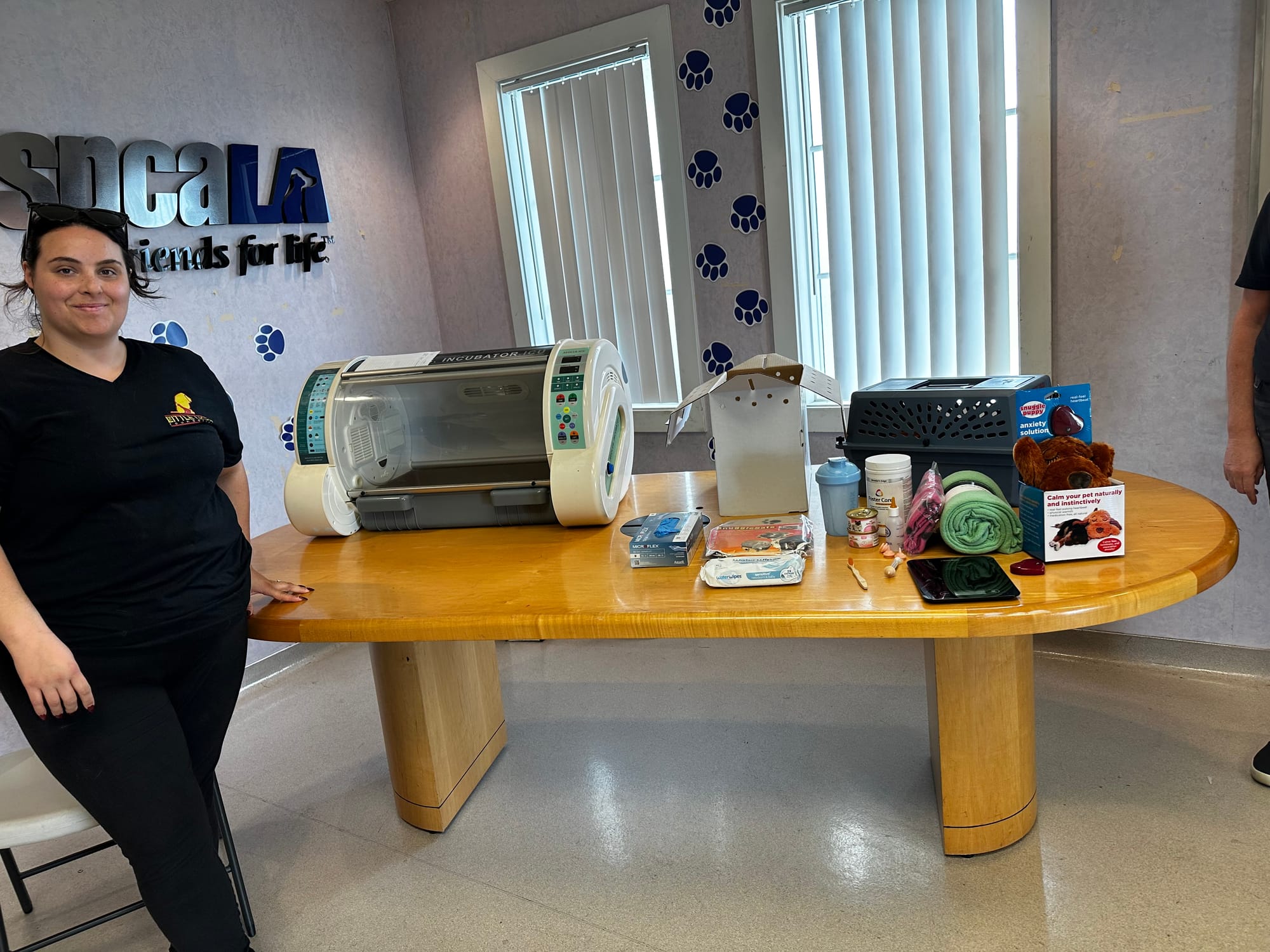
In the photo above, Amanda Barajas displays the supplies needed for kitten care. They include feeding syringes, kitten formula and kitten pate food, a blankie, a soft toothbrush, nursing bottles and nipples. LLF recommends Miracle Nipples, a new brand that mimics the actual nipple of a nursing mammal. Because newborn kittens can’t regulate their body temperature, they will die without a heat source. Heating discs, Snuggle Puppies, a hot-water bottle, or a sock filled with rice and warmed in a microwave work well. Don’t worry about that incubator in the photo — LLF, LBACS and other rescues use them, but you’ll do fine with that warmed-up sock of rice.
Nonprofit cat rescue Helen Sanders CatPAWS regularly provides LBACS with DIY Kitten Care Kits that include the items seen in the photo. They’re provided without cost to anyone caring for newborn kittens.
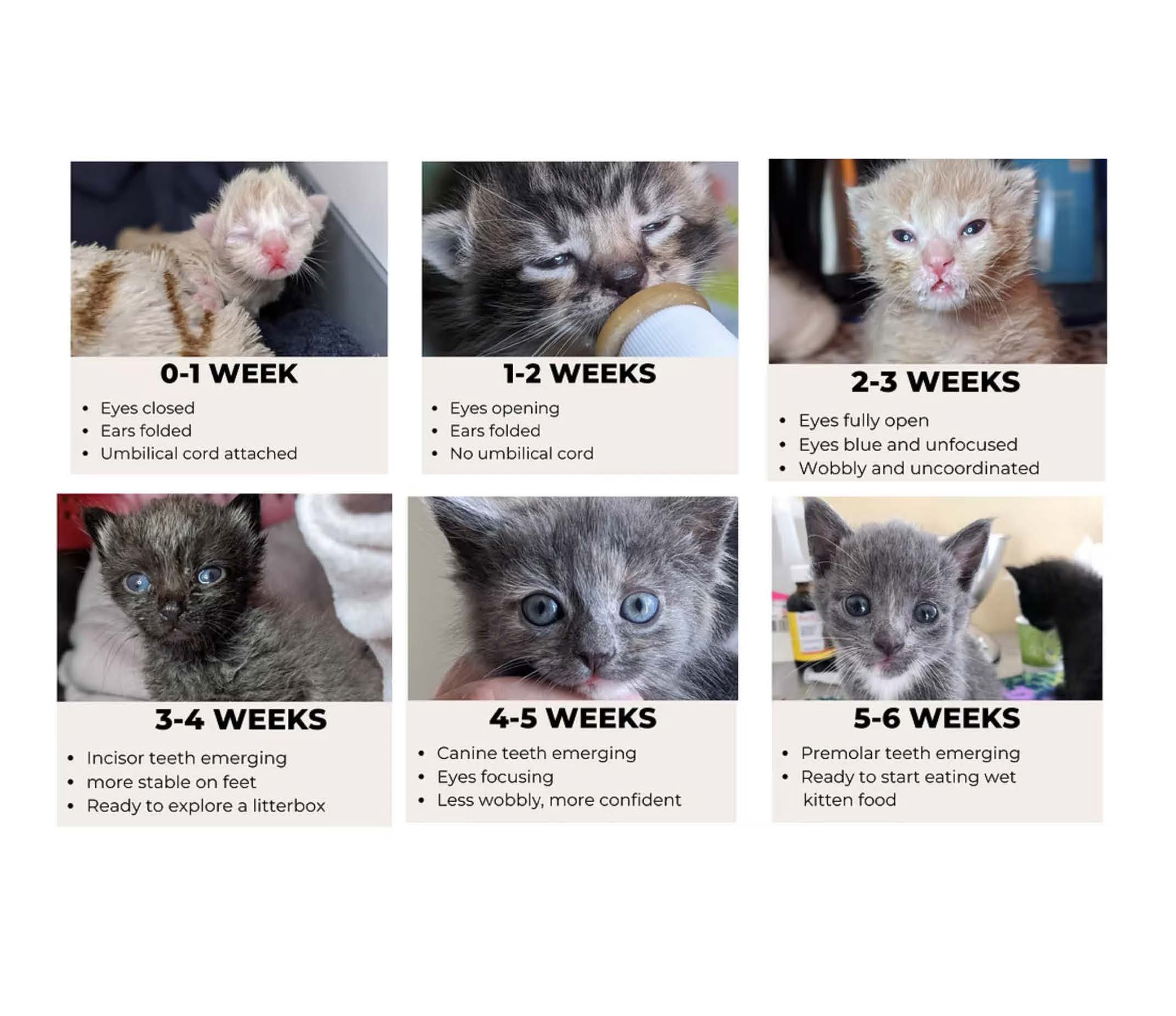
A kitten’s age indicates what the kitten needs regarding food, potty trips, anything. The chart above is a guide for that. Otis advised that two people might see a cat in two different ways: one person will determine a chonky cat to be 3 weeks old, and another will think it’s 4 months, and that could mess with feeding. If there’s any doubt, check the teeth — Incisors grow in at 3 weeks old — or ask a veterinarian or someone at LLF. When in doubt, go young.
“Kittens are so vulnerable every week of their life,” Otis said. “Every day, they need something different.”
Newborn kittens will transition in time to litter boxes, which should contain unscented litter only. During the first few weeks, however, the caregiver will have to express their little anal glands and keep an eye on what’s coming out of it regarding color and texture.
Weighing the kittens daily before and after meals and charting it on a Google sheet or chart paper will track their development and signal any problems. For this, you’ll need a kitten scale, available online for about $16.
Otis detailed the delicate labor of love and feeding, most importantly to always feed newborns on their stomach, which is the position in which they nurse from their mother. Feeding them on their back can result in food aspiration and death. The food should always be warm and served on schedule according to the kitten’s age.
Here’s where you separate the goats from the sheep — people who say “Baa” to getting up every couple of hours to feed a kitten (I can deal with expressing poop glands, but as far as giving up sleep, just call me Shaun). Otis recommended forming a tag team among friends or family members and alternate feeding duties — LLF had in their volunteer cache a family of four who did just that.
You could also care for kittens transitioning from bottle to pate food, showing them how to lap up their meal instead of walking into it. That way, you get most of your zzz’s in. You can also volunteer to foster an already developed kitten and have all the fun of getting them used to what a home is, playing with them, and getting them ready for adoption. Fair warning: that might be an in-house adoption, or what’s known as foster failure.
However old a kitten is, though, you have to be vigilant about major health issues. These kittens were either born in the street or were there in utero without the benefit of vaccinatioins against diseases that can pass to them through the mother or in contact with other cats.
“Major health issues for kittens 8 weeks and under are upper-respiratory infections, diarrhea—the biggest thing, from parasites, which eat them inside; constipation coupled with a hard, distended belly; and having trouble walking,” Otis said. “If they go more than two feedings without wanting to eat, then something’s going on.”
Watch for sneezing, eyes that won’t open, pus in the eyes, and poop that is too light, too dark, too hard or watery, she added.
“We look at pictures of kitten poop all day long,” Otis said.
It’s common for newborns to have fleas, she said. Fleas are parasitic and cause anemia. Otis stressed not to bathe a kitten under 4 weeks old — submerging a newborn in water will lower their temperature and result in death. Instead, put a drop of flea treatment on their shoulder blades and comb it through the fur. Kittens 4 weeks old and older can be bathed gently in Dawn dish liquid and dried off with the trusty blow dryer.
Everything presented in “Kitten Care 101” telescopes what LLF teaches in the kitten classes, but neither the article nor the PowerPoint is a substitution for direct instruction. If you’re interested in saving little feline lives, contact LLF at thelittlelionfoundation@gmail.com, or check their website and Facebook and Instagram pages for workshop announcements.
“It’s all about rallying the troops,” Otis said. “When you teach people how to care for kittens, they’re empowered and they’re going to help our community.”
YOURS DROOLY
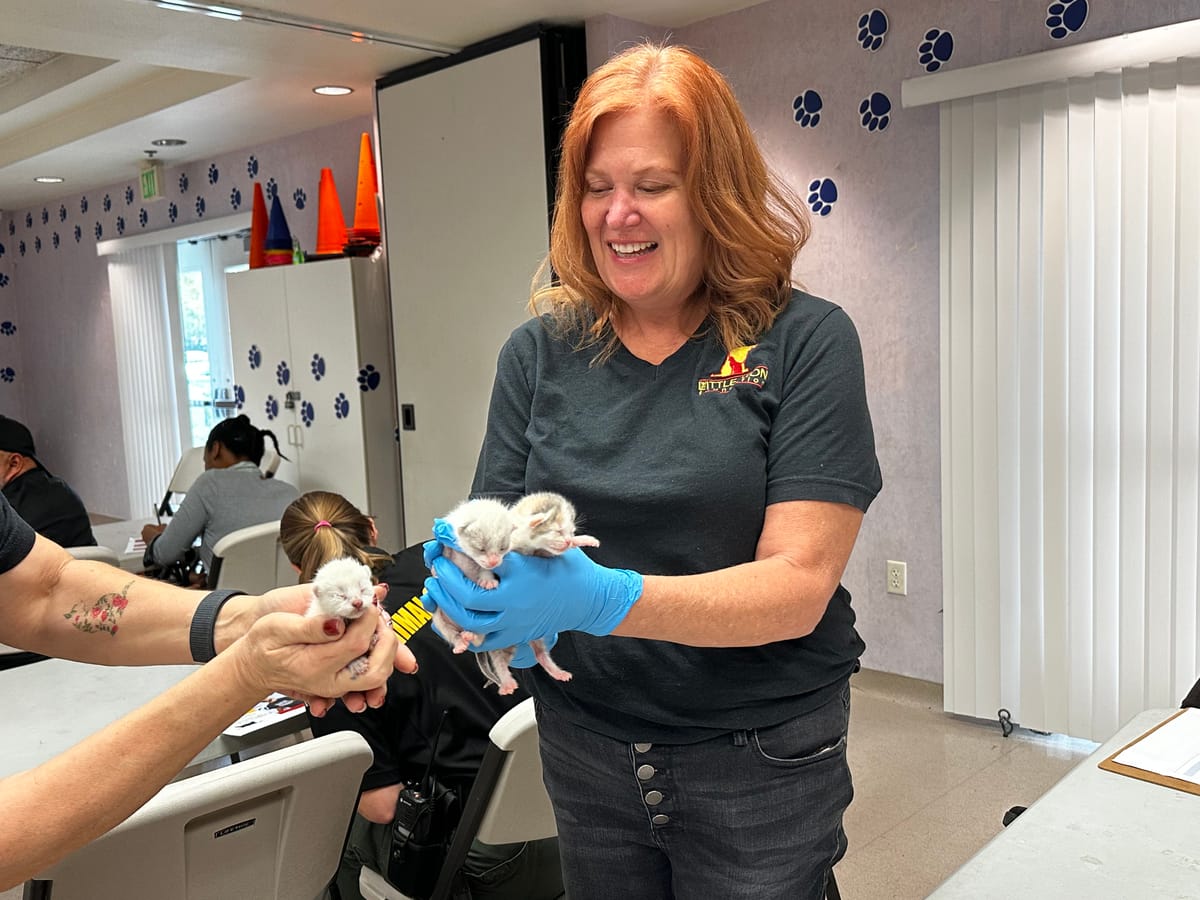
Little Lion’s motto — actually, the nonprofit’s raison d'être — is “Because every cat deserves to roar.” The kittens in the photo at the beginning of the article will benefit from the hard work and care and grow up to be little lions who will find their own pride no matter who they are.
Meet three little lions ready, if to not roar, then to purr their little pointed ears off in a forever home. Maybe that’s yours? Meet them all and find out how to adopt them here.
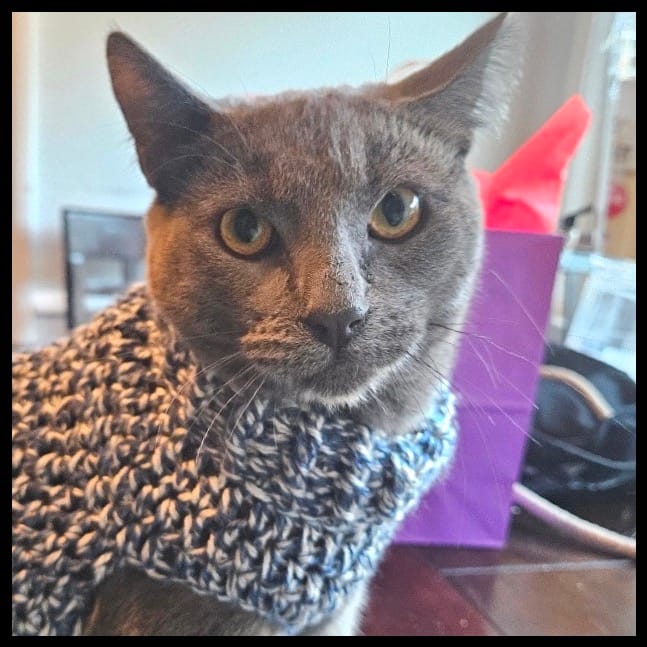
Mr. Tumnus’ friends and foster mommies call him Tummy. Mr. Tumnus is a lean, muscular cat but still acts like a baby — well, he’s still just a teenager at 9 months old! His mommies tell him that he’s going to be a big boy and that he looks like a gray panther. They also say he’s super-handsome, which he is. He loves asking his foster mom for pets and love all day long. Whenever she's sitting on the couch or lying in bed, Mr. Tumnus cuddles up for love. When he’s not being smothered in cuddles, he’s chasing his foster sister Lyra and his foster brother Armani all around the house. Mr. Tumnus would love to be adopted with either of them or go home to a family with a young cat that will play with him!
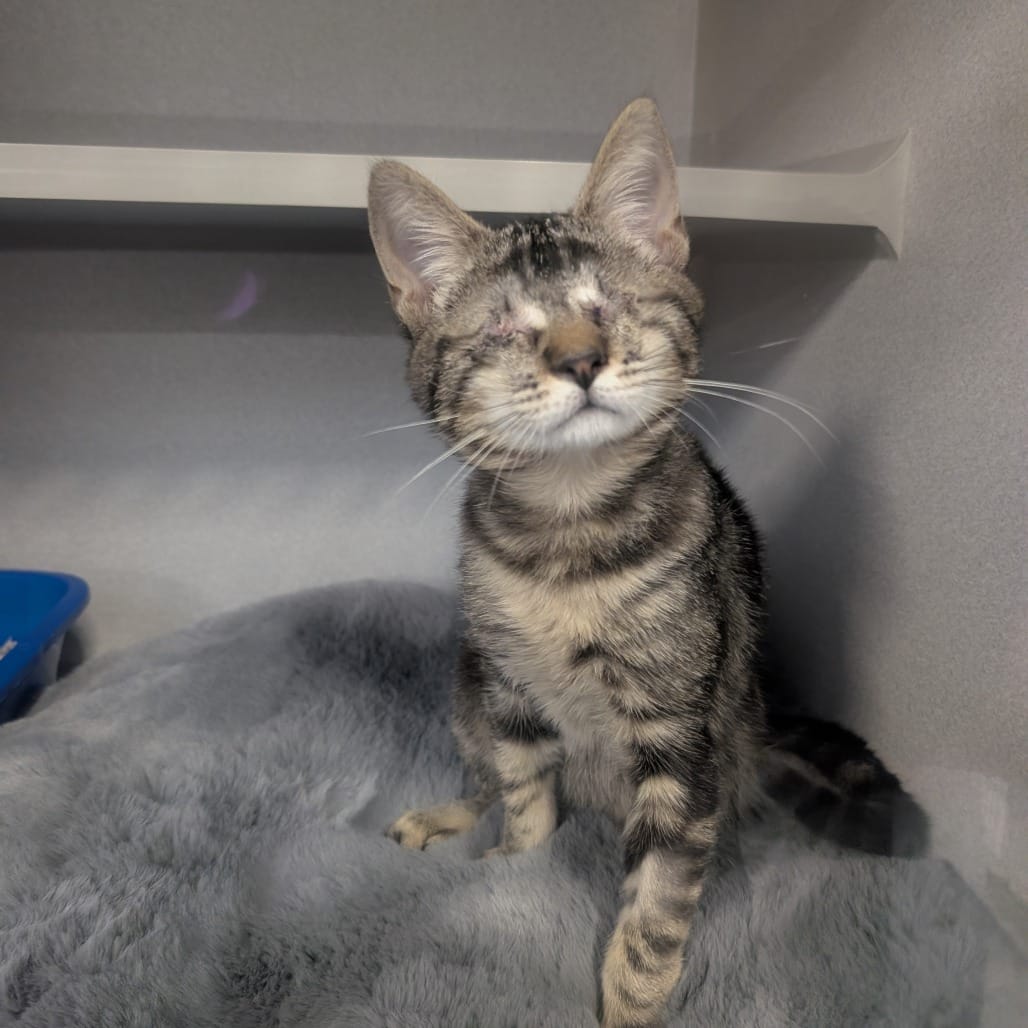
Murdoch is a blind kitten with a huge heart and an even bigger purr. He’s playful, curious, and gets around just fine despite not being able to see. At night, he loves sleeping with his people, and he’s happiest curled up in your arms, purring nonstop. Murdoch gets along great with other cats and will need a confident feline friend to follow and learn from. He’s incredibly lovable, gentle, and ready to bring so much joy to the right home. He’s only 5 months old — if he’s come this far this quickly, imagine what he’ll be able to do when he’s a big boy!
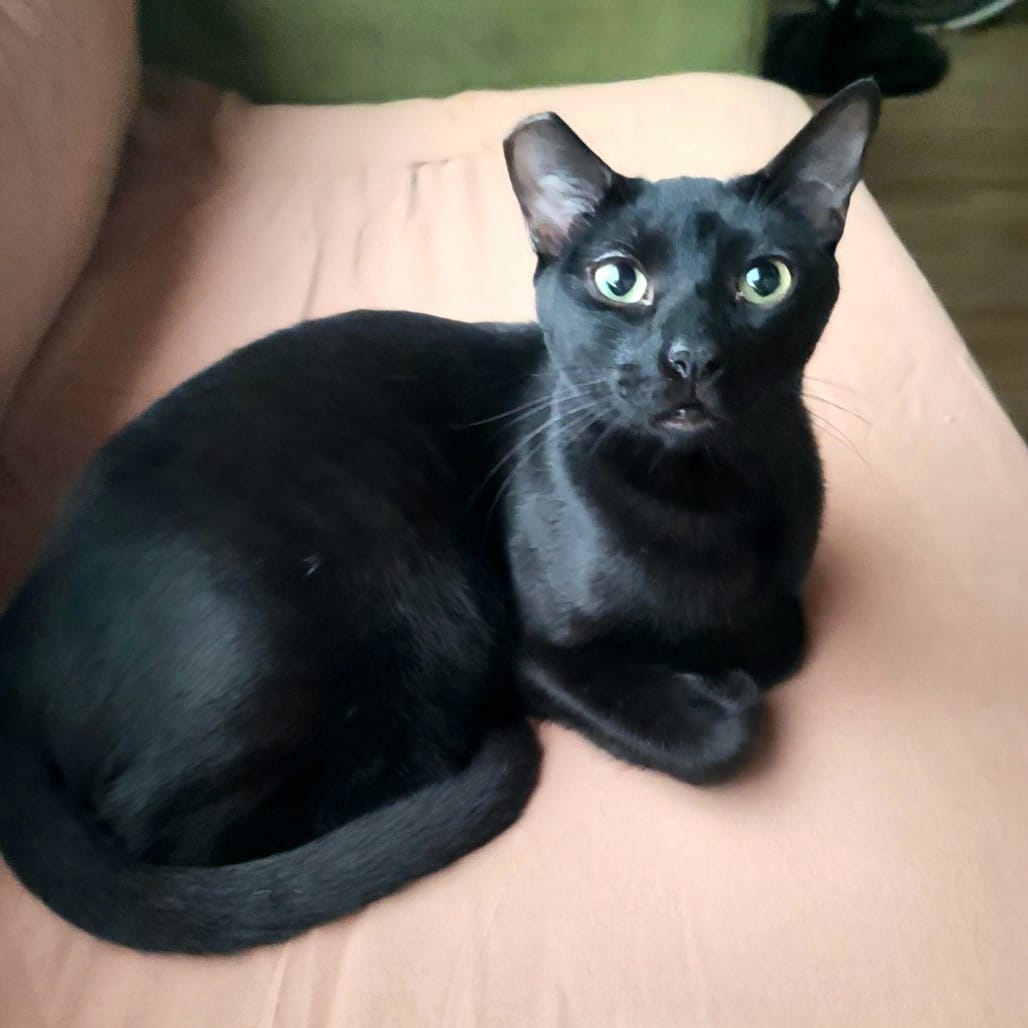
Meet Ruffio — the sweetest boy around! Looking for a lovable, cuddly and talkative new best friend? Ruffio is your guy! This handsome black kitty is full of personality — he’s super affectionate, loves giving kisses, and will follow you around just to be close. Ruffio, almost 2 years old, is not only a people cat — he’s also great with other animals! He loves playing and snuggling with other cats, and he’s dog friendly, too. He’s incredibly smart, very vocal, and always ready to brighten your day with his playful charm and sweet snuggles. If you’re looking for a loyal, outgoing, and affectionate companion, Ruffio would love to meet you!
TAIL-WAGGIN' AND NOSE-BOOPIN' EVENTS
Show Me Your Kitties Cabaret

Get ready for a night of feline-filled fun and fabulousness! Show Me Your Kitties Cabaret is a classic cabaret with a twist: the entire show is cat-themed! The Little Lion Foundation is producing a lineup of dazzling performers, all coming together to raise money for the Long Beach-based nonprofit dedicated to saving the lives of kittens. Join us at the Altar Society for an evening of glitter, glamour, and good deeds as we shimmy, shake, and strut our tails off to support spay/neuter services, kitten rescue, and the Little Lion Foundation's life-saving programs. Not included in ticket prices are competitions for gift baskets, cocktails to swig and a limited menu from the Altar Society. Oh yes — it’ll be Friday the 13th, so wear your basic black-cat attire! All proceeds from ticket sales go to the Little Lions’ little lions!
Show Us Your Kitties Cabaret Doors takes place Friday, March 13, 6:30 p.m.–10:30 p.m. at the Altar Society, 230 Pine Ave., Long Beach. Get there early to get good seats — buy your tickets here.
Free Pet Loss Support Group
The worst day in the life you share with a pet is the day you have to say goodbye forever. Grief is personal on the one hand, and on the other hand, you have a lot of company who get what you’re going through. Helen Sanders CatPAWS rescue gets it, too, and offers a space for anyone who also gets it, who’ll never say to you, “But it was just a cat.” Or a dog, or a rabbit, or a horse, or a goldfish. The members of this group will listen, connect, and support you, and you’ll do the same for them.
The Pet Loss Support Group takes place Saturday, March 21, at 11 a.m. at Bayshore Church, 5100 E. The Toledo, Long Beach. No cost for the meeting, but a count of attendees is needed, so please reserve your space here.
Let’s go bowling with Helen Sanders CatPAWS!

When your cat sits up straight, their little head pointing upward, do you think of bowling pins? When they knock the cup that holds your pens to the floor, do you suddenly yell “Strike!”? If you do, you’ll love this event! Helen Sanders CatPAWS 13th Annual Bowling Fundraiser will give you a great way to focus and vent your energy and support this nonprofit rescue at the same time. Shoes and a snack are included! Hate bowling? Come anyway and cheer your team on! Bid on silent auction items, and win a prize for your bowling skill or lack of same. Funds will support CatPAWS’ spay/neuter programs for community cats and owned cats and will pay the medical bills for the rescued cats, which will turn them into the adorable adoptables you can see on their Adoptions page and in person at the Seal Beach PetSmart. Purchase tickets here.
CatPAWS’ 13th Annual Bowling Fundraiser takes place Saturday, March 21, 3 p.m.–6 p.m. at Westminster Lanes, 6471 Westminster Blvd., Westminster. Ticket prices $45 for bowlers, $25 for non-bowlers. Snack is included in both tickets.
Need a low-cost veterinarian, information about trapping community cats, places to volunteer, pet food, veterinary assistance, rescues and shelters to adopt from — anything pet related? Follow this link for resources. Please add your own ideas in the Comments section.
We need your support.
Subcribe to the Watchdog today.
The Long Beach Watchdog is owned by journalists, and paid for by readers like you. If independent, local reporting like the story you just read is important to you, support our work by becoming a subscriber.