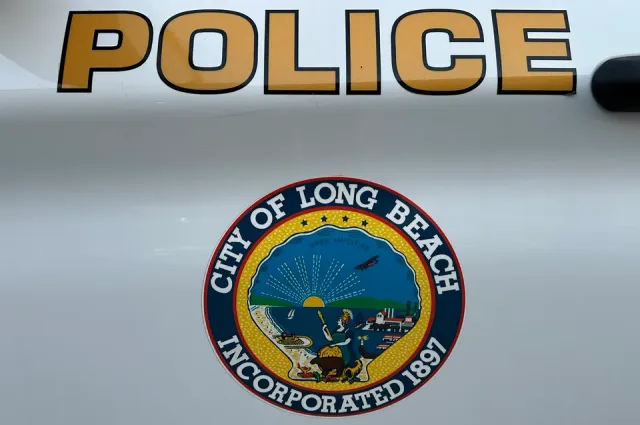
We asked Long Beach officials your questions about ICE
Police Chief Wally Hebeish refused to denounce the aggressive tactics used by federal immigration enforcement agents.

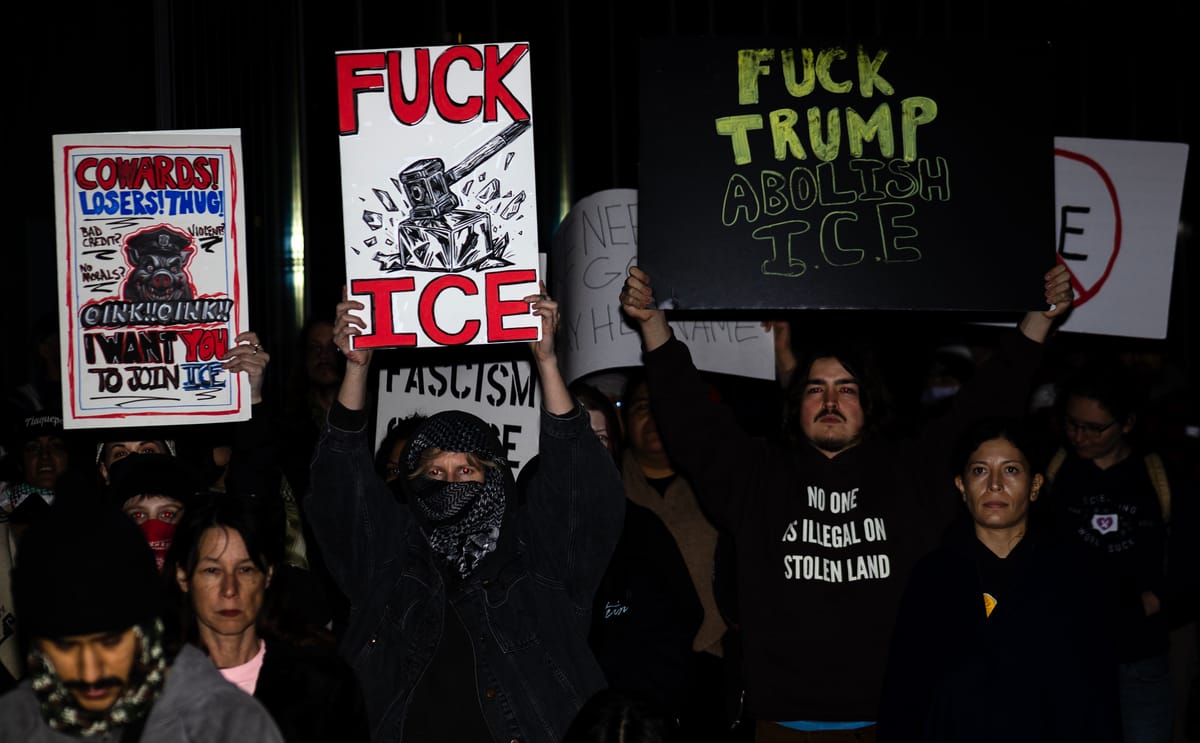
Throughout the country, a growing majority from across the political spectrum are calling on civic leaders to put an end to the rampant campaign of violence and terror being carried out by the federal government.
ICE and CBP agents have killed at least eight people in the field since July 2025. At least 31 more died in ICE detention facilities last year and another six died in the first weeks of January 2026 alone.
Videos showing agents tear gassing families, pepper balling pastors (more than once), slamming women to the ground, pushing protesters into oncoming traffic, dragging a disabled woman from her car and even kicking small dogs saturate social media.
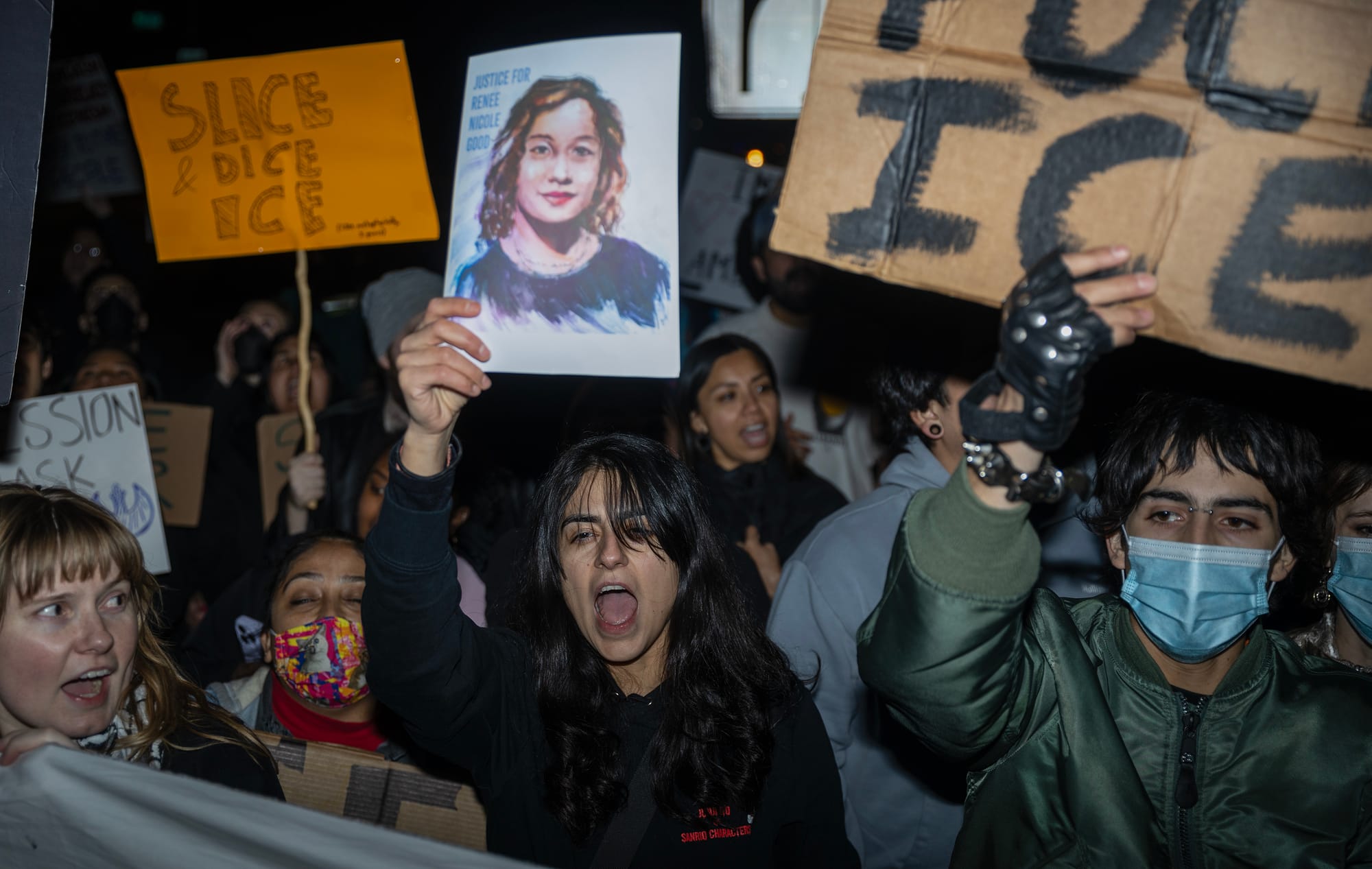
For many, the threat posed by unaccountable federal agents being allowed to conduct extrajudicial operations in U.S. cities ultimately became clear last month when ICE agents were captured on camera shooting and killing two U.S. citizens, Renee Good and Alex Pretti.
Experts and advocates have flatly called both incidents murder.
The American Prospect maintains a tracker of deaths and injuries caused by federal agents. The Trace, a nonprofit newsroom tracking gun violence, has identified at least 20 incidents since last year in which immigration agents shot at people, along with another 41 incidents in which agents held protesters, legal observers and bystanders at gunpoint.
A Wall Street Journal investigation found 13 instances since July of agents firing at or into vehicles — a tactic most U.S. police agencies, including the federal Department of Justice, have trained officers not to use or have banned outright.
In case after case, agents have blatantly lied about the circumstances. In one incident, agents claimed they were attacked with shovels and broom sticks, which resulted in them shooting one of the assailants. The charges against two men were dropped, after it was determined the agents lied under oath about being attacked.
In another case, agents claimed they shot Marimar Martinez five times because she rammed their car with hers. Body camera and surveillance camera footage shows the agents swerved into Martinez before shooting her. Martinez survived and testified before congress.
Agents have been recorded snatching protesters' phones out of their hands even though recording them is protected under the First Amendment. One agent was recorded saying he would “erase” people for yelling.
“We have seen multiple videos of ICE being violent toward responders and legal observers in the state and across the nation, which highlights a disturbing trend in this administration’s willingness to commit violence on our communities,” a spokesperson for Long Beach-based immigrant advocacy group ÓRALE told the Watchdog in an email.
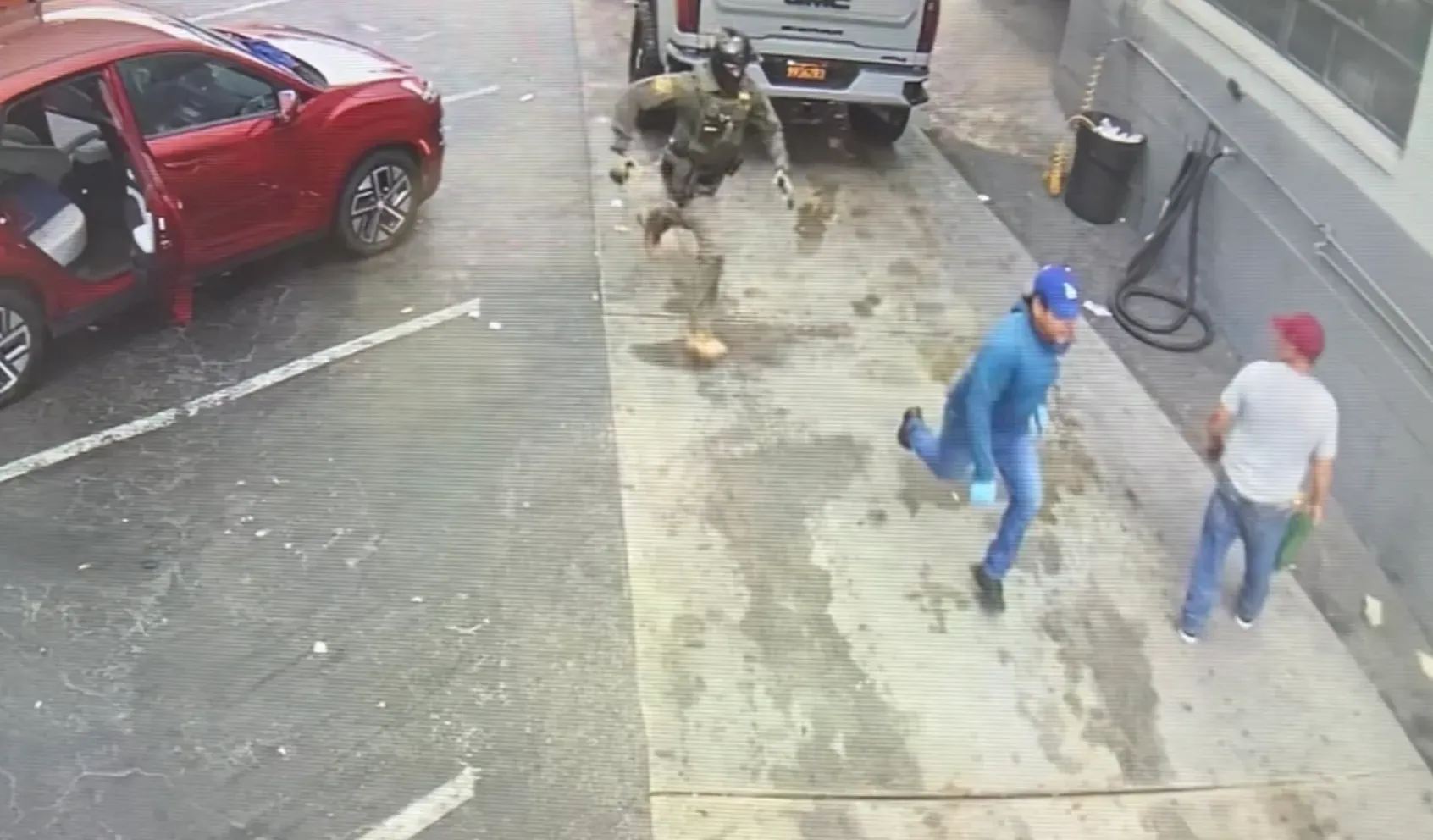
Federal agents remain active in the city, periodically taking people off the street while they work at car washes or as gardeners, or while attending appointments as part of their legal immigration process.
Since immigration enforcement operations began in Long Beach last summer, federal agents have “kidnapped at least 88 people from our community,” according to ÓRALE. The group added that this figure is likely a gross undercount.
Locals have continuously called on city officials to stand up to the federal government and bar federal immigration agents from operating in the city.
Long Beach elected officials have said all the right words; during his State of the City address last month, Mayor Rex Richardson condemned the Trump administration’s immigration policy, likening it to slave catchers of the past and violence against civil rights activists.
“Let me say this unequivocally clear: ICE does not belong in our city, ICE does not belong in the hotels, ICE does not belong in our schools, not in our places of worship, not in our places of work, not in Long Beach period,” Richardson said.
During its Feb. 3 meeting, the City Council voted unanimously to denounce the actions of immigration agents in Long Beach and across the country.
“No more kidnapping, no more fear, no more racism, no more deaths, no more unconstitutional actions by our federal agents,” First District Councilmember Mary Zendejas said. “Oh, one more thing: Fuck ICE.”
Locals have responded — in the council chamber and on social media — that these words, coming after months of unchecked abuses of power caught on camera, are meaningless without action.
“The City of Long Beach can do more to protect our immigrant communities,” ÓRALE said, noting that the money allocated to the city’s Justice Fund is not enough to “meet the ever-increasing need for this resource.”
The advocacy group also said the city should strengthen the Long Beach Values Act, specifically by removing the Senate Bill 54 exceptions it currently includes, “which leaves members of our community open to ICE’s attacks.”
If this work is important to you, please buy him a coffee.
“Expanding the protections of the Values Act to all members of our community is one way the city can show the community that ICE is not welcome in Long Beach,” ÓRALE said.
The people are demanding more, and asking why the city is not taking action. The Watchdog posed those questions — as well as some of our own — to city officials.
Here's what they said:
There have been many documented cases of federal agents using excessive force across the country. Have there been any reported instances of such events in Long Beach?
Long Beach Police Department: Reports of excessive force by federal agents are required to be filed with the Department of Homeland Security and/or Department of Justice. If a resident is interested in filing a personnel complaint, the LBPD refers them to the governing agency’s complaint process.
Additional context: While the department did not answer the question, an ÓRALE spokesperson told the Watchdog that agents have behaved aggressively toward observers in Long Beach, been verbally aggressive, used intimidation tactics including pointing weapons at observers and in one incident, an agent smacked a phone out of someone’s hand.
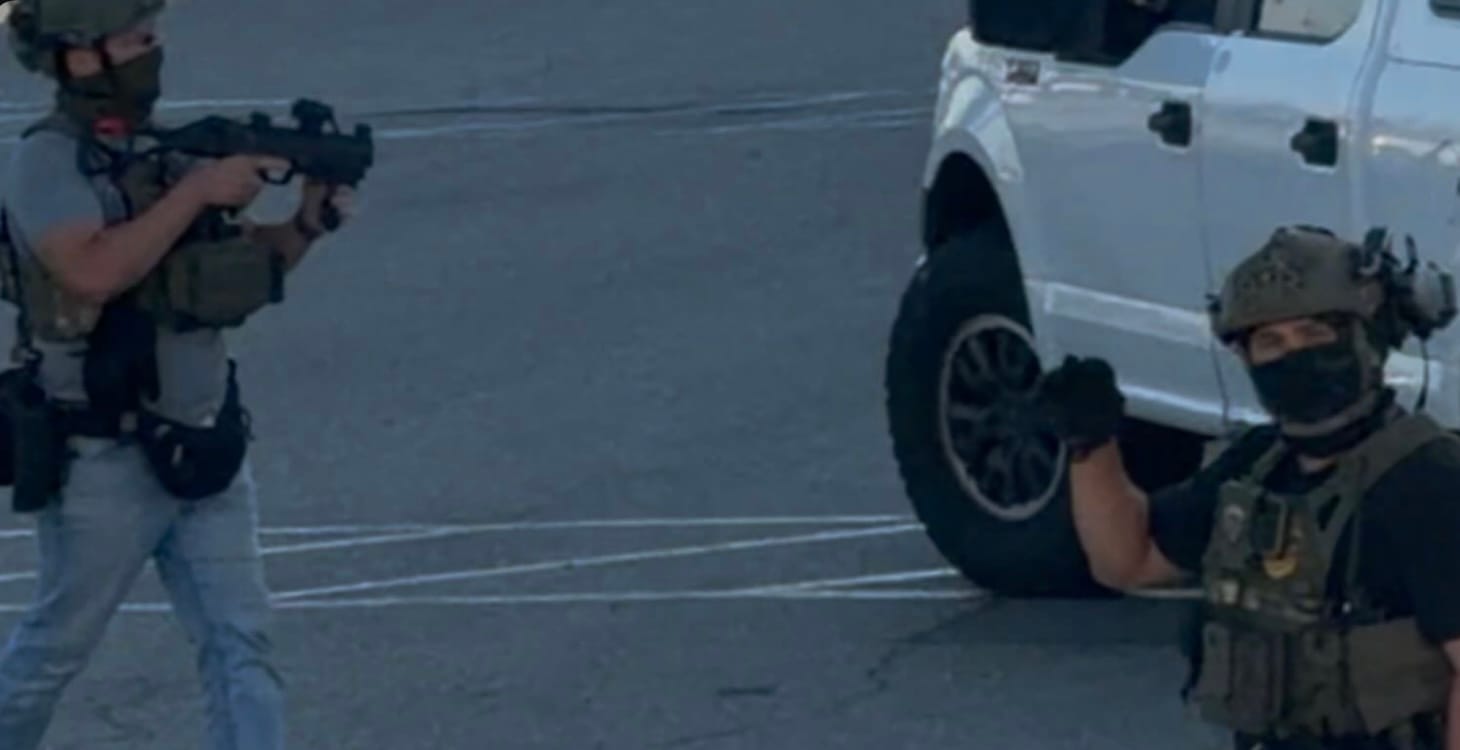
Other police departments have denounced how many of these operations are being carried out with no-cause stops, racial profiling, purposefully shooting protesters in the head/face with “less-lethal” munitions, other instances of assault and battery against protesters/observers and more.
Will Chief Wally Hebeish also denounce these actions?
LBPD: It would not be appropriate for the Chief of Police to comment on incidents in which he does not have all of the details. The Chief of Police is committed to community policing and the LBPD works diligently on strengthening public trust, including the trust of our immigrant community in Long Beach. We're aware of the heightened concern and anxiety during this time and remain committed to the safety of our entire community.
Additional context: Based solely on video circulated by news organizations and on social media, Minneapolis Police Chief Brian O’Hara has described federal agents’ actions as “profoundly disturbing,” adding that the “egregious disregard for human dignity is appalling.”
Brooklyn Park Police Chief Mark Bruley described these tacticts as “civil rights violations in our streets,” while Hennepin County Sheriff Dawanna Witt said trust in local police is being eroded by the “questionable and sometimes unethical actions” of federal agents.
What is Chief Wally Hebeish’s response to federal agents detaining a U.S. citizen without cause in his jurisdiction?
LBPD: See [previous response].
Additional context: Last month, federal agents detained a gardener in Long Beach’s University Park Estates neighborhood despite the man informing them he is an U.S. citizen who was born in Long Beach.
Based on Long Beach Police Department standards and best-practices, is it appropriate for federal agents to brandish and point less-lethal weapons at legal observers?
LBPD: Questions related to best practices of federal law enforcement agencies should be directed to the appropriate federal agency in question.
Does the Long Beach Police Department have the authority to arrest federal agents if they were to commit a crime such as assault in the line of duty?
LBPD: If a resident believes any individual has committed a crime in Long Beach, they should contact the LBPD who will investigate and determine if the action rises to the level of criminal activity or a personnel matter for the involved agency. If a resident believes any law enforcement officer has been involved in misconduct or taken inappropriate action, they should contact the employing law enforcement agency:
- Department of Homeland Security, Office of Professional Responsibility at the Immigration and Customs Enforcement Integrity Coordination Center (ICC): 1-833-4ICE-OPR
- Department of Justice, Civil Rights Division: (202) 514-3847
Additional context: The department did not address the question as to whether local police can arrest federal agents who commit a crime while on duty.
Minneapolis Police Chief O’Hare has publicly stated that his officers have a duty to intervene if they witness federal agents breaking the law or face termination.
Do Long Beach police officers have a similar directive?
LBPD: As police officers, we have a duty to uphold the law and take enforcement action as appropriate.
Additional context: The department did not indicate whether or not enforcement action against federal agents committing a crime is “appropriate.”
Do Long Beach police have the authority to interfere with federal agents during operations if they have no judicial warrant?
LBPD: The LBPD does not have the legal authority to interfere or obstruct federal law enforcement operations.
Some residents view Long Beach police actions during anti-ICE protests as the police supporting and/or protecting federal agents. Can you explain the department’s stance in that regard?
LBPD: The Long Beach Police Department supports the First Amendment and recognizes the legal rights of individuals participating in First Amendment activities. The LBPD is committed to public safety, which includes protestors, residents, and businesses alike. If violence or criminal activity occurs, the LBPD will take appropriate action to maintain the safety of our entire community.
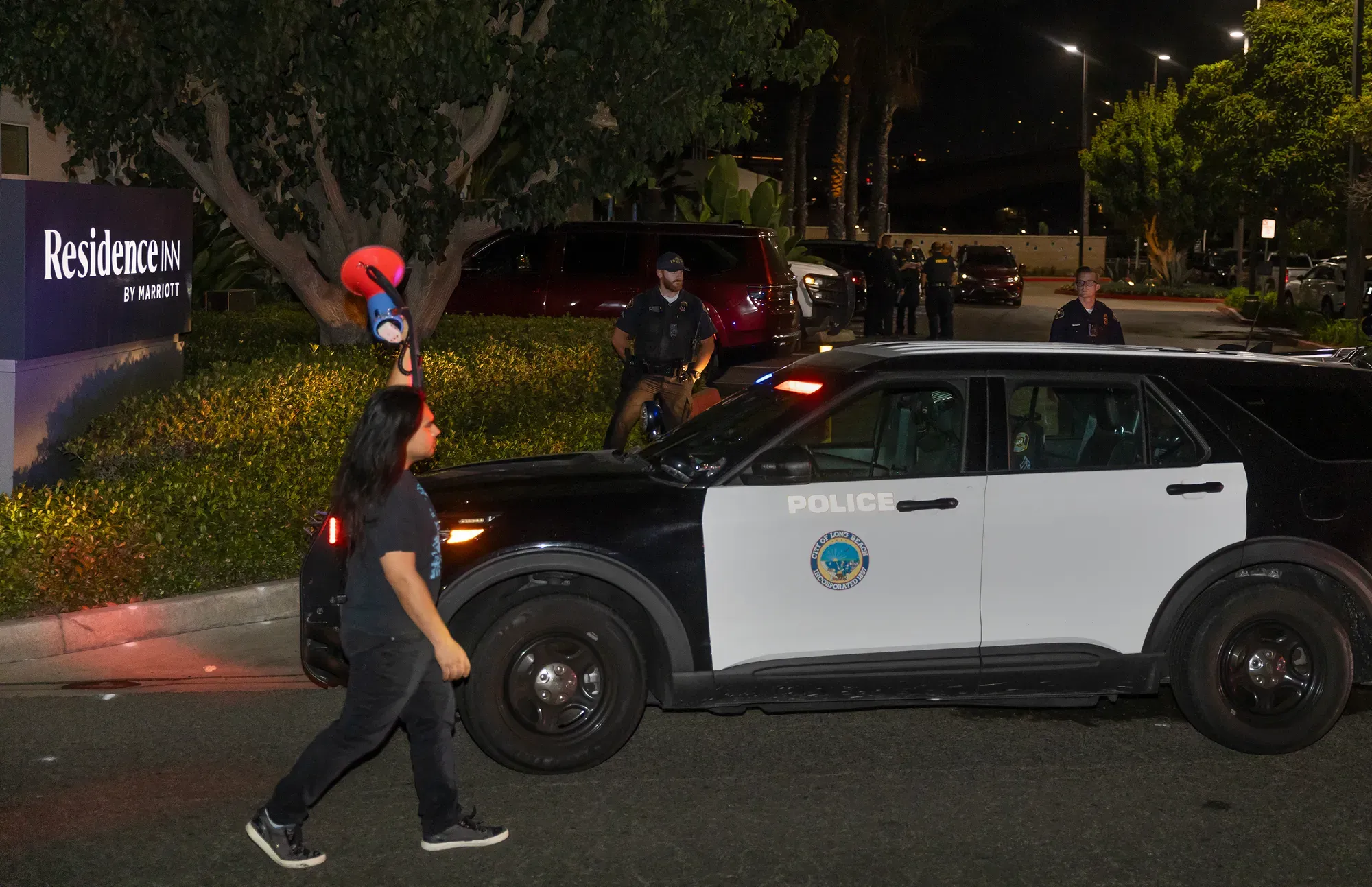
The state passed a law banning masks for federal agents while they operate in California. Why is the city not enforcing that law?
City of Long Beach: In 2025, the State of California passed a law (SB 627) that generally prohibits law enforcement officers from wearing face coverings, with certain exceptions. Before the law could take effect on January 1, 2026, the United States filed a lawsuit challenging the law, arguing that it cannot be enforced against federal law enforcement officers. To allow the court to resolve the issue as quickly as possible, California agreed not to enforce the law against federal agents while the case is pending. The City of Long Beach filed a brief in support of the California law and opposing the United States’ requested injunction.
On February 9, 2026, the Court issued a preliminary injunction preventing the enforcement of the mask law as it relates to federal agents. It is likely that the order will be appealed, and the ruling on the preliminary injunction is not a final decision, so the City will continue to track the litigation and the Long Beach Police Department will continue to comply with all applicable state and federal laws as they relate to this legislation.
Additional context: Last month, Los Angeles Police Department Chief Jim McDonnell said his department would not enforce the mask ban. “Trying to enforce a misdemeanor violation on another law enforcement agency, that’s not going to end well,” McDonnell said.
Residents have repeatedly pointed out that federal agents are staying in Long Beach hotels. Will the city publicly denounce hotels, by name, that knowingly host federal agents?
City: Hotels in Long Beach are privately owned and operated businesses. Decisions regarding hotel guests are made by hotel operators, subject to generally applicable laws. The City does not regulate which customers a hotel chooses to accommodate.
State and local governments cannot take any action that “regulates the United States directly or discriminates against the Federal Government or those with whom it deals.” North Dakota v. United States, 495 U.S. 423, 435 (1990). Accordingly, state and local jurisdictions, including the City, cannot lawfully adopt regulations that prohibit, penalize or otherwise impose special burdens on hotels for accommodating federal agencies or agents.
Courts have recently applied this principle in the context of the current federal immigration enforcement efforts. For example, in litigation arising from King County, Washington’s attempt to restrict airport vendors from providing services to entities engaged in immigration detention or deportation activities, the Ninth Circuit held that the county’s action violated the Supremacy Clause because it discriminated against federal operations and those contracting with the federal government. United States v. King County, Washington (9th Cir. 2024) 122 F.4th 740, 748.
Accordingly, the City may not prohibit or penalize hotels for accommodating federal agents acting within the scope of federal operations.
Additional context: The city did not directly address the question as to whether or not it would denounce hotels accommodating federal agents. The question was not about what action the city can take, but rather about the city stating its stance publicly. Mayor Richardson has said "ICE does not belong in our hotels,” yet the city declined to call out the hotel operators quartering federal agents.
Is there any way for the city to incentivize hotels to refuse service to federal agents such as tax breaks, fines or other means?
City: Cities are not allowed to use regulations in a manner that discriminate against the Federal Government or those with whom it deals. This includes the imposition of taxes, fines or other regulatory tools designed to discourage private businesses from doing business with the federal government. Courts have repeatedly ruled that cities cannot take actions — directly or indirectly — that interfere with federal operations.
Additional context: On Feb. 10, LA Mayor Karen Bass signed Executive Directive 17, which among other things, directs “the Department of City Planning to prepare an ordinance and nexus study for presentation to the City Council imposing an impact fee on any owner of property in the City who gives site control to anyone for the purpose of conducting immigration enforcement and related activities on the owner’s property.”
While agents staying in a hotel is not the same as giving “site control” to agents, this is an instance of a local government seeking to impose a penalty against private property owners for working with federal operations.
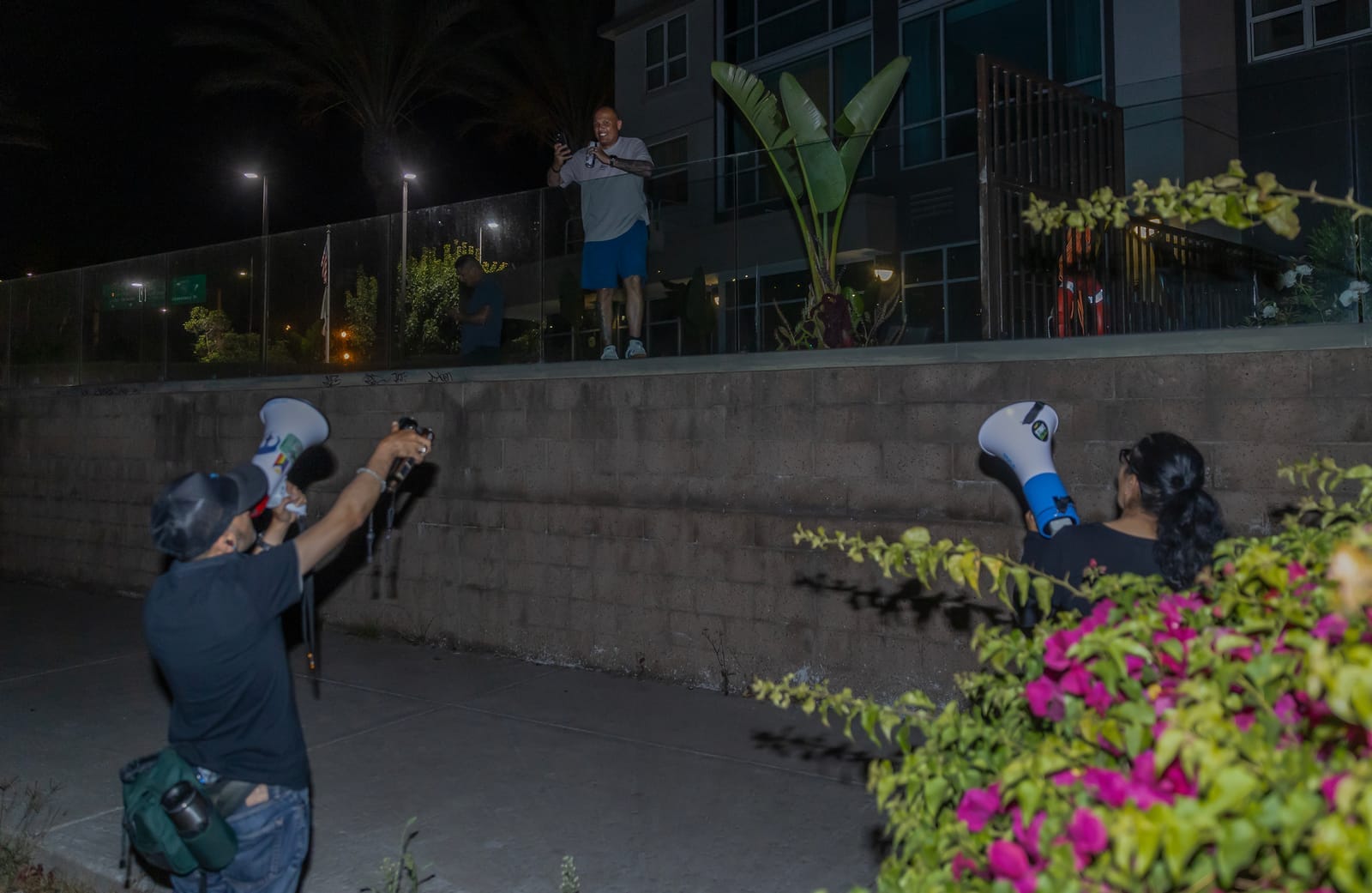
Could the city legally pass an ordinance requiring hotels to publicly disclose when hosting federal law enforcement?
City: Cities are not allowed to use regulations in a manner that discriminate against the Federal Government or those with whom it deals. Hotels operating in Long Beach are private businesses, and the City does not direct, authorize or control whether a hotel provides lodging or services to any individual or entity, including federal law enforcement. The City also cannot legally impose a rule that would prohibit hotels from renting rooms to federal law enforcement or penalize them for the same.
Additional context: The question was not about regulating who hotels provide services to but rather requiring them to disclose when services are being provided to federal law enforcement.
Does the city have any contracts, partnerships or other financial relationships with any hotels? If so, will it commit to canceling any and all dealings with hotels that house federal immigration agents?
City: The City does not have any contracts with hotels that hand over control of room bookings to the City.
The City has lease, tax-sharing or operating agreements with a few Long Beach hotels. For example, several hotels are located on State Tidelands Land, which is held in trust by the City, and there are long standing lease agreements between the hotel and the City to allow the hotel to operate on that land. The terms of these agreements were entered into years ago and can only be modified by the agreement of both parties. The agreements do not give control of any operating decisions to the City. Hotel operations and accommodations fall under the purview of the private hotels and are not regulated by the City of Long Beach. Accordingly, decisions regarding hotel guests are made independently by hotel operators.
It is up to those businesses to determine who they serve, in accordance with all federal, state and municipal laws, and the City may not interfere with those actions. Federal law prohibits cities from discriminating against the Federal Government or those with whom it deals.
During his State of the City address, Mayor Richardson said the city has established “ICE-free zones." Can you explain what those zones are?
City: As part of the Long Beach Values Act, the City does not participate in federal immigration enforcement. As such, the City restricts law enforcement access to non-public City-owned facilities, spaces and property by designating these areas as "Non-Public Secure Locations," consistent with the "ICE-free zones" policy approach introduced in Chicago in October 2025, several months after Long Beach. To ensure staff and external contractors are prepared to respond to any potential law enforcement action at City-owned facilities, the City continues to deliver internal Long Beach Values Act and City protocols training and know-your-rights education. This item was proposed by the Mayor in the Fiscal Year 2026 budget, approved by the Long Beach City Council on Sept. 9, 2025, with postings of “Non-Public Secure Locations” signs beginning Sept. 12, 2025.
Long Beach was one of the first cities in LA County to establish "Non-Public Secure Locations” on City property.
Additional context: According to city documents, "non-public city owned facilities spaces and property" includes clinical areas, custodial closets, employee break rooms, IT server rooms, laboratories, medical exam rooms, records and file rooms, security and monitoring rooms, staff bathrooms, staff locker rooms, staff-only offices, storage or supply closets, utility and mechanical rooms spaces and typically only available to the public by reservation.
In short, the policy is in place to protect city employees rather than the public.
The mayor also mentioned the raising of $200,000 as well as the allocation of $5 million for supporting impacted families. Can you give a breakdown of where those funds have been or will be dispersed and for what, specifically, they will be used?
City: The Office of Mayor Rex Richardson, in partnership with the California Community Foundation (CCF), launched the privately funded Neighbors Supporting Neighbors Fund in August 2025, raising more than $200,000 in donations to provide direct, immediate relief to community members impacted by recent immigration enforcement activity. These funds are being distributed through CCF to trusted community-based organizations to support rental assistance, food and grocery distribution, replacement of lost income and rapid response services. A total of $125,000 has already been disbursed, with all funds going directly to relief efforts through partners including Centro CHA, ÓRALE, United Cambodian Community, Latinos in Action California, Filipino Migrant Center and Puente Latino Association, ensuring resources are deployed quickly, equitably and where they are needed most.
Adopted as part of the City Council-approved Fiscal Year 2026 Budget, the Defending Our Long Beach Values Plan is a comprehensive investment of more than $5 million in available assistance, including $2.5 million of new funding entirely dedicated to supporting the needs of Long Beach’s diverse immigrant community. This investment includes $600,000 in one-time funds to bring the total of the Long Beach Justice Fund to $1.85 million (the largest City investment in the program’s history), ensuring our residents have access to legal representation and resources, and $150,000 to expand know-your-rights education and training for local businesses, street vendors and workers. And lastly, a minimum of $500,000 in Los Angeles County Affordable Housing Agency (LACAHSA) Measure A funds will be used to provide emergency rent relief and flexible financial assistance to support and stabilize low-income renters who are at-risk of homelessness and/or facing an acute housing crisis as result of immigration enforcement. LACAHSA Measure A funds will be used to provide impacted, eligible households with the necessary supportive services and financial assistance to prevent an eviction, settle arrears and stabilize in housing.
Agreements with local trusted community-based organizations for the Know Your Rights program were finalized and the program is active. The legal assistance funds are currently available and being managed by the Office of Equity. The rental and financial assistance program is in design in collaboration with our Health and Human Services department and community-based organizations and anticipated to launch in the coming months. The City of Long Beach is one of the first cities in LA County to establish a dedicated emergency rental and financial assistance program for impacted families.
Together, these investments address both immediate needs and long-term protections and ensure Long Beach’s diverse immigrant community remains supported and informed.
The mayor said city employees have received special training related to immigration operations in the city. What did that training entail?
City: As part of the August 2025 strengthening of the Long Beach Values Act, the City has been delivering specialized training and open office hours that help City employees and external contractors understand the Long Beach Values Act and help prepare them to respond appropriately to any law enforcement activity at City-owned facilities. The trainings, which began in September 2025, cover clear, practical guidance, including who is responsible for leading interactions with law enforcement; what information should be documented; how to respond to law enforcement requests for access both with and without a warrant; how to understand the types of legal documentation law enforcement may have; how to coordinate with the City Attorney’s Office; and how to properly document interactions. To support these trainings, the City also provided staff with relevant resources, City protocols and other materials to help staff navigate through potential interactions with law enforcement.
This work is ongoing, with plans to host additional in-person training to ensure employees across departments, including field-based staff, are equipped with resources and information and have opportunities to ask questions, review real-world scenarios and help them feel confident carrying out these protocols in a consistent and lawful way.
Has the city hosted know-your-rights events for residents?
City: The Economic Development & Opportunity team has actively supported and participated in know-your-rights workshops hosted by partnering organizations for the business community and workers in Long Beach. These workshops train local businesses, including street vendors, on what to do if law enforcement activities take place at or near their business operations and how to verify the existence of a legitimate court order or judicial warrant. These efforts are supported by $150,000 in one-time funding adopted as part of the City Council-approved Fiscal Year 2026 Budget to support on-going know-your-rights training led by experienced community-based organizations including ÓRALE and Centro CHA. Resources for those impacted by federal immigration activity, which the City has distributed and made available to anyone who needs them, can be found here.
Has the city considered using its emergency text alert system and social media pages to warn residents when immigration enforcement agents are operating in Long Beach in real time?
City: As part of the Long Beach Values Act, which is modeled after the California Values Act and reaffirms our commitment to serving all residents regardless of immigration status, the City does not participate in or coordinate with federal immigration enforcement actions. At the same time, the City cannot use its official communication systems to interfere with federal law enforcement operations. (U.S. Const., art. VI, cl. 2; see also federal obstruction statutes, e.g., 18 U.S.C. §§ 1505, 1512).
The City is focused on ensuring residents understand their rights and have access to trusted information and support. The City partners with and supports our community connectors that provide rapid response services and access to free legal assistance, case management, emergency relief and social services. The City supports businesses through the City’s Long Beach Workforce Innovation Network and BizCare. Residents can also access information through the City’s Immigration Information and Resources webpage.
Does the city have any contracts with DHS or any of its sub-agencies?
City: The City only has agreements and contracts with TSA and FEMA. The TSA contracts are related to security and safety at the Long Beach Airport. The agreements related to FEMA are for federal grants generally related to emergency preparedness and resiliency. The City does not have contracts related to immigration enforcement operations, training, housing, staging, jailing or any other operations.
Additional context: Escondido approved a $67,000 contract with DHS for the use of a firing range to train agents.
The city of Anaheim has a dedicated webpage to update the public on immigration enforcement operations as well as provide information about rights and services. Has the city considered creating a similar page?
City: The City has a dedicated Immigration Information and Resources webpage where residents can learn more about their rights and how to navigate federal enforcement actions, as well as get connected to services and resources. Information also continues to be shared on the City’s social media pages @LongBeachCity on Facebook, X and Instagram.
Additional context: While the city does have a resource page, it does not include regular updates on enforcement operations within the city the way that the Anaheim website does.
Some residents have asked local officials — mayor, councilmembers, city attorney, city prosecutor and the police chief — to hold a town hall at an easily accessible location during a time to maximize turnout to field questions related to immigration enforcement in Long Beach.
Will officials commit to organizing such an event?
City: The City recognizes how sensitive, polarizing and deeply impactful immigration enforcement issues are, and we are listening closely to the concerns and genuine fears raised by our community. The City has held City Council meetings where residents were invited to make their voices heard on recent Council actions related to federal immigration enforcement, such as strengthening the Long Beach Values Act in January and August 2025 and calling for federal immigration accountability on Feb. 3, 2026.
The City is committed to approaching this work with care, transparency and compassion, and ensuring people have access to accurate information and meaningful support by investing in and expanding critical resources such as legal services through the Long Beach Justice Fund, rental assistance, emergency relief, rapid response efforts and know-your-rights education. While a townhall-style format on the topic is not currently scheduled, the best and most accessible public forum where residents are encouraged to continue making their voices heard is during the regular Long Beach City Council meetings, in addition to contacting their local, state and federal representatives and by following the City @LongBeachCity on Facebook, X and Instagram. The City will also continue to provide important information and resources at our Immigration Information and Resources webpage.
Additional context: While voicing concerns during public comment periods at council meetings does bring them to the attention of councilmembers, it does not provide the public with answers as councilmembers typically do not respond to public comment.
Is there anything else any city official would like to add as it relates to immigration enforcement in Long Beach?
City: Long Beach stands with its immigrant community. It is estimated that Long Beach has over 100,000 immigrants of all different backgrounds and statuses, all of whom help make Long Beach the vibrant, diverse city it is. Indiscriminate raids by the federal government based solely on how someone looks, talks or appears run counter to our values as a City.
The City is continuing to take steps to preserve the legal rights of our entire community. This work started back in 2018, with the passage of the Long Beach Values Act. The City took early action on this issue in advance of the change in federal administrations in January 2025, when the Mayor and City Council approved the strengthening of the Long Beach Values Act, adding additional funds to the Justice Fund and reaffirming the City’s commitment to protecting our local, diverse immigrant communities.
In July 2025, the City joined a federal lawsuit against illegal raids by federal law enforcement that violate the U.S. Constitution. The City is also actively supporting the California Attorney General, who, along with a consortium of other states, has filed 33 cases against the federal administration's policies and actions on issues such as termination of federal funds of libraries, schools, museums and disaster areas and illegal grant conditions.
Finally, the City has leveraged its government affairs resources to actively advocate for and support emerging state and federal legislation, including participating in congressional hearings to document the local impacts of immigration enforcement, in order to enhance protections for immigrant communities and increase transparency and accountability around federal immigration operations.
We understand federal law enforcement activity raises genuine fears in our community and undermines the sense of security necessary to participate fully in public life. We remain committed to supporting our entire community, regardless of immigration status, as everyone navigates through these unprecedented times. We encourage residents to learn more about their rights and get connected to resources by visiting the City’s Immigration Information and Resources webpage.
Questions were sent to the City of Long Beach on Jan. 20. Responses from the Long Beach Police Department were received on Jan. 23, while the remaining responses were received on Feb. 15.
Editor's note: This story has been updated to corrected the spelling of Chief Wally Hebeish's last name.
We need your support.
Subcribe to the Watchdog today.
The Long Beach Watchdog is owned by journalists, and paid for by readers like you. If independent, local reporting like the story you just read is important to you, support our work by becoming a subscriber.