Two genuine horrors for pet health
A rabid bat and a hideous heat wave alert humans to protect their furry roommates.

Protect your pets from a genuine horror
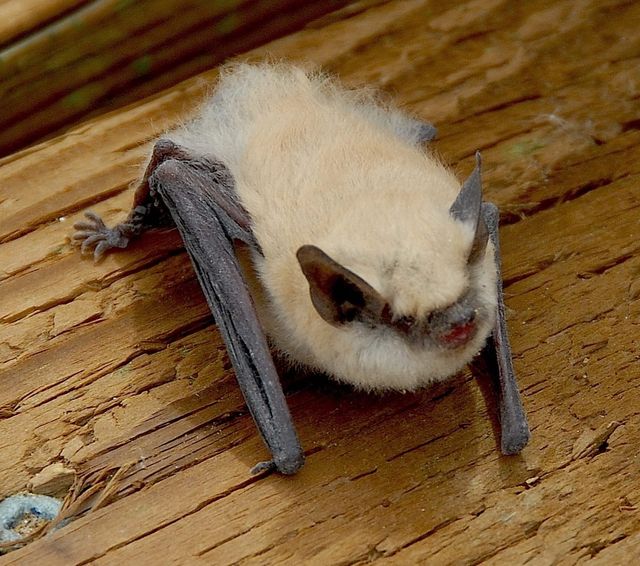
The recent discovery of a rabid bat in Long Beach unfortunately coincided with Halloween month, but it posed a real-world scare. Bats and any wild animal carrying rabies can be a danger to humans and animals — if the bite isn’t tended to immediately, it can be a death sentence. An article by Long Beach Watchdog reporter Anthony Pignataro informed readers what to do if they encounter a bat, including updating your pets’ rabies vaccines. Please do this if you haven’t yet.
Back in the old black-and-white days in Los Angeles, decades of rabies outbreaks caused the death of dogs, horses, mules, herds of cattle and people, children included. Finally in 1958, clinics stared popping up all over the city and its suburbs to administer rabies vaccines to dogs and made the shots mandatory in Los Angeles County. This cut down the disease in domestic pets and saved a lot of lives in the process.
The state of California later made it a requirement for people to vaccinate their dogs against rabies. There’s no similar state mandate for cats, although certain cities, Long Beach included, do require the shots for both cats and dogs over 4 months old. Avoiding legal consequences, however, isn’t the reason to get your pet vaccinated. A rabies vaccine protects your pet from illness and death the way garlic is said to protect you from vampires, except that the shots have a scientific basis.
Long Beach Animal Care Services (LBACS) and CAMPLA have teamed up to provide low-cost vaccinations on Tuesdays at LBACS, and CAMP holds mobile clinics all over the LA area. Access their calendar here — it includes the LBACS dates and times.
Dangerous dog days of autumn
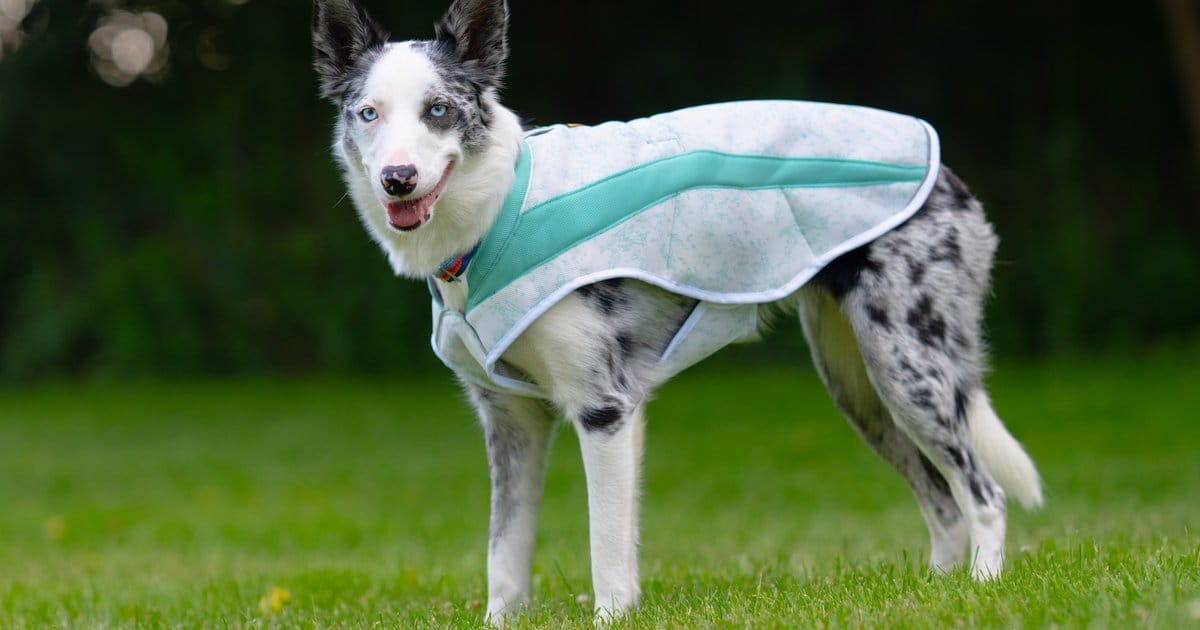
The weatherpersons are predicting a cooldown next week. But after days of feeling like you’re walking through cotton batting, in October, yet, Dog knows what we can expect. Extreme heat fluctuations comprise another risk for pets — Primary Care Animal Hospital veterinarian Carrie Robbins recently talked with me about how yoyoing temperatures can seriously mess with a pet’s health.
Robbins said that extreme heat can harm pets if they haven’t had enough time to acclimatize to it. Acclimatization can take up to several weeks for dogs, depending on the breed. An animal who’s been in air conditioning all day and then goes outside into a 90 degree day may have trouble in the heat.
The heat wave we just had may be at its end, and we might get some blessed rain. But when (and if) we finally get some October temperatures, we still might get slapped with a few 90 degree days. If (and when) this happens, we have to know the signs of heat exhaustion and heatstroke and how to protect the pets against it.
“The big thing about heatstroke is that it can be really scary,” Robbins said. “I had a pug come in with symptoms and a temperature of 109 — normal temperature is less than 102.5. We had to temporarily tack back his palate and cool him down until his temperature decreased and he could breathe. He was very lucky to make it through.”
Dogs can’t sweat like people, Robbins said. They cool themselves through panting and sweating through their ears. Labored breathing and very hot ears could be warning signs of heatstroke or heat stress. She said that brachycephalic breeds like her pug patient are more susceptible to heatstroke and other respiratory illnesses. Brachycephalic animals have smushy faces, narrow air passages, a small trachea and long, soft palates among other characteristics. These affect their breathing in normal situations and worsen with heat. Species and breeds include, among others, pugs, French and English bulldogs, Pekingese, boxers and Persian cats.
Robbins said that senior pets, puppies and obese animals are also more susceptible to heatstroke and heat exhaustion. Interestingly, she said, working dogs such as K9 officers and helper animals are trained not to show stress and should be monitored for other signs of heatstroke.
They include:
- Panting
- Increased thirst
- Temperature over 102 degrees Fahrenheit
- Drooling
- Diarrhea or black stool
- Lethargy
- Confusion
- Seizures
- Red gums
Cats can exhibit these symptoms, too, as well as mouth breathing, which is a distressing sight if you’ve ever seen it. If your pet shows any of these symptoms, cool them off immediately by applying cool — not cold! — water to the groin, chest, tummy, between the legs and around the neck. Do not, Robbins stressed, soak their pads with alcohol. The initial coolness will dry the pads and turn to heat.
Then, charge off to the vet, either to your pet’s or one of the emergency clinics on this link.
Prevention is, as always, the best medicine. My good buddy David, server at the Coffee Cup Café, said that his cat, Carrot, is annoyed by the heat, especially because it’s too hot to cuddle. His house has no air conditioning, but he has a portable AC unit and a fan. To keep Carrot crisp, David trains both of them on the cat, who is as appreciative as cats will allow themselves to show.
Robbins said that she hasn’t seen as many cats affected by heatstroke as she has dogs, possibly because cats seem to meet their own needs or get others to meet them, as Carrot showed (my theory, not Dr. Robbins’). She does advise cat roommates to not line their carriers with blankies or towels on hot days but instead to use a thin sheet. (I use pee pads, which have the dual blessing of lightness and the capability of soaking up results of feline fantods.)
Robbins has a few tips for keeping the heat of your pet:
- Keep your pet hydrated. Be sure their water bowl is always full. Bring portable bottles for their walks.
- Walk your dog during early morning or late afternoon hours, when it’s cooler. Keep the walks brief.
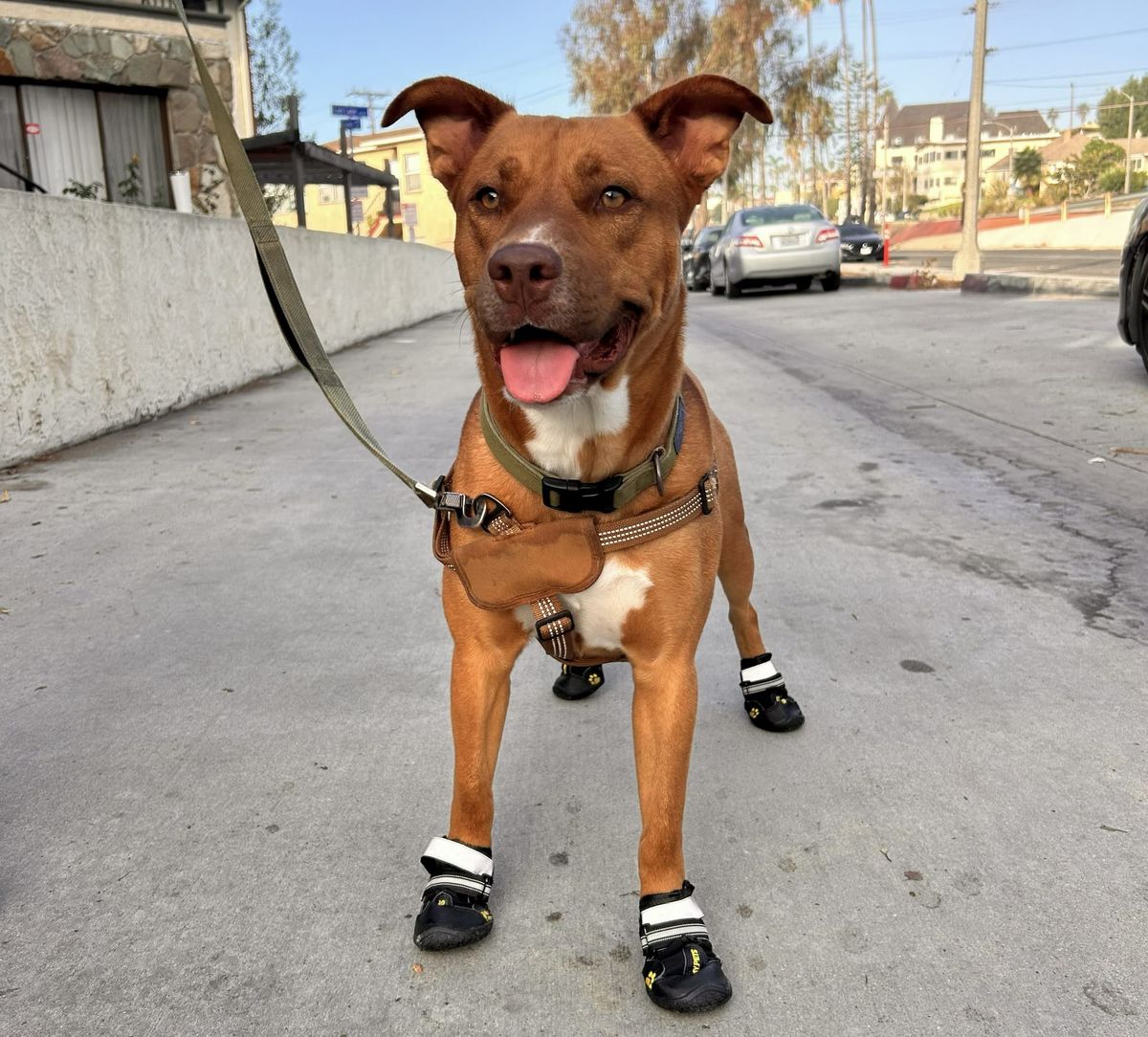
- Don’t let their feet hit the hot asphalt. If they’ll stand for booties, buy a set.
- Precool your vehicle if you’re taking them anywhere in it. And never leave them in the car. There’s a law against that.
- Even if they’re housebound prisoners of love, be sure there are shady spots for them. If they’re outdoors on a long lead, provide shade or a doghouse.
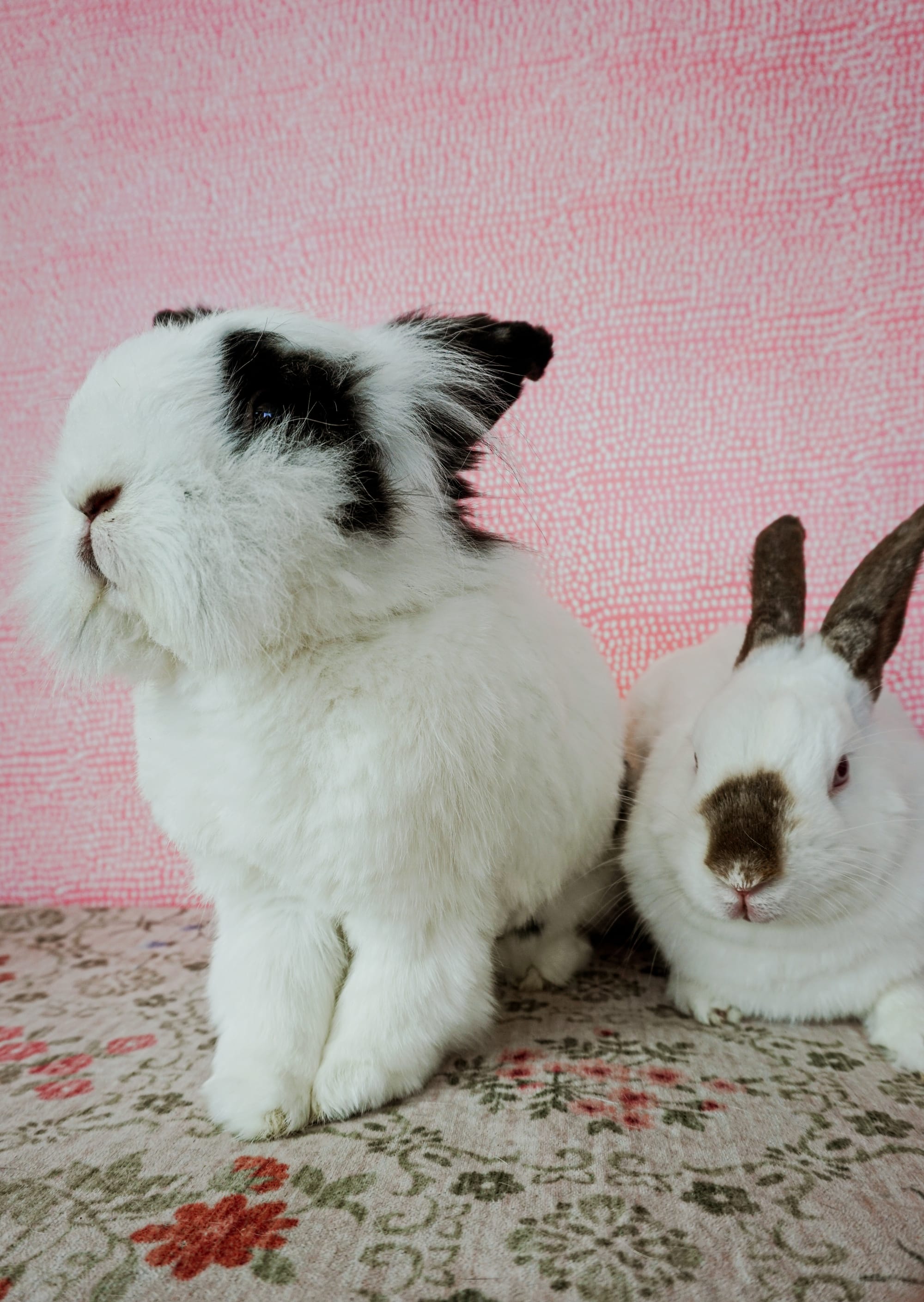
“A House Rabbit Primer” by Lucile C. Moore (Santa Monica Press, 2022) advises rabbit roommates to keep house temperatures between 61 degrees and 70 degrees Fahrenheit. As the title suggests, rabbits should stay indoors and not outside in hutches with unpredictable weather. Rabbits are delicate and can perish from extreme cold or heat. If you don’t have air conditioning, the primer offers these tips for hare care in the heat:
- Place ice cubes in the rabbit’s water bowl. No matter the weather, keep the bowl full.
- Drape a wet towel over the bunny’s cage.
- Freeze plastic containers or refrigerate a ceramic tile and put them in the cage.
- Cool your bunny’s ears by wetting your fingers with ice water and stroking them.
If you’re vigilant, the bunn should be fine. But if signs of heatstroke appear, spray the rabbit with a water mister, wrap them in a damp cloth, immerse them in cool water, and get them to the vet. Signs of heatstroke include lethargy; rapid or labored breathing; drooling; rectal temperature above 104 degrees Fahrenheit; blue-tinged mouth, nose or ears; incoordination; seizures; and coma.
Cooling mats and pads for Flopsy to flop on are available at pet-supply stores and online.
YOURS DROOLY
Last week, Scratch This! presented a plethora of paws-themed pet events for Halloween. This week features adoptable rabbits from Sunshine Rabbit Center. You can meet them this Sunday at their Drag Story Time event, spooky version, as their big ears take in the tales, cotton or otherwise, that drag performers Queen Beau ’Dacious and King Ronnie read. It might not be scary, but the vibe will surely be Alice’s Adventures in Wonderland.
Meet three of the wascally wabbits weady to wive at your wesidence. Access this link to see the others and find out how to adopt any of them.
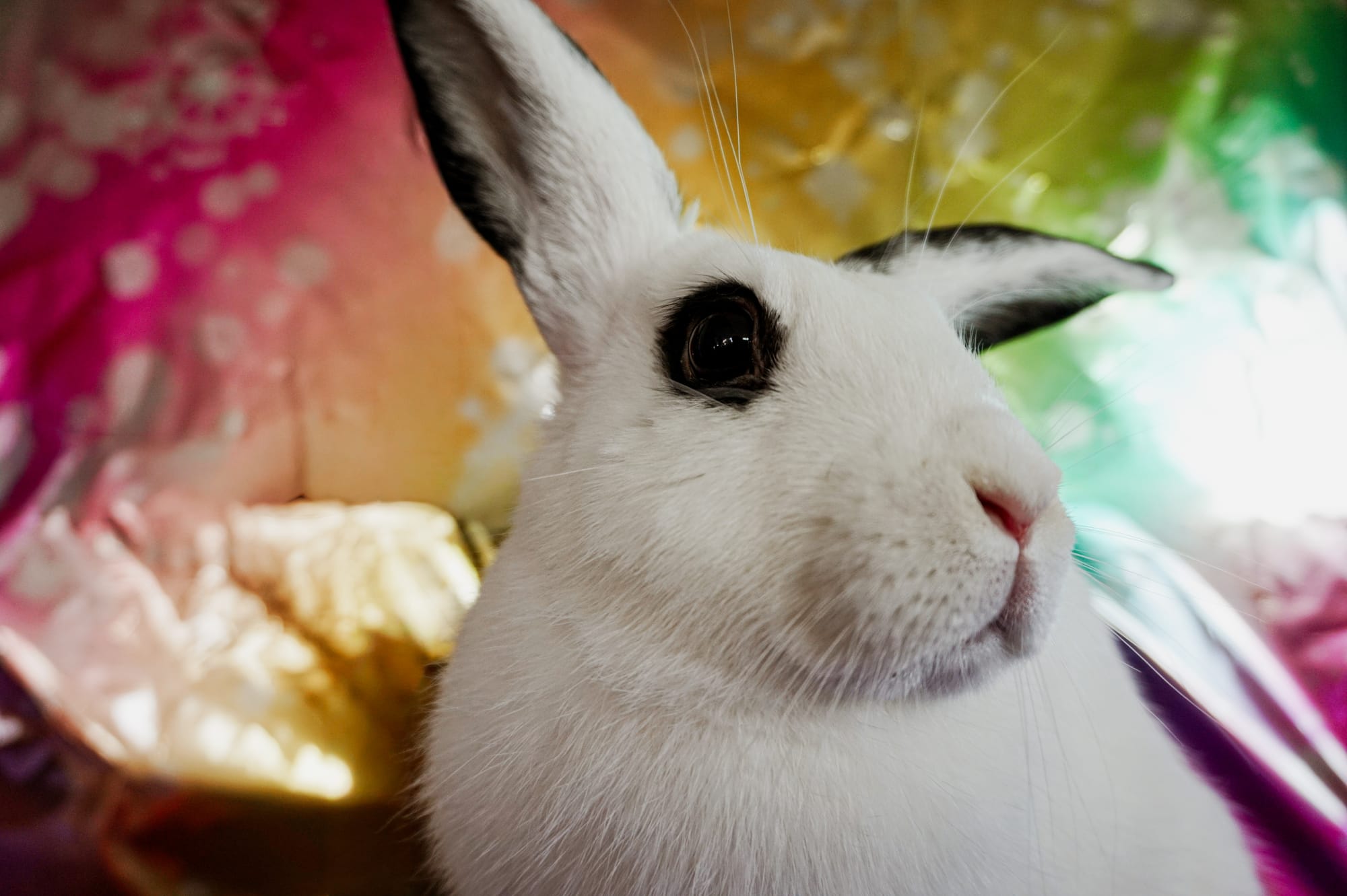
Fig is a year old. She’s curious, smart and adventurous, and she loves to explore! Her mom was a lop, but Fig’s ears go up — they’re so long and funny! Fig just came back from a vacation with a foster family. They said that once she came out of her shell, Fig was the life of the party! She’s very social and loves to climb on her human friends!
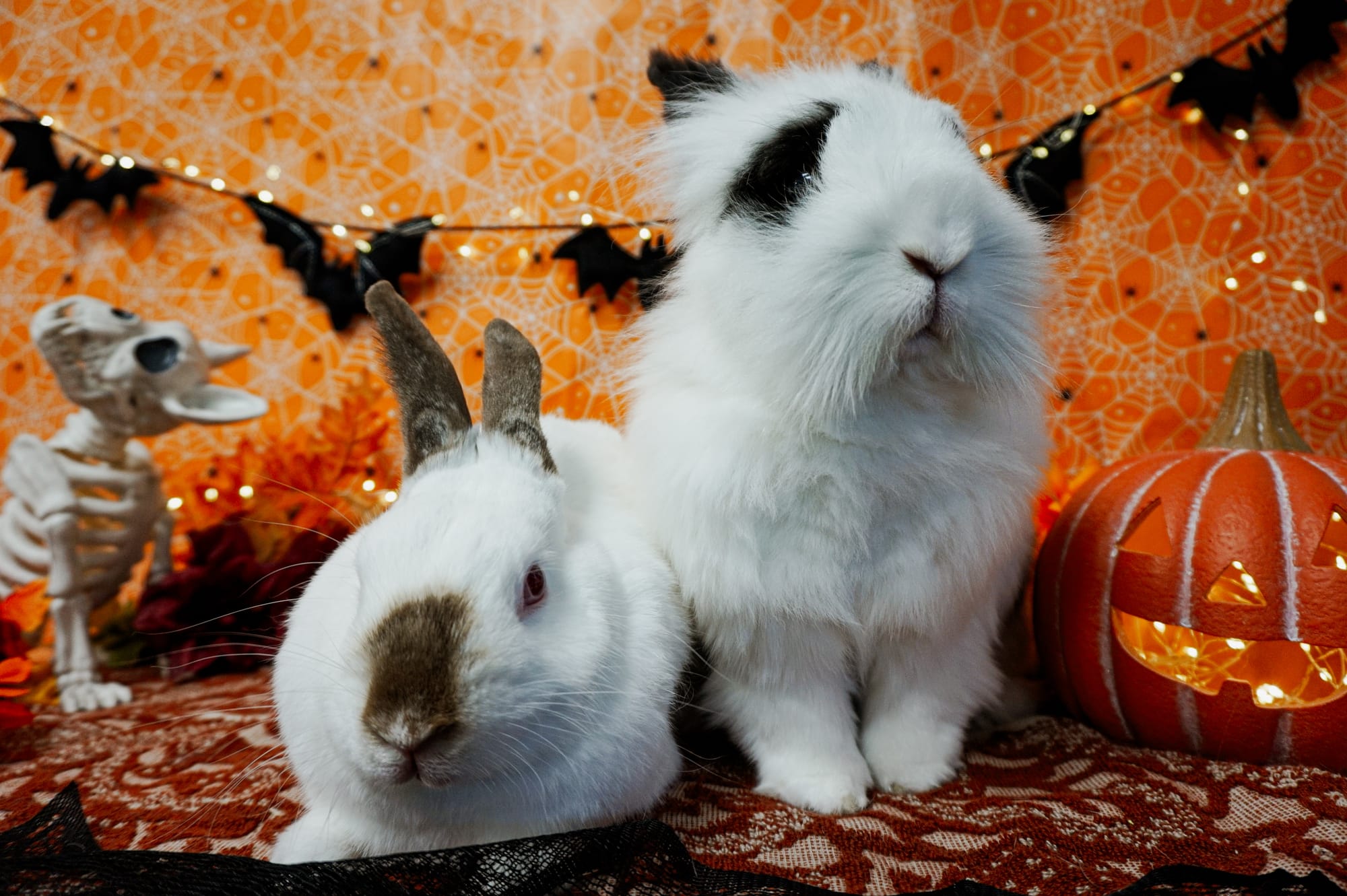
Owen, age 4, and Evelyn, age 5, are a fun, gentle, bonded pair. Owen only has three legs, but you’d never notice! He runs, hops, and does a tripod bunny wiggle! And Evelyn is his loving support system. They come running when they’re called, according to their foster.
TAIL-WAGGIN' AND NOSE-BOOPIN' EVENTS
Pit Bull Appreciation Day 2026
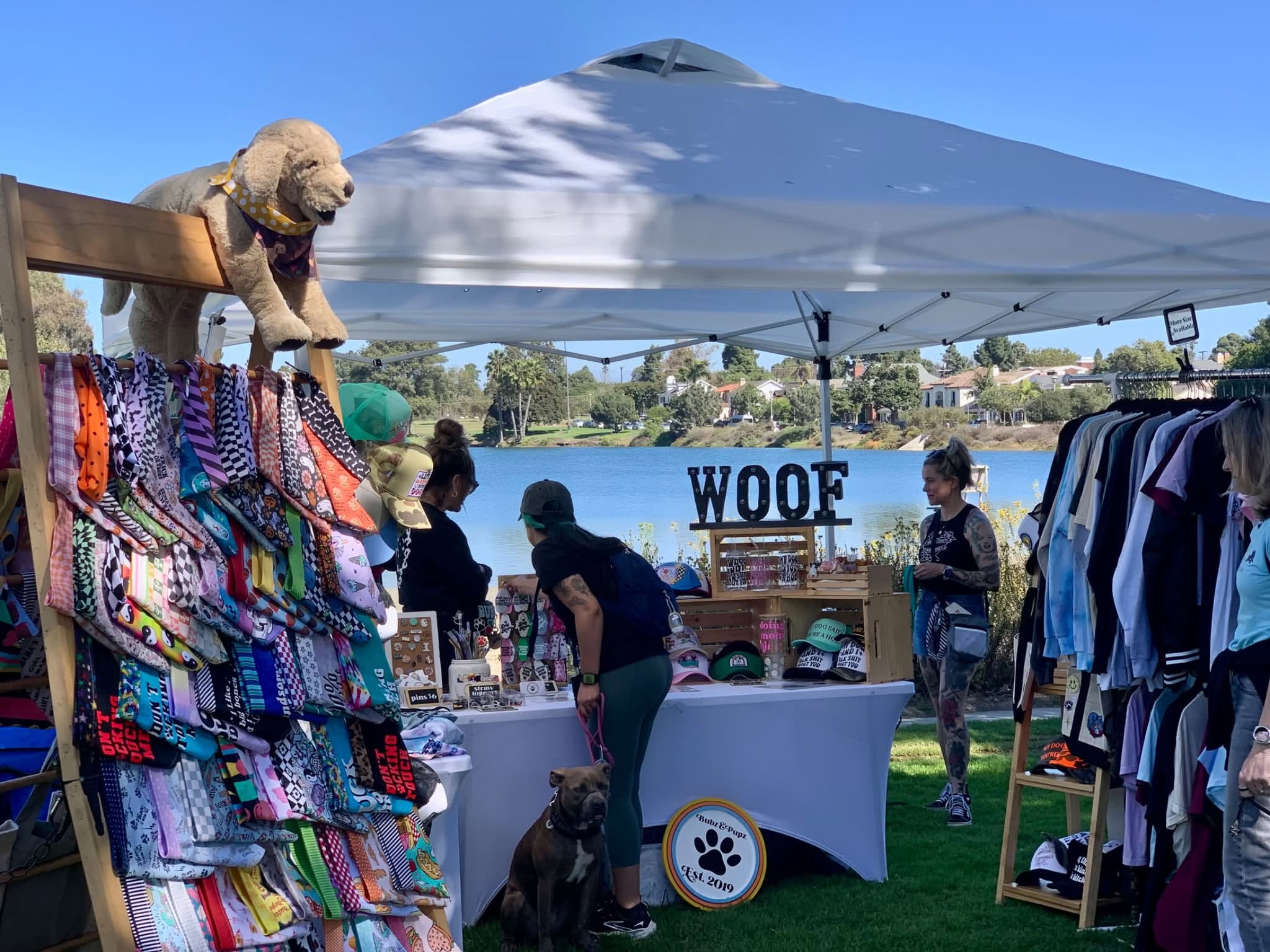
Thanks to folks like the founders of the Blockhead Brigade, more and more people are finding out how great pit bulls are and are getting educated about bully breeds. Every year, Blockhead Brigade holds a much-deserved Pit Bull Appreciation Day, and lovers and roommates of these goofy guys and girls convene to enjoy pack walks, take advantage of community resources, and exchange ideas. The event is a no-contact community dog event featuring a scavenger hunt, training demos, a photo contest, a beautiful Day of the Dead Pet Memorial Altar, and adoptable doggies. All breeds, mixes and sizes are welcome!
For safety precautions, the organizers require a 10-foot minimum of space between dogs, 6-foot or shorter leashes (no retractables), and no dog introductions. Free event, but your donation helps support Blockhead Brigade’s community-assistance programs, which provides free behavior, housing and medical support. Register your buddy here, and visit the event page for a full description of the day and a list of sponsors.
Pit Bull Appreciation Day place Saturday, Oct. 10, 10:00 a.m.–3:00 p.m. at Marina Vista Park, E. Colorado Street at Terraine Avenue, Long Beach
Two local rescues present two special adoption events for October
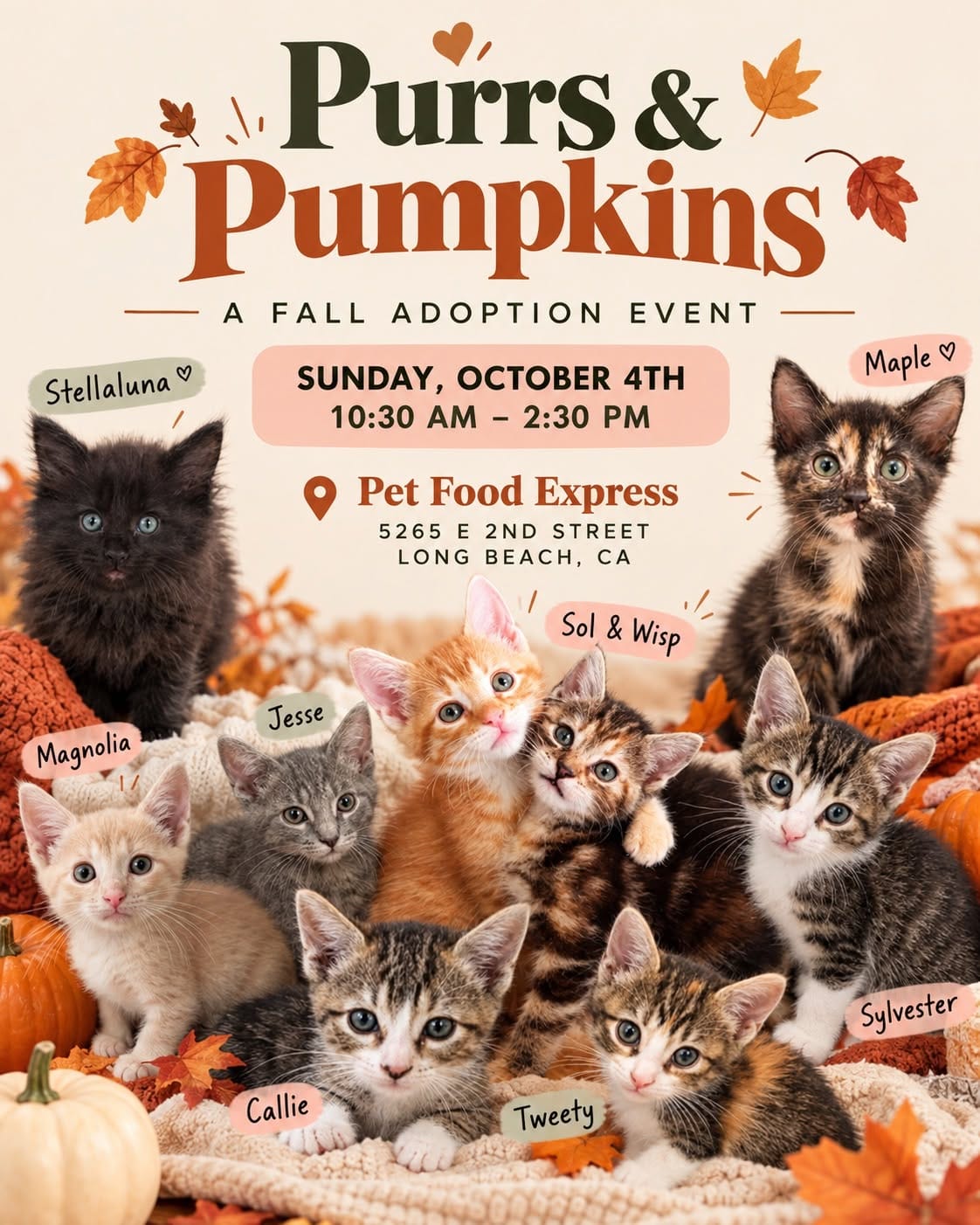
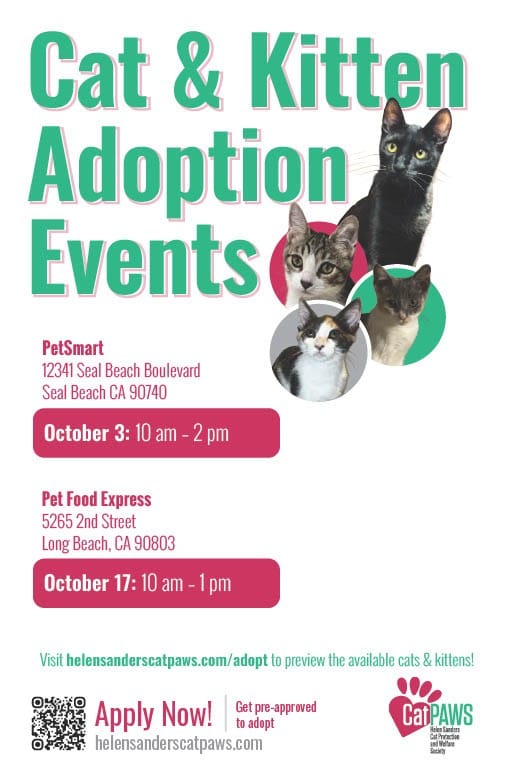
Cat lovers may say that there’s no such thing as too many kittens, but when you have an increasingly longer kitten season thanks to our warming climate, too many kittens are indeed seeing the light of day. Thankfully, nonprofits like Paws in the Sand and Helen Sanders CatPAWS take in as many of the little guys as they can and guarantee them happy times as long as they live. You, the adopters, make it happily ever after. Drop by these events and find your best buddy. For more rescues, hit the link at the end of the article.
Frost Fund’s Annual Fall Festival Fundraiser

Only a few tickets left for this neat event! Pull on your Western boots, button up your flannels, gallop across the county line, and celebrate autumn with Frost Fund at Chapman Crafted Beer! Enjoy an evening of yummy food, line dancing, local brews, raffle prizes, autumn-themed games and local vendors. Your doggy can dress up, too, and enter the costume contest, and children are more than welcome. Strollers are fine, too, but watch out for paws and wagging tails. Through social and news media, Frost Fund finds placement in local and out-of-state rescues, sanctuaries and forever homes for dogs and cats in dire need of rescue. Long Beach Animal Care Services (LBACS) pets have been beneficiaries of their volunteer efforts. Like many small nonprofits, Frost Fund is financed through donations and fundraisers like this one, so purchase tickets here. Early bird tickets are on sale until Aug. 23. If you’re currently a student, use code YOUTH at checkout for a discount, and bring your student ID at the event.
The Fall Festival Fundraiser takes place Oct. 24, 4 p.m.–8 p.m. at Chapman Crafted Beer, 123 N. Cypress St., Orange. Ticket prices vary.
Need a low-cost veterinarian, information about trapping community cats, places to volunteer, pet food, veterinary assistance, rescues and shelters to adopt from — anything pet related? Follow this link for resources. Please add your own ideas in the Comments section.
We need your support.
Subcribe to the Watchdog today.
The Long Beach Watchdog is owned by journalists, and paid for by readers like you. If independent, local reporting like the story you just read is important to you, support our work by becoming a subscriber.