Column: Actually Congressman, this is exactly who we are
In denouncing the Trump Administration’s authoritarian brutality in Minneapolis, Rep. Robert Garcia whitewashes American history.

Make no mistake: the scenes you’re seeing on the news and social media of masked gangs of ICE and Border Patrol agents roaming Minneapolis, throwing tear gas into crowds and inside cars filled with children, abducting people regardless of their age or immigration status, shooting and killing American citizens — they could easily happen here in Long Beach.
ICE and Border Patrol have already been conducting kidnapping operations throughout Southern California for months (my colleague Brandon Richardson wrote about some of them here, here, here, here and here). It would take very little for President Donald Trump (or Deputy Chief of Staff Stephen Miller, who also seems to be giving orders to Homeland Security forces) to call for a violent surge in Los Angeles and Long Beach.
To his credit, Congressman Robert Garcia is becoming increasingly vocal in his denunciations of these acts of violence against the American people.
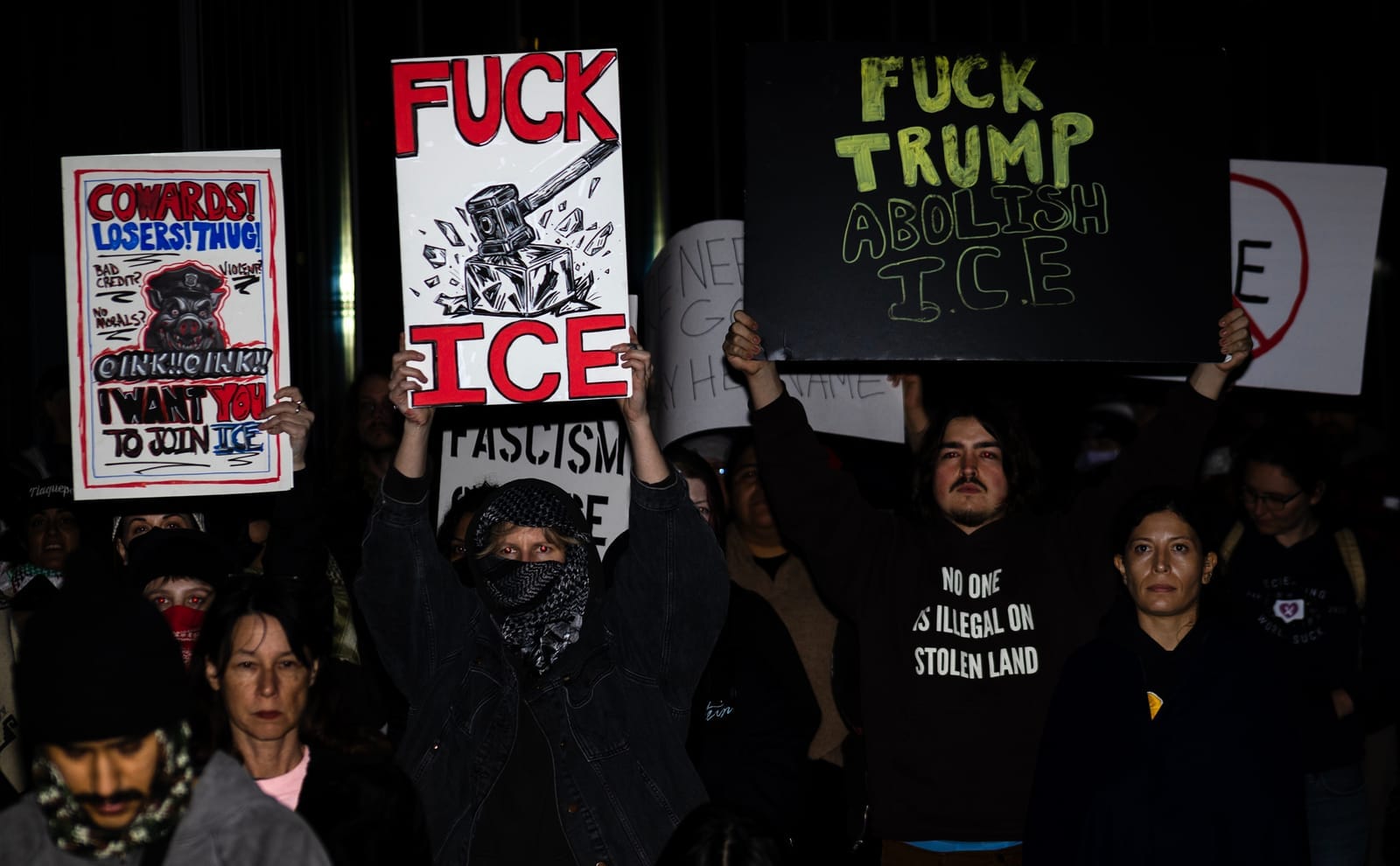
“ICE in its current form cannot exist, because what they’re doing right now is they’re killing people in the street, they’re violating due process,” Garcia said on Jan. 27, according to The Hill. “ICE needs to be abolished. It cannot be reformed.”
Garcia also said that Congress must impeach Homeland Security Secretary Kristi Noem, the former North Dakota governor whose biggest claim to fame prior to her joining the Trump Administration was that she shot and killed her puppy because she failed to train her to hunt properly and then bragged about it in her memoir.
“I’m honored that Democratic Leader Hakeem Jeffries has selected me to lead an impeachment inquiry into Noem,” Garcia said in a Jan. 29 email to constituents. Garcia went on to say Democrats should stop funding ICE.
But Garcia said something else in the email that gave me pause: “What we are seeing in Minneapolis, and in cities across the country, should not be happening. This is not who we are.”
I’ve seen variations of this phrase a lot on social media in the last decade (pretty much since Trump first ran for president). It’s a well-meaning way of trying to isolate and denigrate Trump and the entire Make America Great Again movement. But it’s nonsense.
If American history tells us anything, it’s that the violence and cruelty of the Trump Administration is absolutely who we are as a nation. The only difference is how publicly it’s taking place. Thanks to social media, anyone can watch the atrocities in real time.
Here are a few events to keep in mind when you see images of gun-toting, uniformed officers attacking and killing civilians and think that seems un-American (Note: this is far from a comprehensive list):
- Slavery, a stain on the nation since its founding, brutalized millions of people and made a mockery of Thomas Jefferson’s oft-quoted insistence in the Declaration of Independence that “all men are created equal.” Modern-day policing can trace its lineage back to slave patrols in the South. But since its destruction in the American Civil War, the only people involved in slavery who ever received financial reparations were slaveholders.
- The Trail of Tears was what we would now call ethnic cleansing: the forced displacement of tens of thousands of native tribespeople in the 1830s. Pushed by President Andrew Jackson (who is commemorated on the $20 bill), tens of thousands of indigenous people died during the hundreds of miles walk from their ancestral homes in the Southeast U.S. to new reservations in what is now Oklahoma.
- Indeed, all the wars fought by the U.S. Army against indigenous tribes, from the earliest years of the nation to the early 20th century, in which white America gradually but steadily moved westward, killing thousands and then moving survivors onto reservations that were tiny fractions of the lands that were promised to them in treaties with the U.S. government.
- The entire history of Jim Crow segregation, which ran from around 1877 (the end of Reconstruction) to the mid-1960s, in which it was completely legal for governments and private businesses to openly discriminate against Black American citizens.
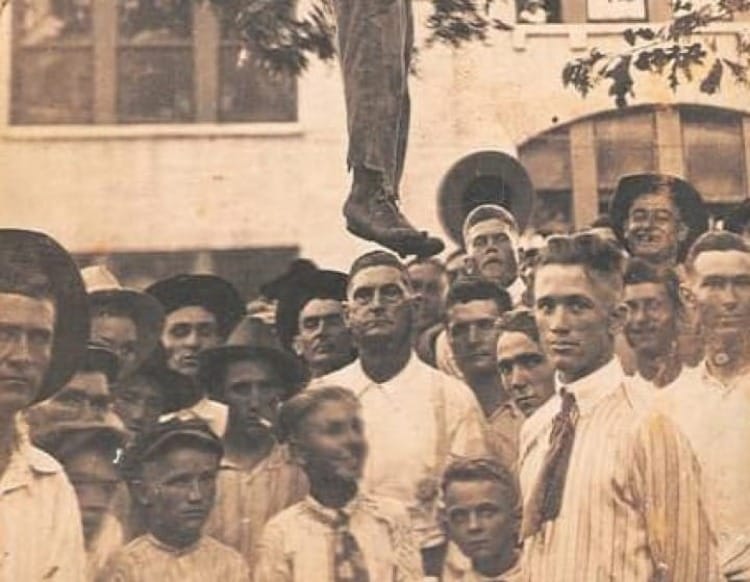
- The 4,743 people who were lynched in this country, usually by angry, racist mobs, between 1882 and 1968, according to the NAACP.
- The Chinese Exclusion Act of 1882, one of the first real immigration restrictions passed in the U.S., made it all but impossible for Chinese people to enter the U.S. until it was repealed in 1943.
- The Ludlow Massacre, where Colorado National Guardsmen and private security forces attacked striking coal miners and their families in 1914, killing 21, most of whom were women and children.
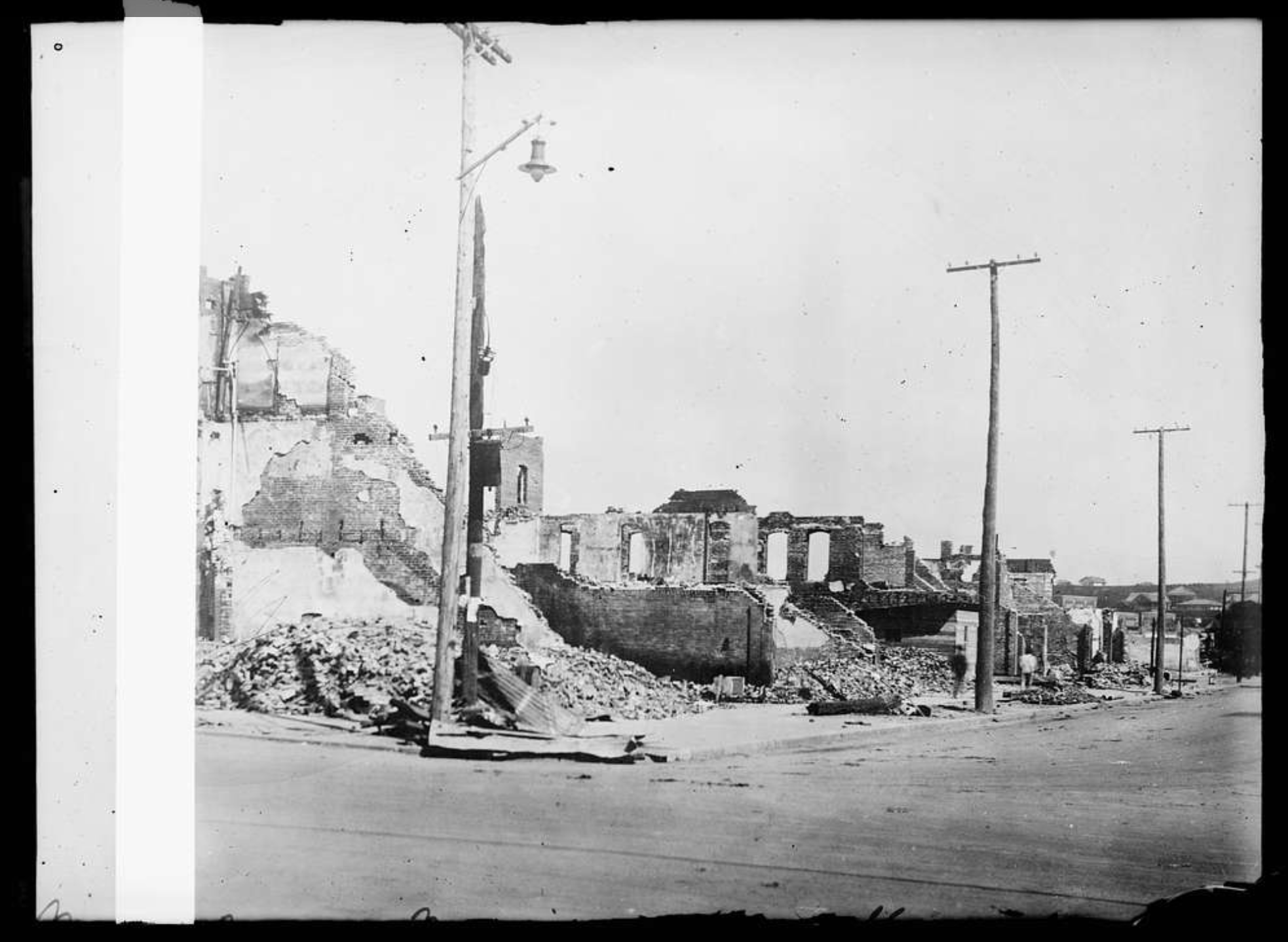
- The Tulsa Race Massacre of 1921, in which white mobs, some members of which had been deputized by local government officials, attacked Black residents and destroyed Black-owned businesses. Between 36 and 300 Black residents died, 800 were injured and thousands more were arrested. The mob destroyed the prosperous financial district known as “Black Wall Street.”
- The 1921 Battle of Blair Mountain, in which thousands of striking West Virginia miners battled police, strikebreakers and U.S. troops and endured aerial bombing that included leftover poison gas from World War I.
- The Hanapēpē Massacre, where police battled striking Filipino sugar workers on the island of Kauai in 1924, losing four of their own while killing 16.
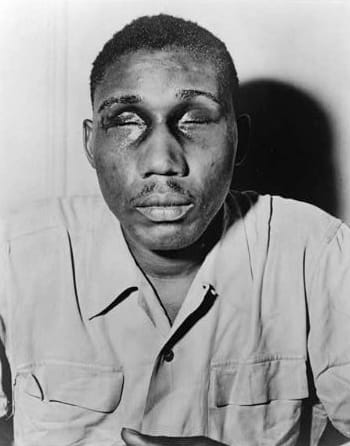
- While returning home from World War II and still wearing his U.S. Army uniform, Isaac Woodard, a Black man, was attacked by police in Batesburg, South Carolina in February 1946. Officers clubbed him repeatedly with nightsticks, and then Batesburg Police Chief Lynwood Shull used his nightstick to gouge out Woodard's eyes.
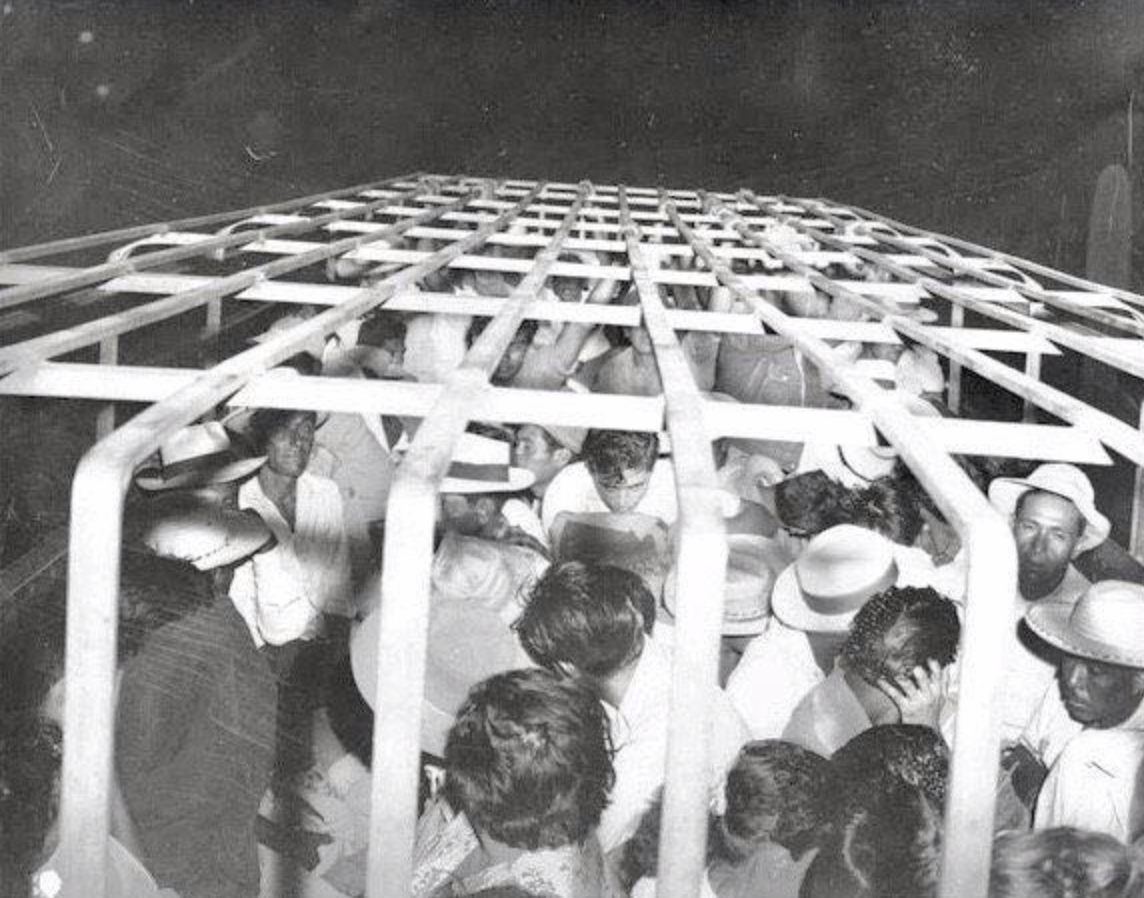
- There have been a variety of mass deportion efforts of Latinos throughout the 20th and 21st century, but much of what Trump is doing now is modeled after “Operation Wetback.” That was a military-style mass deportation campaign run by President Dwight Eisenhower’s administration from 1954 to 1955 that may have deported as many as a million people to Mexico and led to nearly 100 deaths.
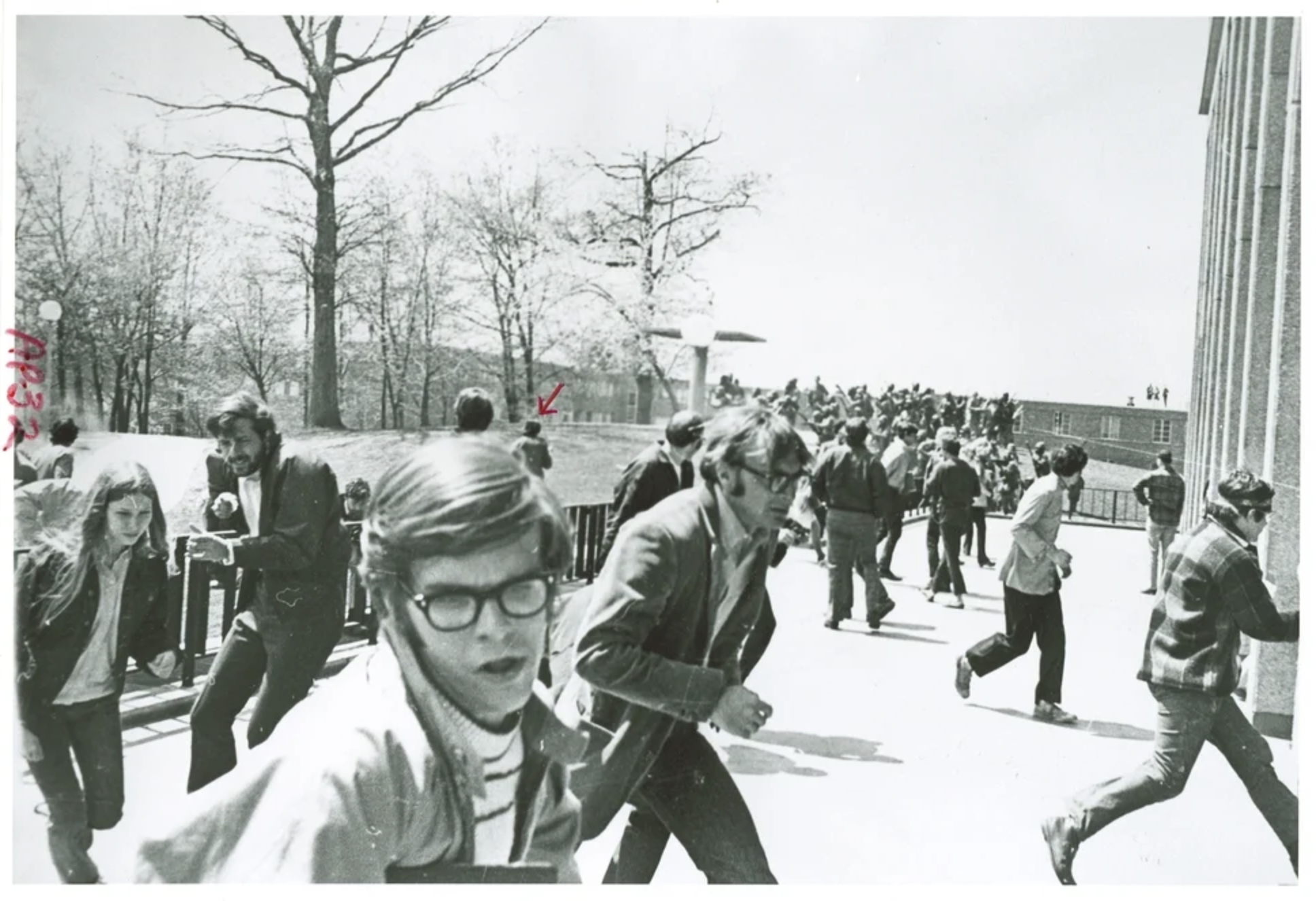
- In May 1970, Ohio National Guardsmen opened fire on student demonstrators at Kent State University, killing four and wounding nine.
- In May 1985, Philadelphia police used a helicopter to drop two bombs on a house being used by MOVE, a Black liberation organization. The explosion and subsequent fires killed six adults, five children and destroyed 61 homes spread over two city blocks.
- The law enforcement killings of Black people between the year 2000 and the present like Oscar Grant, Tyrone West, Eric Garner, Michael Brown, Ezell Ford, Tamir Rice, Natasha McKenna, Anthony Hill, Freddie Gray, Greg Gunn, Jordan Edwards, Stephon Clark, Philando Castile, Elijah McClain, Breonna Taylor, Sandra Bland, George Floyd, Sonya Massey or any of the hundreds of other names on this list.
When a government official like Garcia watches a video of a group of federal agents put a dozen bullets into Alex Pretti — a VA nurse and white man — after disarming him and says “this is not who we are,” they are whitewashing history.
They’re saying all the events I just listed don’t matter. They’re pretending that government officials and law enforcement in the United States don’t have a storied past of brutalizing people who go on strike or protest government actions or who simply aren’t white. Ultimately, they’re saying that the life of a white man is more valuable than that of 10 or even a hundred people of color, which is exactly what white supremacists have been saying all along.
For Garcia, who is himself an immigrant from Peru, to deny the reality of American history is to get lost in the country’s mythology, which is why today we’re still dealing with the same white supremacist violence as the nation’s founders did 250 years ago.
Please understand, I’m not writing this to say American history is just a long catalog of horrors, bereft of anything good and decent. There are libraries packed with courage and inspiration to be found if you want to read about American slave rebellions, union drives, suffragettes, civil rights actions and anti-war protesters. The very founding of the nation itself hinged on violent revolution.
The tens of thousands of Minneapolis residents enduring sub-zero temperatures, tear gas and gunfire to document federal immigration raids in their city day after day after day exemplify the highest ideals of what it means to be an American.
But there’s not much ultimately good and decent about a nation that cannot – OK, will not – end its violent, white supremacist tendencies. The ideals of freedom, democracy and equality before the law that helped found the nation don’t mean much if they were, and are, still to this day enforced arbitrarily and unequally.
Yes, much of the violence and sadism against the American people that has marked Donald Trump’s time in office as president exceeds that of his predecessors, but very little of it is unprecedented.
Changing that demands that we acknowledge the past in an open and honest manner. It can start with a simple statement from officials like Garcia that says, yes, all of this is exactly who we are. Now we must take real, tangible steps to ensure none of this ever happens again.
We need your support.
Subcribe to the Watchdog today.
The Long Beach Watchdog is owned by journalists, and paid for by readers like you. If independent, local reporting like the story you just read is important to you, support our work by becoming a subscriber.