City officials celebrate another weapons manufacturer moving into Long Beach
This is the second defense contractor to announce its move into Long Beach this year, causing locals to worry about the soul of the city.

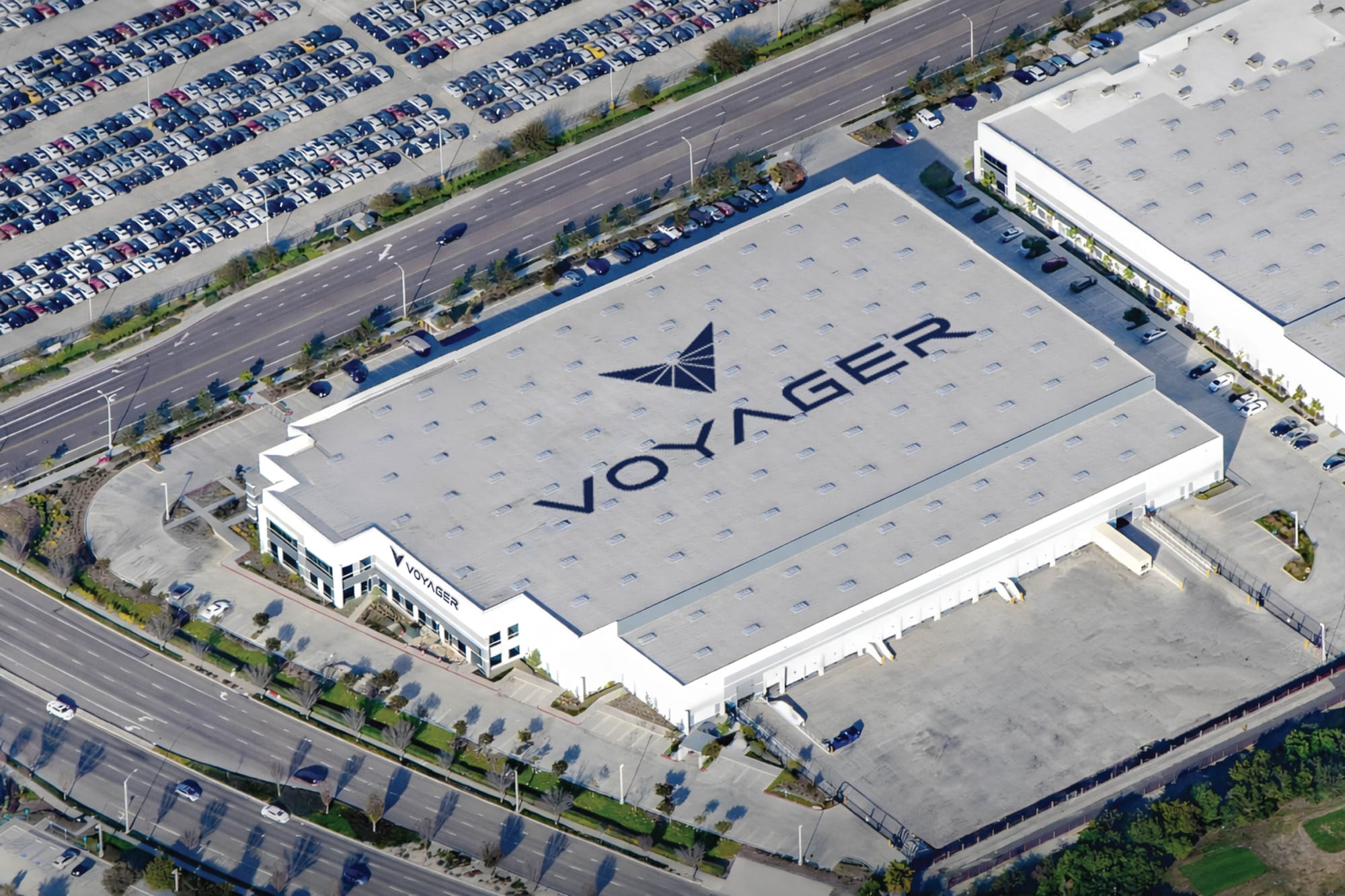
Weapons manufacturer Voyager Technologies announced Thursday that it has moved into a 140,000-square-foot facility in Long Beach, making it the second defense company to announce a move into the city in less than two months.
The resurgence of overt weapons manufacturing in Long Beach has some locals questioning the morals of city officials who are praising the companies as well as the legacy the city is building upon.
"We are moving fast from design to build, test and fielded capability, and this facility gives us access to world-class talent, a proven aerospace ecosystem and the collaborative energy of companies that are all pushing in the same direction,” Voyager CEO Matt Magaña, a Long Beach native and Cal State Long Beach alumni, said in a statement.
The facility will employ 150 to 200 people and focus on “secure work space and advanced electronics manufacturing, including some assembly,” according to a company spokesperson.
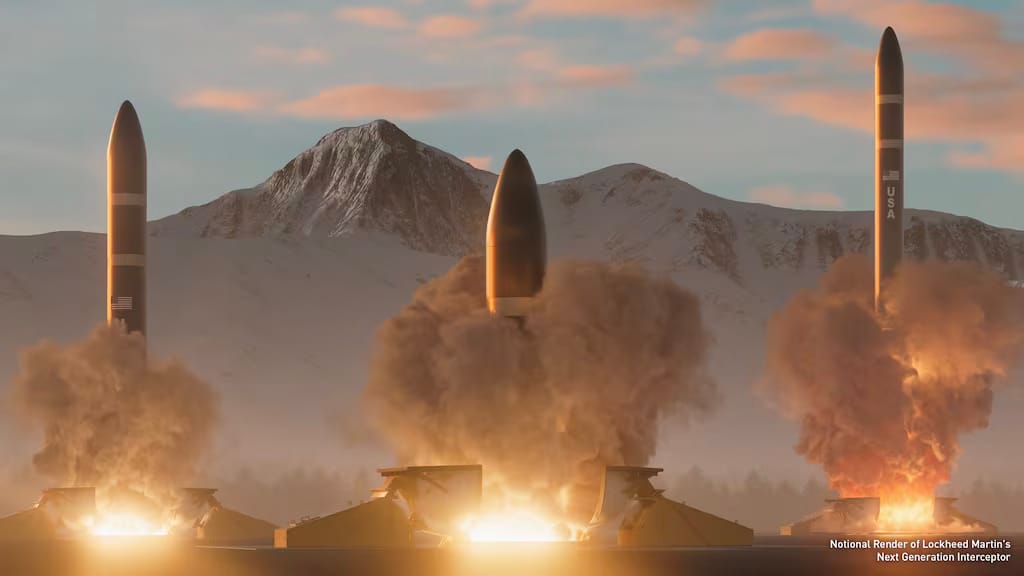
While the company did not respond to questions asking for more specific details about what will be developed and built in Long Beach, a large portion of the firm’s revenue comes from defense contracts. One major aspect of Voyager’s defense segment is supplying propulsion components and other hardware for Lockheed Martin’s “Next Generation Interceptor,” a missile set to replace outdated U.S. ground-based defense systems.
The company also manufactures space infrastructure and technology such as airlocks, satellite servicing equipment, star trackers, sun sensors and more.
The spokesperson stressed that the company serves “a variety of customers across civil, commercial and defense industries.” Voyager’s 2025 financial report, however, highlights the company’s focus: Defense net sales increased 59% to $123 million, while space solutions decreased by 36% to $47.6 million.
The biggest gains were in the Interceptor program as well as an “undisclosed” defense program, according to the company.
The company also leads a joint venture known as Starlab to develop a commercial replacement for the International Space Station. The project does not currently generate revenue and is not expected to “in the near term,” but the company says it has received “significant” funding from NASA, including $9.5 million in cash in the fourth quarter of last year.
In its announcement, Voyager boasted that the company can rapidly move from concept to delivery of operational systems and equipment with “AI-driven digital engineering and automated manufacturing.”
“This is more about efficiency,” a company spokesperson said when asked if the use of AI and automation reduces the number of jobs needed to complete its work. “We’re incorporating AI to enable us to move from design to build faster.”
In a statement Thursday, Mayor Rex Richardson said he is “proud” to welcome Voyager to Long Beach.
“This investment brings high-skilled jobs, strengthens our local economy, and further establishes Long Beach as a national hub for the industries shaping our future,” Richardson said.
The Voyager announcement comes less than two months after Anduril announced a $1 billion investment in Long Beach, including the construction of a six-building campus totaling nearly 1.2 million square feet. Expected to come online in summer 2027, the campus will support around 5,500 jobs, the company said.
According to Richardson, the investment is the largest in the city’s history.
Anduril manufactures AI-powered autonomous defense systems, including drones, surveillance towers and underwater vehicles, all of which run on the company’s software platform Lattice. U.S. Customs and Border Protection uses hundreds of the company’s surveillance towers along U.S. land and maritime borders, according to the company.
Like Magaña, Anduril founder Palmer Luckey attended CSULB but did not graduate. Instead, he founded virtual reality company Oculus in 2012 at the age of 19. The company was acquired by Facebook in 2014 for $2 billion.
Luckey, a Long Beach native, was fired from Facebook in 2017 after it was revealed he secretly funded a pro-Trump campaign focused on manipulating the 2016 election via online meme culture. Luckey quickly founded Anduril months later.
Since then, Luckey, whose sister is married to disgraced former Congressman Matt Gaetz, has hosted numerous fundraisers for President Donald Trump’s re-election campaigns, including a private event in Newport Beach in 2020 and a 2024 luncheon that started at $3,300 per plate.
In January, when Anduril announced its Long Beach expansion, Richardson again said he was “proud” to welcome the firm, adding that the city looks forward to working with education and workforce partners to meet the company’s job demands.
It would be difficult for officials to deny any business the ability to operate in the city if it complies with the various permitting regulations. But the active praise of these companies moving into the city by officials, Richardson in particular, has put a sour taste in some locals' mouths.
While the comment sections under the Voyager announcement were a bit more tame and congratulatory, likely due to the fact that the company is less known, Richardson’s post about Anduril received harsh backlash.
“Rex, you sit there and praise a defense contractor that its goal and purpose is the mass surveillance of its citizens,” one commenter wrote. “Autonomous drones designed for war. Paving the way for the next generation of ICE and others like it. No different than what the people of Gaza see every day. Your post is disgusting and disgraceful. Grow a moral backbone and stand with it. What good are these jobs when they are intended for the destruction and murder of others.”
One person shamed Richardson for “selling our beautiful city” to a defense company aligned with federal agents “hunting residents of your city,” while another asked him a question: “You expect us to believe this is a good idea because the jobs building weapons for fascists pay well?”
“This is a company that designs bombs and weapons, by the way,” one commenter added. “Space Beach? More like Murder Beach.”
But these are precisely the types of companies the city is trying to attract under its Grow Long Beach initiative, according Lucius Martin, deputy mayor of economic development. Space, defense and the broader aerospace sector are big job and revenue generators through property, business license and other taxes.
The city prioritizes attracting these “high-wage, high-growth companies,” Martin explained, adding that the city does not offer companies any type of financial incentive to relocate or expand into Long Beach.
“From the Grow Long Beach agenda, the question was: How do we continue to grow the economy during uncertain times?” Marin said. “How do we grow jobs here when the oil industry is waning? How do we prepare for the next generation of opportunities?”
In addition to the companies’ direct impact on the city’s economy, Martin noted that their employees also contribute by participating in it by patronizing local restaurants and stores.
“You go to the Hangar at Long Beach Exchange during lunch time and you see folks with Ford shirts, Rocket Lab T-shirts, you’ll see Boeing folks, you’ll see True Anomaly,” he said. “These folks are buying lunch at the small businesses that are there.”
Martin said that the “explosion” of new companies is exciting to see, adding that its important the city not be a “one-company town.” Instead, diversification keeps Long Beach on stable economic footing.
Long Beach is not new to the military industrial complex — for decades, the city was a leader in airplane manufacturing, including thousands of warplanes.
In 1941, weeks before the Japanese attack at Pearl Harbor, Douglas Aircraft opened its Long Beach plant off Lakewood Boulevard. Amid the war effort, planes were constructed around the clock.
The company produced the C-74 Globemaster and C-124 Globemaster in the 1940s and ’50s, two large heavy-lift transport aircraft for moving troops and military equipment. Other military craft manufactured in Long Beach include the Boeing B-17 Flying Fortress, which dropped more bombs than any other aircraft during World War II, and the KC-10 tanker, a modified version of McDonnell Douglas’s commercial DC-10. The KC-10 was retired in 2024.
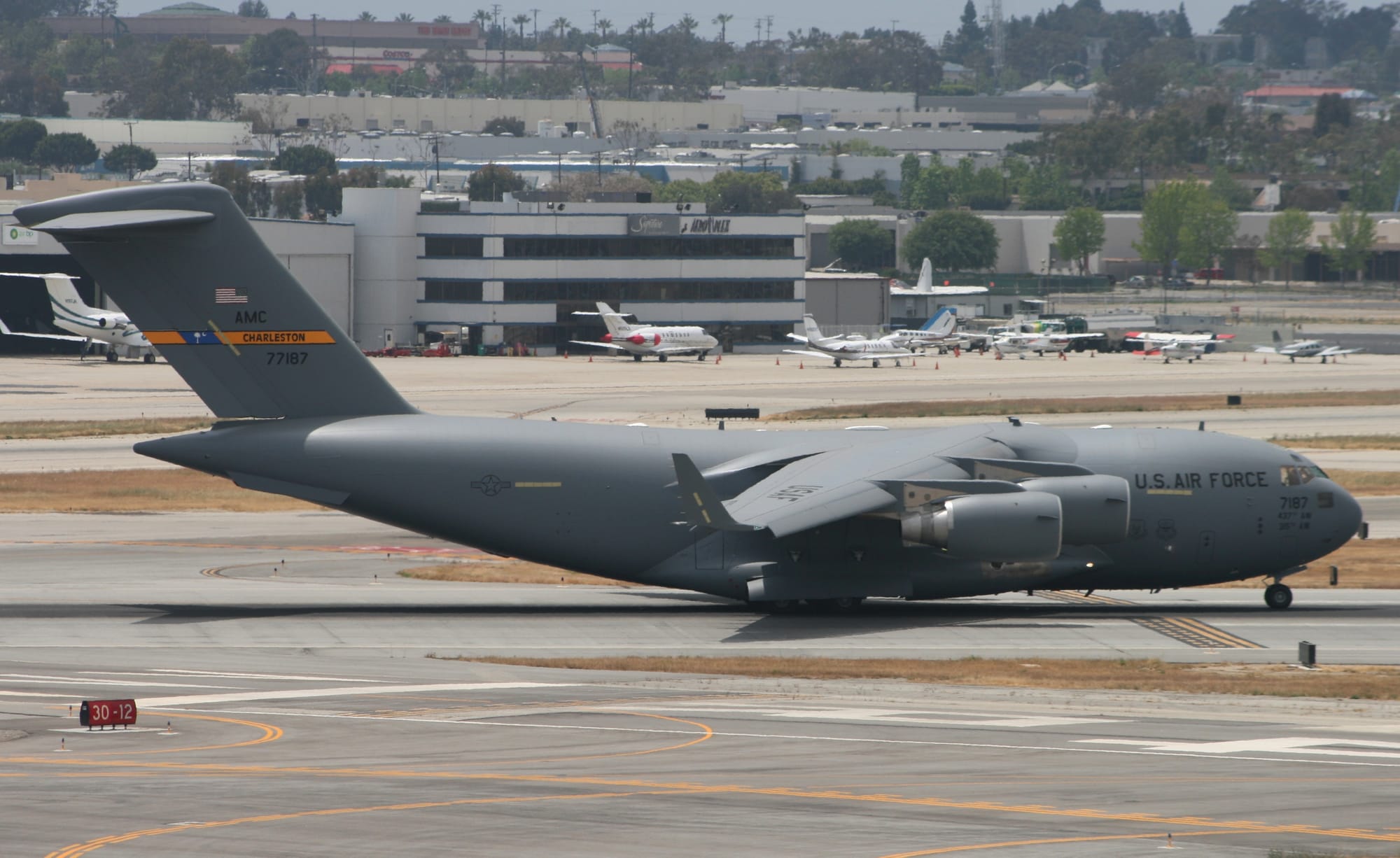
The last military aircraft manufactured in Long Beach was the Boeing C-17 Globemaster III. Nearly 280 of the massive transport planes were built from 1991 to 2015, which marked the end of airplane manufacturing in Long Beach. According to the U.S. Air Force website, 222 C-17 remain in service today.
Martin, another Long Beach native, fondly recalled growing up in the city and marveling at the C-17s as they departed the city. “I remember the giant shadow and our house would shake,” he said. “It was a whole thing.”
All said, more than 15,000 planes were built in Long Beach from 1941 to 2015, most of which were for military use. Nearly 9,500 aircraft were produced during WWII alone.
“The work, historically, that's been done in Long Beach — if you think of the Pacific Fleet, the naval shipyard, of Douglas-Boeing, a vast majority of that was military-related, national security defense work,” Martin said. “So we're essentially building off the legacy that we've had for over 100 years.”
But the end of C-17 production also marked the end of Long Beach’s most notable war machine ties. The resurgence of the city as a major player in aerospace over the past decade has largely been focused on the space sector — rockets and satellites and exploration — and innovative aircraft, including eVTOLs — essentially short range sky taxis — and “revolutionary” commercial aircraft.
While most, if not all, of the local space companies do have government contracts, many are related to exploration and transportation, such as taking satellites into orbit and missions to the moon. Some also develop and manufacture satellites, mostly for navigation, scientific research, and environmental monitoring.
With the largest segment of their revenue coming from instruments of surveillance and violence used both domestically and abroad, this new cohort of weapons manufacturers is different.
While the city does have a long legacy with the military, Americans have gradually become more and more disillusioned by war. After Pearl Harbor, 97% of Americans approved of the U.S. entering WWII — and decades later it remains the most widely supported war in the country’s history.
Since then, American approval has almost always dropped from the start of a war to the end. When the U.S. first entered Iraq in 2003, the invasion had about 73% support. Twenty years later, only 36% of Americans believed the war was justified.
Two weeks into the country’s most recent military action — an unprompted attack on Iran — the war only has 36% approval, according to NPR.
But Martin maintains the net positive of defense companies moving to Long Beach. He even highlighted Voyager’s partnership with the Long Beach Unified School District’s Sato Academy via NASA’s HUNCH program. Students will design and fabricate real hardware that will travel to the International Space Station, he noted.
“It’s about inspiring the next generation,” Martin said. “So it’s not a surprise, it’s by design, that we’re attracting these companies to Long Beach.”
We need your support.
Subcribe to the Watchdog today.
The Long Beach Watchdog is owned by journalists, and paid for by readers like you. If independent, local reporting like the story you just read is important to you, support our work by becoming a subscriber.